
Mammotion YUKA 3000
NetRTK positioning through Mammotion's iNavi service replaces both the buried wire and a separate base station, enabling full-yard autonomy under about an acre. Clipping collection depends on the sweeper kit, which is a separate purchase; with it fitted, the mower carries its own basket and tips it at one of up to 150 user-defined dumping spots. Blade durability and sweeper reliability remain underdocumented in field reports.

Will the Mammotion YUKA 3000 work on your yard?
Describe your yard using the controls. Each choice reads the spec sheet for you, flagging where the Mammotion YUKA 3000 is built for your space and where it isn’t.
A classification of fit for the conditions you set, not a recommendation. Verdicts describe engineering design intent, not test results.
Living with it.
RTK consistency and sweeper durability unproven over seasons.
Unprovenowner-reported arc
Manufacturer documentation covers RTK accuracy and vision capability; multi-year reliability data sparse. Self-emptying sweeper mechanism is novel; long-term durability undocumented.
Clean the charging dock contacts, and if the sweeper kit is fitted, clear grass from the brush and the basket.
Replace the small on both cutting discs. They are flip-and-replace items: sharpening strips the coating and weakens a part that spins on an unattended machine.
Store the mower indoors over winter with its battery charged. Lithium packs are stored charged, not run flat.
Keep the user-defined dumping spots clear so the mower can tip its basket where it expects to.
$2,099 to buy, then about $80 a year for the replaceable parts below. Over three years that is roughly $240 past the sticker price. Excludes electricity and any repairs.
- Seasonally
Replacement cadence from the maintenance schedule; prices shown where the source documents them. Part links may earn a commission and do not influence the classification. All parts at Mammotion
-
RTK antenna placementBase-station position affects accuracy. Dense trees and buildings degrade signal.
-
Moving blade hazardRotary blade presents pinch/laceration risk. Keep hands clear during operation.
The full spec sheet.
Priced above the category median, with every figure charted against the category below.
- FootprintThe width, depth and height of the robot itself, without its dock.
- 25.5 × 20.4 in · 13 in tall•
- WeightThe robot alone, without its dock, as the maker states it.
- 36 lbs•
- Wi-FiThe bands the robot can join; many models need a 2.4 GHz network to set up.
- Supported
- NetworkA radio the robot carries besides Wi-Fi, so it reaches the maker without your router.
- Cellular
- Max slope
- 45%•
- Max area
- 32,700 sq ft•
- Blade system
- 2 cutting discs•
- Boundary method
- Wire-free, RTK-GNSS with camera vision
- Drive layout
- Rear-wheel drive
RTK-GNSS + camera vision with AI obstacle avoidance
Position shows where the figure sits across the tracked category, not a quality judgment.
How the assessment has moved.
Every announcement, release and reassessment behind the current classification.
-
Sep 2026 · AssessmentAutonomy Ladder reclassified IV → III
-
Sep 2026 · AssessmentRecord status: Verified → Provisional
-
Sep 2026 · AssessmentReadiness reassessed: Promising Progress → Ready Now
-
Aug 2026 · AssessmentRecord status: Provisional → Verified
-
Aug 2026 · AssessmentRobovations Score rescored under v4.2: 73 → 67
-
Jul 2026 · AssessmentRobovations Score recorded at 73 of 100
-
Mar 2025 · ReleaseEnters commercial release with $1,599 retail pricing
Show 1 earlier entryHide earlier entry
-
Jan 2025 · AnnouncementUnveiled at CES 2025 with wire-free RTK design
How Mammotion YUKA 3000 compares.
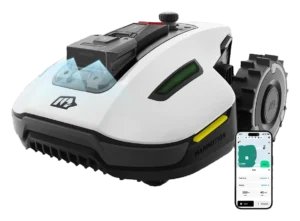
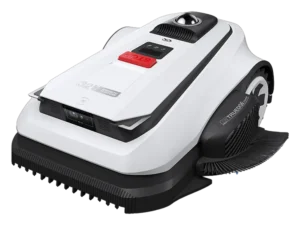
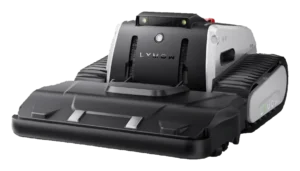
Do wire-free robot mowers with sensor fusion navigate better?
Three wire-free mowers, three positioning architectures. LiDAR-only navigation, RTK plus stereo-camera fusion, and RTK plus AI vision each fail differently when their primary signal degrades. The gap is not precision…
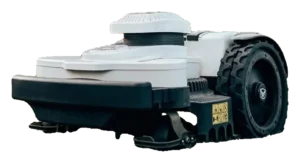
Robot mowers for fragmented yards: zone transit and narrow passages
Four robot mowers, two navigation architectures. Ecovacs Goat A3000 LiDAR PRO and Mammotion YUKA 3000 map corridors autonomously without buried wire; Ambrogio Twenty Elite and Robomow RS630 follow a continuous…
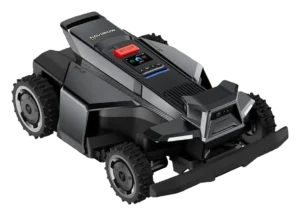
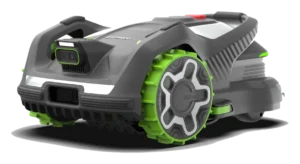
Robot mowers for detached lawns: zones, transport paths, and second docks
Four wire-free RTK mowers face the front-yard-plus-backyard problem: crossing a driveway, saving independent zone maps, and whether a second dock is required for detached areas. Segway Navimow X4, Greenworks AiMowbot…
What people actually ask.
OperationDo I need to bury a perimeter wire for the YUKA 3000?
OperationWhat is the YUKA 3000's operating range?
OwnershipHow often do I replace the blades, and what do they cost?
OperationWhat happens if the RTK signal drops mid-mow?
OperationCan the YUKA 3000 operate in rain or wet grass?
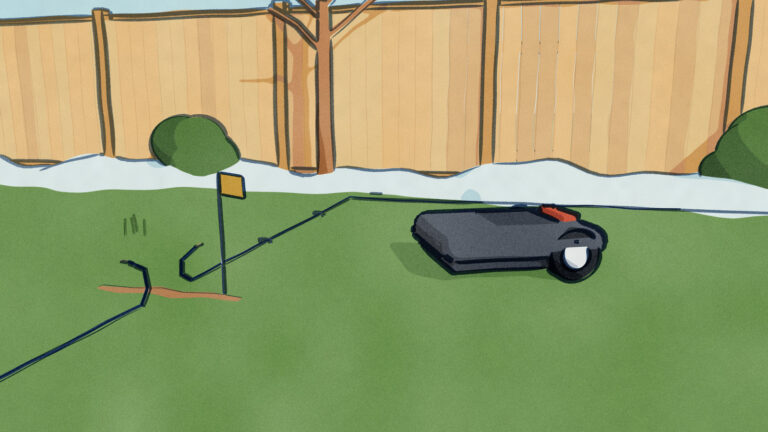
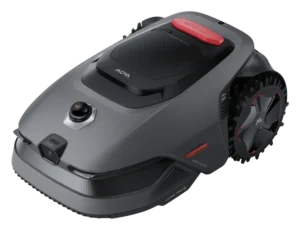
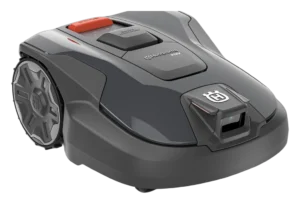 IV
IV
Husqvarna Automower 312V
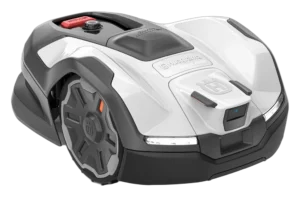 IV
IV
Husqvarna Automower 405VE NERA
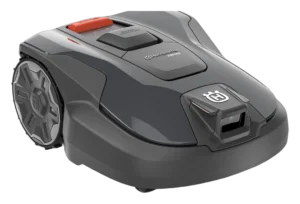 IV
IV
Husqvarna Automower Aspire R6V
Where it's sold
We may earn commission from qualifying purchases. This does not influence classification.
Reference the Mammotion YUKA 3000 classification.
Embed the Autonomy Ladder™ mark or copy the citation. The mark is served from this record, so a reassessment updates it on your page automatically.
Get the embed code and citation
Scale proportionally only, up to 2× (536px wide)(224px wide). No recolouring, cropping, rotating, or re-typesetting.
Robovations. "Mammotion YUKA 3000: Autonomy Level IV (Environmental Autonomy)." Autonomy Ladder™, assessed September 2026. https://robovations.com/robots/mammotion-yuka-3000/
- Link it. The mark must point at this record. An unlinked mark is not authorised.
- Hot-link it. Never download, self-host, or re-upload the image. A saved copy stops updating, and a mark that has stopped updating is a claim we no longer stand behind.
- A classification, not an endorsement. It may not appear beside language implying Robovations recommends, rates, or approves the product.