

Mammotion
Mammotion YUKA 3000
- Autonomy
- IVEnvironmental
- Score
- 67/100Capable
- Readiness
- Ready Now
- Price
- $2,099list
Mammotion
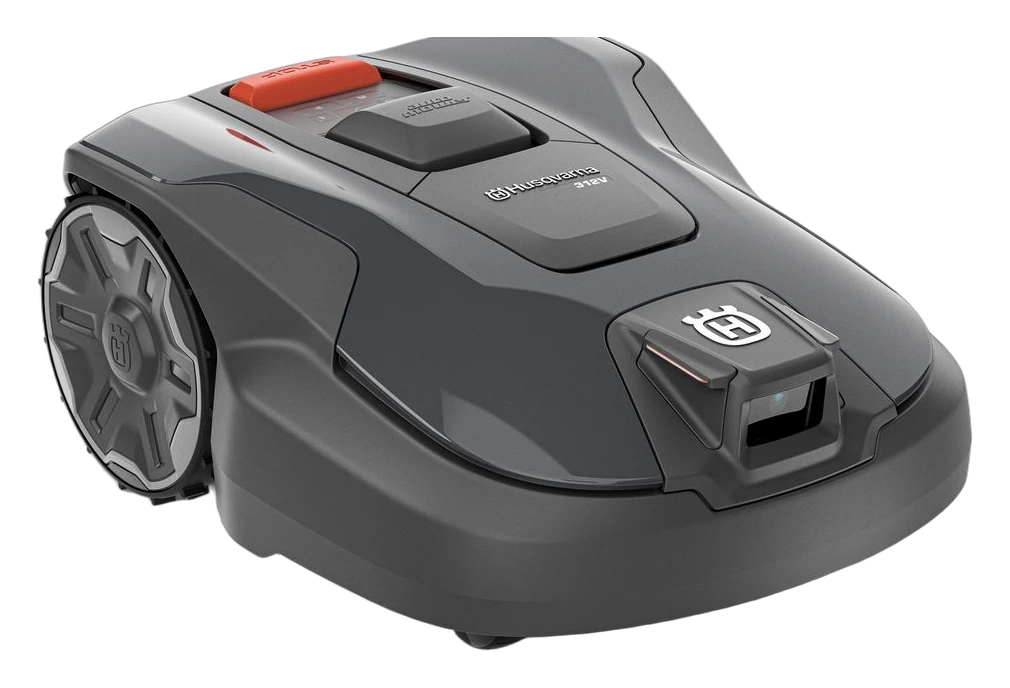
Husqvarna
Up to three
All robot lawn mowers. Every figure below is placed against the whole class, so a gap can be read against how much the class itself varies.
The conditions each robot was assessed against, side by side. Rows marked in gold are where these machines genuinely differ.
| Condition | Mammotion YUKA 3000 | Automower 312V |
|---|---|---|
| Yard size | ||
| Under ¼ acre | GoodOperating range comfortably covers quarter-acre yards; RTK setup justified. | GoodRated for 1,200 m², a little more than a quarter acre, so smaller lawns are covered. |
| ¼ – ½ acrethey differ | GoodIdeal operating window: 0.5–1 acre. RTK maintains coverage edge-to-edge with no wire setup. | DependsHusqvarna's 1,200 m² rating covers only the smaller end of a quarter to half acre. |
| Over ½ acre | PoorManufacturer specs cap operating range at 1 acre. Yards over 1 acre require multiple mower units or acceptance of uncovered perimeter zones. | PoorLawns over half an acre are well beyond Husqvarna's 1,200 m² rating for the 312V. |
| Terrain | ||
| Mostly flat | GoodRTK positioning and traction optimized for flat terrain. No slope-related navigation or drive challenges. | GoodT3 found the cut quality excellent once the mower was configured on its lawns. |
| Gentle slopesthey differ | DependsModerate slopes (up to 20%) supported; category standards show RTK performance remains reliable. Above 20%, traction loss and navigation delays expected on wet grass. | GoodT3's lawn is far from flat after mole damage, and the 312V coped with it well. |
| Steep / hillythey differ | PoorSteep slopes (above 25%) exceed manufacturer design and documented traction limits; operator safety and blade contact risks increase significantly. | DependsHusqvarna rates 40% inside the lawn but 15% at the boundary, and no steep test was found. |
| Grass type | ||
| Typical lawn grass | GoodWell-maintained cool-season or warm-season turf: vision obstacle detection and blade performance are optimized for standard grass heights. | GoodT3 rated the cut quality excellent and the cutting options highly versatile. |
| Mixed / tall growth | DependsTall grass (4+ inches) reduces cutting efficiency and vision clarity. Pre-trim or accept multiple passes; blade wear accelerates on overgrown lawns. | DependsHusqvarna lists spiral cutting for uneven growth, but no long-grass test of the 312V was found. |
| Thick (Bermuda / Zoysia) | DependsThick or dense turf (Bermuda, Zoysia) increases blade load and may reduce autonomous run duration. Manual pre-thinning improves autonomy. | DependsNo test in thick or dense turf was found for its 22 cm cut. |
| Boundary setup | ||
| Wireless required | GoodWire-free RTK boundary is this mower's core design. Wireless-only operation is fully supported. | GoodVirtual boundaries are set in the app, with no perimeter wire to lay. |
| Wire required | PoorYUKA 3000 uses RTK-GNSS positioning only; perimeter wire is not an option. Wired-boundary-only requirement disqualifies this model. | PoorHusqvarna lists virtual boundaries as the only boundary type, so there is no wired installation. |
| No preference | GoodFlexible boundary preference: RTK wireless operation meets wire-free or wire-optional scenarios equally well. | GoodIts wire-free setup meets a no-preference buyer, provided Wi-Fi and open sky cover the lawn. |
A robot being poor for a condition is a fact about fit, not a fault. “Depends” means the record names a limit worth reading, not that the answer is unknown.
Nine inputs across three pillars, each weighted as shown and each scored so more is better. A robot can lead on one and trail on another, which is the point of showing them apart.
A number only means something next to the spread it sits in. Each track is the real range across every classified robot in the class, with the median marked.
Not compared, because fewer than two of these robots carry a published figure: Runtime, Charge time, Noise.
Written on each record, and the only thing here every robot on the site carries.
What each design gives up to be good at what it is good at.
Wire-free setup with no base station: NetRTK corrections arrive over the network through Mammotion’s iNavi service and the reference receiver is built into the mower, so setup is placing the charging base and mapping. What stays seasonal is winter storage.
The sweeper is an accessory, not fitted equipment: it costs extra on the YUKA 3000, it adds a mechanical consumable in the brush and its motor, and Mammotion’s spec table lowers the maximum slope while it is attached.
An excellent, customisable cut once running, but getting there meant repeated troubleshooting in the app.
Stated by the record itself. A robot being wrong for a household is a fact about fit, not a fault.
The upkeep ownership hands back to you, whatever the autonomy level says.
Classifications rest on different depths of evidence. A pre-release assessment and a verified one are not the same kind of claim.
| Robot | Evidence status | Sources reviewed | Last assessed |
|---|---|---|---|
| Mammotion YUKA 3000 | Provisional | 7 | Sep 2026 |
| Husqvarna Automower 312V | Provisional | 4 | Sep 2026 |
Evidence status counts the sources behind a classification, not their kind. A high count can be maker documentation and price coverage, so read it as how much was reviewed rather than as independent testing. How we weigh evidence.
 The full recordMammotion YUKA 3000Specifications, evidence, the Fit Check in full, and every tracked change.
 The full recordHusqvarna Automower 312VSpecifications, evidence, the Fit Check in full, and every tracked change.
Robovations classifies robots; it does not rank them. Nothing on this page is a recommendation, and no manufacturer influences a classification or its placement here.
Comparing across classes is allowed — the page will switch to per-class positioning and tell you it has.