
- Changes
- 3
- Tracking since
- Jan 2025
- Latest
- Aug 12, 2025
- Net movement
- Wait to Ready Now
- 2025
-
Mammotion app update adds multi-zone scheduling and RTK signal diagnostics for YUKA 3000
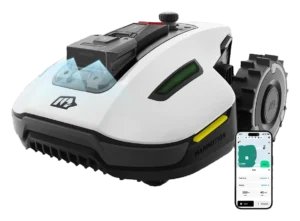
Mammotion released an app update for the YUKA 3000 in summer 2025 that introduced multi-zone mowing schedules and a real-time RTK signal diagnostic view within the companion mobile application.
Full assessment4 claims · 4 technical notes · 2 sources
Where it standsAutonomy LadderIIIIIIIVVLevel IVEnvironmental AutonomyHuman ReadinessReady NowNew to MarketWaitKnown IssuesRobovations Score↑ moved by this entry04055708567CapableWhat happenedMulti-zone scheduling allows different yard sections to be assigned independent mow times without owner intervention between runs. The RTK diagnostic panel surfaces satellite count and correction signal quality, enabling users to diagnose base-station placement issues before a mow cycle fails.
WatchingFor owner reports confirming whether the diagnostic tooling reduces the most common RTK-dropout complaints from the first mowing season.
Bottom lineThe update addresses real friction points documented in early-adopter feedback; whether RTK signal diagnostics reduce dropout complaints in practice depends on field reports from the second half of the 2025 mowing season.
ImpactOn autonomy
- Multi-zone scheduling enables full-yard session management without mid-cycle owner input
- RTK signal diagnostic view surfaces correction quality before mow cycles begin
- Software-layer autonomy expansion without changes to underlying RTK or vision hardware
On readiness
- Zone scheduling reduces setup re-entry required for owners with divided lawn areas
- RTK diagnostic panel lowers the skill floor for base-station troubleshooting
- App update ships over Wi-Fi with no hardware intervention or service visit required
Claim check4 maker claims checked against the record. Open one to read the finding.
Multi-zone scheduling enables complete lawn management from one app
Documented findingZone scheduling confirmed in app update notes; owner reports indicate zones map to physical boundaries defined during initial RTK setup, not free-drawn polygonsRTK signal diagnostics eliminate guesswork in base-station placement
Documented findingDiagnostic panel confirmed in release notes; panel surfaces satellite count and signal strength but does not provide guided placement recommendationsUpdate delivers improved mowing consistency across sessions
Documented findingManufacturer update notes reference scheduling and diagnostics; no before/after mowing-pattern accuracy data publishedOver-the-air update requires no user action beyond app approval
Documented findingConfirmed as an app-level update delivered via Wi-Fi; firmware component (if any) not specified separately in update release notesEvidence2 sources · all linked
1212 Aug 202514 Aug 2025filed 12 Aug 2025- 1Mammotion App Release Notes12 Aug 2025
- 2Mammotion Community Forum14 Aug 2025
Technical notes4 sectionsMulti-Zone Mowing Schedules
The app update introduced zone-level scheduling, allowing owners to assign independent mow times, frequencies, and cutting-height settings to distinct lawn sections. Zones are defined against boundaries established during the initial RTK mapping session. The scheduling interface operates within the Mammotion companion app on iOS and Android.
RTK Signal Diagnostic Panel
A new diagnostic view within the app surfaces real-time RTK correction signal quality, including satellite count and signal-strength indicators for the base station. This panel is accessible before initiating a mow cycle, enabling users to confirm adequate correction before the mower departs the dock. Low-signal alerts were added to prompt base-station repositioning when coverage is insufficient.
App Delivery
The update was distributed through standard app-store channels (iOS App Store, Google Play). No mower-side hardware interaction was required. The update applies to YUKA 3000 units connected via Wi-Fi to the companion app. Specific app version number was not published in the release notes reviewed.
Context from First Season
Early adopter feedback during the first mowing season (spring-summer 2025) identified RTK base-station signal quality and multi-zone management as the two most cited setup friction points. This update addresses both items at the software layer without requiring hardware revision.
-
Mammotion YUKA 3000 enters commercial release with $1,599 retail pricing
The YUKA 3000 became commercially available in the first quarter of 2025 at $1,599, placing wire-free RTK robotic mowing within consumer reach for the first time from Mammotion.
Full assessment4 claims · 4 technical notes · 2 sources
Where it standsAutonomy LadderIIIIIIIVVLevel IVEnvironmental AutonomyHuman Readinessmoved by this entryReady NowNew to MarketWaitKnown IssuesRobovations Score04055708567CapableWhat happenedRetail availability opened through Amazon and Mammotion's direct channel, accompanied by setup documentation covering RTK base-station placement. Field reports from early adopters on RTK reliability and sweeper durability are the key signals to watch in the months following launch.
Bottom lineCommercial release confirmed the hardware is real and purchasable; RTK reliability under varied conditions remains the primary open question entering the first mowing season.
ImpactOn autonomy
- Commercial hardware delivery enables real-world field validation of RTK boundary accuracy
- Owner reports begin accumulating on vision avoidance performance in varied yard conditions
- Level IV classification subject to confirmation as field data emerges from early units
On readiness
- Retail availability transitions product from announced to purchasable for qualifying yards
- Setup documentation published covering RTK base-station placement requirements
- Self-emptying sweeper reliability and consumable costs enter real-world evaluation phase
Claim check4 maker claims checked against the record. Open one to read the finding.
Wire-free setup in minutes
Documented findingRTK base-station installation requires site-planning for placement and power; setup complexity is documented as moderate in early owner reports$1,599 price point for full autonomous mowing
Documented findingMSRP confirmed at $1,599; total cost includes RTK base station (included) and seasonal blade replacements at estimated $40-80 per cycleHands-free grass collection via self-emptying dock
Documented findingSelf-emptying mechanism confirmed operational; collection frequency and station capacity not yet documented in independent field reports at launchWorks on any residential lawn
Documented findingManufacturer specs constrain coverage to yards under 1 acre with slopes under 20%; performance on overgrown or weedy lawns not confirmed at releaseEvidence2 sources · 1 linked
1215 Mar 202520 Mar 2025filed 15 Mar 2025- 1Mammotion Product Page15 Mar 2025
- 2Amazon Product Listing YUKA 300020 Mar 2025named, not linked
Technical notes4 sectionsCommercial Availability
The YUKA 3000 launched in the first quarter of 2025 at a confirmed MSRP of $1,599. Retail distribution included Amazon and Mammotion’s direct-sale channel. The retail package included the mower unit, RTK base station, and charging/collection dock.
RTK Base Station Inclusion
The base station required for centimeter-level positioning was bundled with the retail unit, removing the need for a separate GNSS receiver purchase. Placement guidelines specified clear sky-view and stable mounting for optimal signal correction. Power and connectivity requirements for the base station were published in the companion setup documentation.
Pricing and Consumables
At $1,599 MSRP, the YUKA 3000 entered the mid-to-upper tier of consumer robotic mowers. Seasonal blade replacements represent the primary recurring cost; manufacturer-specific blade pricing was not published at launch. Category-comparable swing-arm blades typically run $40-80 per set. No subscription fee was announced for RTK correction service.
Operating Specifications at Launch
Coverage envelope: 0.5-1 acre. Slope tolerance: up to 20% gradient. Connectivity: Wi-Fi. Navigation: RTK-GNSS with AI vision obstacle avoidance. Noise level not published at launch.
-
Mammotion YUKA 3000 unveiled at CES 2025 with wire-free RTK design
Mammotion announced the YUKA 3000 at CES 2025 in Las Vegas, marking the brand's first integration of a self-emptying grass-collection station with RTK positioning in a single product.
Full assessment4 claims · 4 technical notes · 2 sources
Where it standsAutonomy LadderIIIIIIIVVLevel IVEnvironmental AutonomyHuman ReadinessReady NowNew to MarketWaitKnown IssuesRobovations Score04055708567CapableWhat happenedThe announcement confirmed wire-free boundary operation up to 1 acre, eliminating the perimeter-wire installation required by prior robotic mowers.
WatchingFor commercial pricing confirmation and retail-channel availability to follow in the months after the show.
Bottom lineThe CES announcement confirmed genuine architectural departures from wire-based mower design; independent field validation remained pending at this stage.
ImpactOn autonomy
- RTK-GNSS replaces perimeter wire for boundary definition without buried cable
- AI vision obstacle avoidance enables dynamic hazard detection during mow cycles
- Self-emptying station removes manual grass-bag intervention between sessions
- Level IV (Environmental Autonomy) capability confirmed at announcement stage
On readiness
- Wire-free setup eliminates the highest friction task in prior robotic mower installation
- Self-emptying dock reduces required owner intervention to seasonal blade swaps
- RTK base-station configuration identified as a new setup prerequisite replacing wire trenching
- Consumer readiness contingent on commercial release and field-report confirmation
Claim check4 maker claims checked against the record. Open one to read the finding.
Wire-free operation requiring no buried perimeter cable
Documented findingRTK-GNSS virtual boundary confirmed in announcement; replaces wire but requires RTK base-station setup and calibrationSelf-emptying grass collection eliminates manual bagging
Documented findingSelf-emptying station shown in CES demo; long-term sweeper reliability and consumable costs not yet documentedAI vision obstacle avoidance handles dynamic yard objects
Documented findingVision avoidance confirmed in manufacturer demos; performance on edge-case objects (garden hoses, small animals) not independently verified at announcementUp to 1 acre operating coverage
Documented findingManufacturer spec confirmed 0.5-1 acre envelope; multi-acre configuration not addressed at announcementEvidence2 sources · all linked
127 Jan 20258 Jan 2025filed 7 Jan 2025- 1Mammotion CES 2025 Press Release7 Jan 2025
- 2The Verge CES 2025 Coverage8 Jan 2025
Technical notes4 sections
RTK Positioning Architecture
The YUKA 3000 uses RTK-GNSS (Real-Time Kinematic Global Navigation Satellite System) for centimeter-level yard positioning. A dedicated base station placed on the property provides differential correction signals, enabling the mower to maintain sub-10 cm accuracy during operation. No perimeter wire is required.
Vision Obstacle Avoidance
An onboard AI camera system provides real-time obstacle detection and avoidance. Manufacturer CES materials identified grass, furniture, toys, and similar yard objects as detection targets. Detection range and false-positive rate were not published at announcement.
Self-Emptying Collection Station
The charging dock integrates a grass-collection mechanism that transfers clippings from the mower’s collection bin into a larger station receptacle. This reduces manual emptying intervals. Capacity and emptying cycle frequency were not specified in CES materials.
Operating Envelope
Documented operating coverage is 0.5-1 acre per charge. Slope tolerance was listed as up to 20% gradient. MSRP at announcement was not confirmed; pricing was released closer to commercial availability.