
Autonomy Library·Reference
Robot Mower Boundary Wire
A robot mower boundary wire is a physical perimeter wire, buried or pegged at the lawn edge, that tells the mower where it may operate. Wireless RTK and vision systems now draw the same fence virtually. Each approach trades installation labor for different failure modes, and the right choice is a property of the yard.
Counts are live·reviewed July 5, 2026

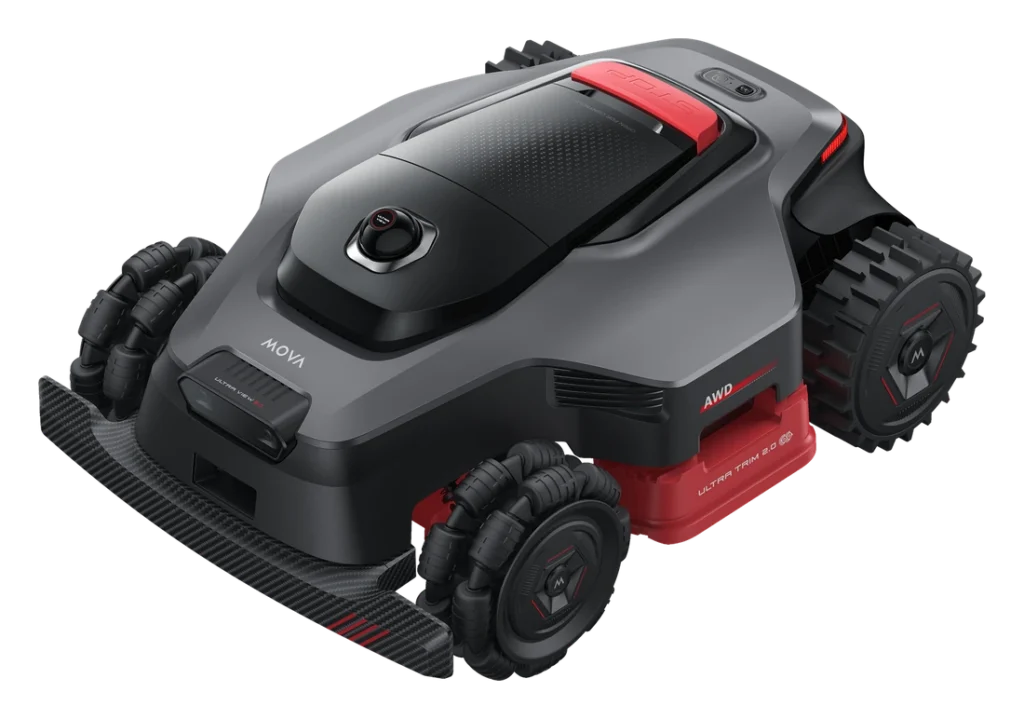
One yard, two ways to draw the fence
- 1
Under the turfThe boundary is a physical loop laid in the ground. Moving it means opening the lawn a second time, along the whole length that changes.
- 2
A breakA cut wire gives no warning. The machine simply stops holding the line, and finding the break is its own afternoon.
- 3
On a screenThe boundary is a saved shape, so changing it is dragging a line. Nothing in the yard moves.
- 4
Needs the skyA virtual line is only where the machine thinks it is. Overhead cover degrades the fix that places it, and the fence moves with the error.
How a boundary wire works
A low-voltage wire loops the mowing area, pegged into the turf or buried a few centimeters down. The charging station drives a signal through it; the mower senses the field and treats the wire as an electric fence. Islands of wire protect flower beds, and guide wires lead the mower home to dock.
The system is simple, proven across decades of installed mowers, and entirely dependent on an unbroken physical loop.
Wire against wireless
| Boundary wire | Wireless (RTK or vision) |
|---|---|
| Installation is hours of physical work: laying, pegging or burying, and splicing, done once per layout. | Installation is a guided walk of the perimeter in an app, plus mounting and powering a reference antenna for RTK. |
| Fails by breaking: aeration, edging, frost, and roots cut wires, and the break must be found and spliced before mowing resumes. | Fails by losing signal: dense tree canopy, buildings, and bad satellite geometry create dead zones where the mower stops or wanders. |
| Garden changes mean physically re-laying wire. | Garden changes mean editing a map in the app. |
| No dependence on satellites, cameras, or cloud accounts. | RTK depends on the antenna’s sky view and placement; some systems add account or connectivity dependencies. |
| Mowing pattern is often random-bounce within the loop, which costs efficiency on large lawns. | Positioning enables systematic stripes, zone control, and coverage tracking. |
What the shift means for autonomy
Setup burden is part of robot mower autonomy, and the wireless generation removed its largest single block of human work. Combined with mapped navigation and better obstacle handling, that is a real capability step, and it is the main reason the category’s recent classifications reach higher than its wire-era ones.
It is not a free upgrade. RTK needs open sky and a well-placed antenna, and complex small yards can inherit new failure modes, examined in when RTK adds complexity without adding capability.
What to verify for your yard
The right boundary system is a property of the yard. Five checks before choosing.
-
01Sky view.For RTK: how much of the lawn sits under tree canopy or beside tall structures? Persistent shade from satellites means dead zones.
-
02Narrow passages.Side yards and gates below roughly a meter challenge both systems, and each manufacturer publishes a minimum passage width worth checking.
-
03Separated zones.A front and back lawn with no mowable connection needs either wire to each, a mower that can be carried, or a multi-zone wireless system.
-
04Slope at the boundary.Grade limits tighten near edges, where a slide means an escape. Check the boundary-zone slope spec, not just the headline number.
-
05Existing wire.Replacing a wire mower? Some wireless models can coexist with or reuse nothing of the old installation; removal is optional but breaks are no longer your problem.
Questions
Do robot mowers still need a boundary wire?
Many do not. Wireless mowers using RTK satellite positioning or camera vision define boundaries virtually. Wire remains standard on many current and installed models, and each approach has distinct failure modes rather than a clear winner for every yard.
What happens when a boundary wire breaks?
The mower stops working or refuses to leave its dock until the break is found and spliced. Breaks come from aeration, edging, frost heave, and roots, and locating one is the signature maintenance chore of wire systems.
Is RTK better than a boundary wire?
It depends on the yard. RTK removes wire installation and enables systematic mowing, and it requires open sky and a well-placed reference antenna. Heavily treed or built-in yards can be more reliable on wire. The yard chooses.
Can I install a boundary wire myself?
Yes, and many owners do: pegging wire at the surface needs no special tools, and grass grows over it within weeks. Burying is more work. Large or complex yards are commonly professionally installed.
Do wireless robot mowers work under trees?
RTK mowers degrade under dense canopy because they lose satellite geometry; some pair vision or dead-reckoning to bridge shaded areas. Vision-guided mowers depend less on sky view. Under heavy canopy, wire remains the dependable option.
Robot Mower Autonomy·Robot Autonomy Levels·Robot Firmware Update·Robot Autonomy·Full library
Browse classified robot mowers →·Analysis: the percent-grade ceiling →
Cite this page
Robovations. “Robot Mower Boundary Wire: Wire vs Wireless Compared” Robovations Autonomy Library. Last reviewed July 5, 2026. https://robovations.com/robot-mower-boundary-wire/