Skip to content
Saved
ROBOVATIONS/COMPARISON3 CONTENDERSREASSESSED 2026.06.23

Technology-shift

What does sensor fusion change in wire-free mowing?

Wire-free robot mowers now split between single-signal LiDAR navigation and multi-signal fusion stacks pairing RTK with camera vision, a difference that changes how each system behaves when one input is lost.

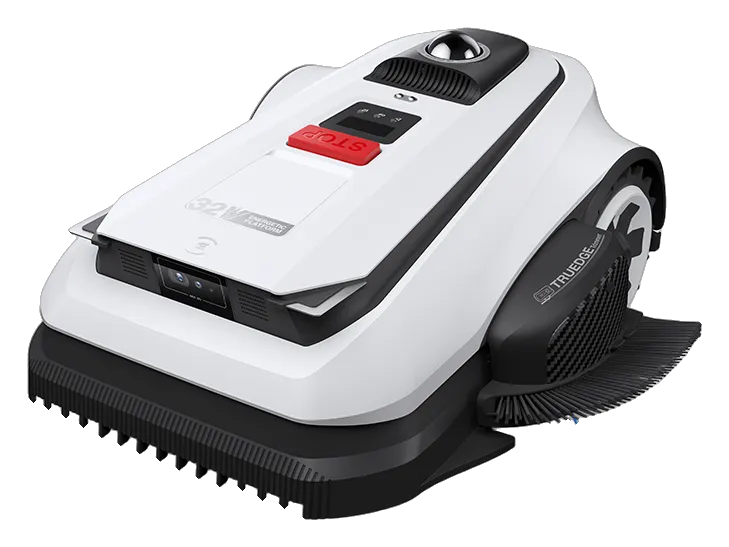
Ecovacs Goat A3000 LiDAR PRO
Ecovacs

Ecovacs Goat A3000 LiDAR PRO

$2,499Level IV
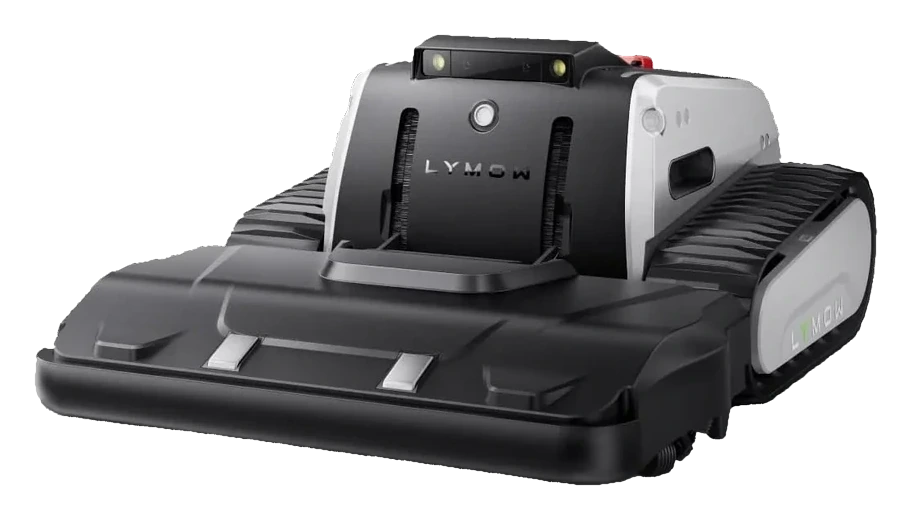
Lymow One Plus
Lymow

Lymow One Plus

$2,599Level IV
Mammotion YUKA 3000
Mammotion

Mammotion YUKA 3000

$2,099Level IV
Price range$2,099–$2,599
Autonomy spreadLevel IV
Contenders3

Classification, not a ranking. Every mark below is documented evidence, not a purchase recommendation.

We may earn commission from qualifying purchases. This does not influence the comparison.

The technological divide

Two architectures, two failure modes

The category has split into two architectural approaches. Each works well in some conditions and breaks down in others.

Approach A: Single-signal LiDAR navigation

LiDAR-only SLAM mapping

360 SCAN, SINGLE SIGNALLaser scanRoverObstacle

The robot measures the distance to nearby objects by timing reflected laser pulses, building a live map of its surroundings.

A rotating LiDAR puck builds a spatial map of the lawn and localizes the mower within it. Obstacle avoidance and boundary inference depend entirely on this one sensor chain; there is no independent positioning fallback.

  • Accurate mapping in open, unshaded lawns
  • Dynamic obstacle detection without buried wire
  • No fallback if LiDAR signal degrades
  • Dense overhead cover may reduce scan reliability
vs
Approach B: RTK + camera vision fusion

RTK-GNSS with visual co-localization

RTK + CAMERA FUSIONCamera + LiDARRover

A camera and a laser scanner work together, so navigation holds up when either sensor is fooled on its own.

RTK-GNSS delivers centimeter-level absolute positioning; an onboard camera system provides secondary localization and obstacle identification. Each signal can compensate when the other degrades, forming a two-layer resilience stack.

  • Centimeter-level accuracy under open sky
  • Camera fallback when RTK signal drops
  • RTK base-station setup adds initial overhead
  • Camera performance degrades in very low light

Where each robot sits

Does the architecture pay off?

Horizontal: where each robot sits between the two architectures. Vertical: its documented result on the headline test.
Handles itPartialStruggles
Lymow One PlusvSLAM secondary
Mammotion YUKA 3000Undocumented
Ecovacs Goat A3000 LiDAR PRONo fallback
ALiDAR-only SLAM mappingRTK-GNSS with visual co-localizationB

Vertical axis — documented result on: Positioning when primary signal degrades

What each architecture can and can’t do

Capability tests

Each capability is documented from owner reports, manufacturer specifications, or third-party reviews. No in-person testing.

CapabilityEcovacs Goat A3000 LiDAR PROLymow One PlusMammotion YUKA 3000
Positioning when primary signal degradesSignal-loss fallbackNo fallbackvSLAM secondaryUndocumented
Operation under dense overhead tree coverCanopy interferenceLiDAR may driftRTK plus cameraRTK weakens, vision active
Boundary setup: no buried wire requiredInstallation burdenApp mapping onlyRTK virtual boundaryRTK virtual boundary
Dynamic obstacle avoidance during a mow sessionMid-run hazard responseLiDAR detectionStereo-camera AIVision AI
Absolute positioning accuracy (boundary adherence)Centimeter vs. map-relativeMap-relative onlyCentimeter RTKCentimeter RTK
Setup complexity for a non-technical ownerFirst-run overheadApp boundary walkBase-station requiredBase-station required

What the architecture difference means

Different homes, different sensor stacks

Where each architecture fits, by condition.

Open yards, minimal tree canopy

LiDAR-only navigation performs reliably where scan lines are unobstructed. Manufacturer reports for the Goat A3000 LiDAR PRO describe stable operation in open residential lots; yards with more than 30% canopy cover above the mowing plane remain an unconfirmed condition.

Yards with tall structures or signal obstructions

RTK accuracy degrades near multi-story buildings or dense hedgerows that shadow satellite geometry. Fusion stacks on the Lymow One Plus and YUKA 3000 use camera vSLAM as a secondary localization source during those gaps; LiDAR-only architectures have no equivalent secondary channel.

Owners weighing setup cost against long-term autonomy

RTK base-station installation adds $500 to $1,000 in initial cost and requires antenna placement planning. LiDAR-only setup involves only a charging-station dock and an in-app boundary walk. The trade-off is front-loaded cost on the fusion side versus a single point of failure on the LiDAR-only side.

Common questions

What readers ask about this comparison.

Q.
Does the Ecovacs Goat A3000 LiDAR PRO use RTK positioning?
No. Manufacturer documentation describes dual-LiDAR navigation with autonomous boundary mapping. No RTK module or GNSS base-station requirement is listed. Boundary accuracy is map-relative, not absolute GPS.
Q.
What happens when the Lymow One Plus loses RTK signal?
Manufacturer documentation states RTK provides centimeter-level accuracy under clear sky and stereo-camera vSLAM provides secondary localization in degraded conditions. Detailed fallback thresholds and transition behavior are not yet published in owner reports.
Q.
Does the Mammotion YUKA 3000 require a separate RTK base station?
Yes. The YUKA 3000 uses RTK-GNSS positioning, which requires a reference base station for centimeter-level accuracy. Mammotion’s product page confirms the base station as part of setup; indoor or obstructed placement degrades accuracy.
Q.
How does sensor fusion change degradation behavior compared to single-sensor mowers?
A single-sensor architecture stops navigating reliably when that sensor fails or degrades. A fusion stack with two independent signals can continue operating at reduced accuracy on whichever signal remains. Neither the Lymow nor YUKA has published partial-signal degradation data.
Next up

Robot mowers for fragmented yards: zone transit and narrow passages

Read the comparison

Comparison ID: RV–CMP–7458 · Last reviewed Jun 23, 2026 · Based on owner reports, manufacturer documentation, and firmware release notes