What does a robot mower cost to keep through a full year, winter included?
Blades wear, batteries age, and the antenna a satellite-guided mower steers by has to make it through the frost.
On this page4 sections
Before a hard winter, the first step Mammotion gives a LUBA 2 AWD owner is “Delete the map in the Mammotion app.” The map is the lawn as the mower knows it, every edge traced at setup. It has to go because the RTK reference station, the antenna that sends the mower corrections for its satellite fix, is coming indoors.
That step applies where winter drops below -4°F and the station stands on a ground pole. Where it stays milder, the station can stay out: unplugged, its cable wound around it, the cap tightened and the whole thing wrapped in plastic. An owner who brings the station in puts it back up in spring and maps the lawn again.
Where does the money go in a year of owning one of these mowers? The mowing months bring one recurring purchase, blades, and one slow one, the battery. The months without mowing bring a routine at each end and a choice about what stays out in the yard. For a satellite-guided mower, that choice can cost you the map.
Mammotion’s LUBA mowers find the edge of the lawn by RTK. Husqvarna sells Automowers of both kinds, some following a buried boundary wire and some a virtual one. Both makers spell out the off-season routine in detail, and they part ways most over what spends the winter outdoors.
Blades, the one recurring purchase
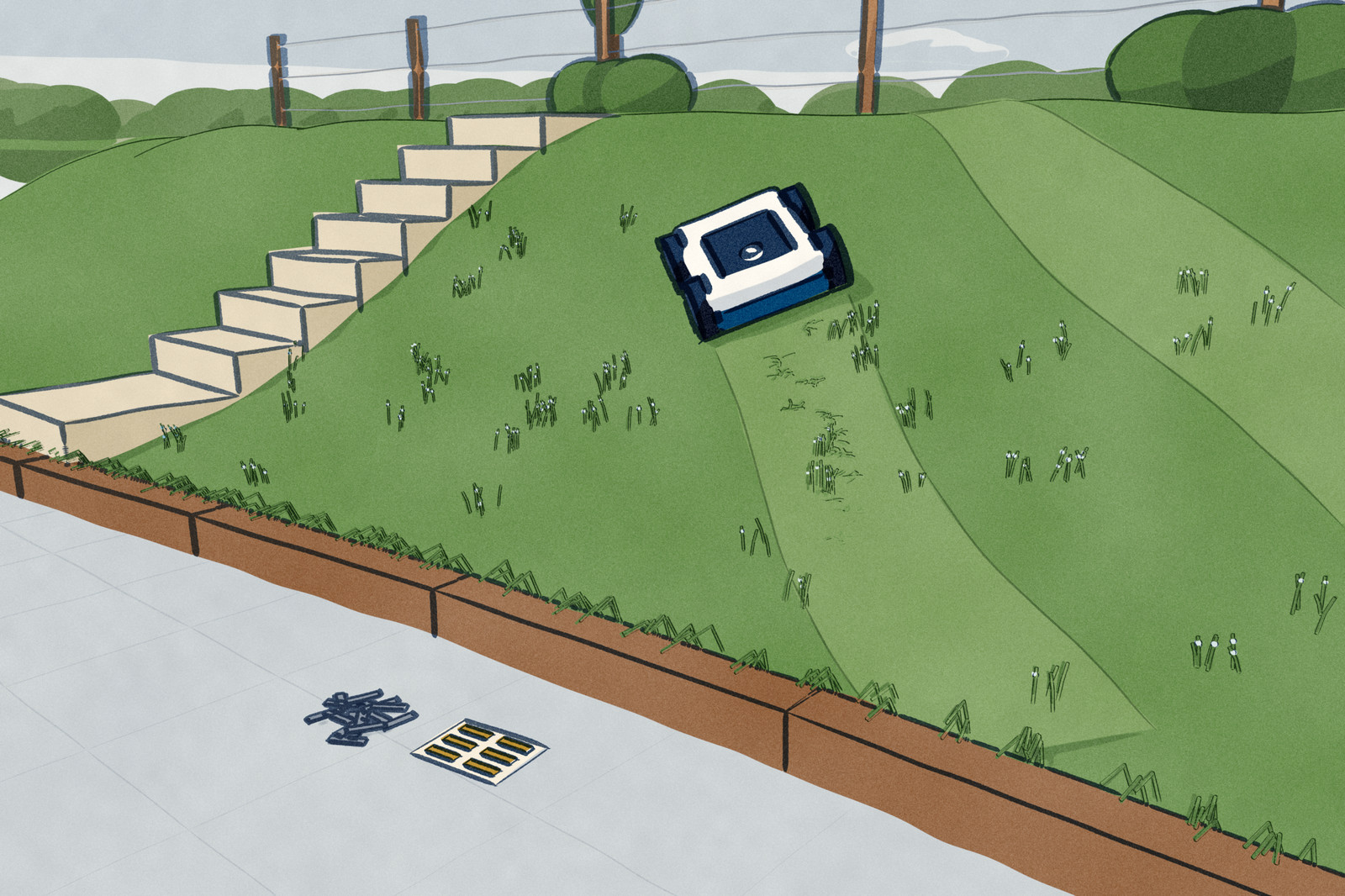
Every three months or 150 hours of mowing, the LUBA 2 AWD gets new cutting blades, and sooner in thick grass. A season from April through October runs seven months, so that’s two changes a year. Wet grass adds a chore: it clings to the blades and the underside, and Mammotion advises against mowing it.
The blades come by the pack. Mammotion sells its Endurance blades 24 to a $49 pack, made to fit all of its mower series. Each blade also gets flipped halfway through its life, at 50 hours, before it’s replaced at 150. Mammotion’s figures come from tests on Zoysia grass.
Husqvarna’s own longer-life blades start at $26.99 for six. They fit models including the 115H, the Automower 430XH and the current 400-series iQ mowers, and Husqvarna says they last more than twice as long as its classic blades.
Husqvarna times the change by the season instead of the hour. New blades and screws go on before the mower is stored, so the edges don’t rust over winter. Skip that, and they go on before the first cut in spring. Either way, that’s at least one change a year.
The battery and the connection
An Automower battery typically lasts between 2 and 5 years, and less on a big lawn full of obstacles, on uneven ground or under daily mowing. A worn one gives itself away. The mower heads back to charge more often, or it stops on the lawn with an empty battery and no error message.
For a new one, Husqvarna sends you to a dealer. Mammotion sells the removable pack for its smaller LUBA mini AWD 1500 for $209. The largest battery the LUBA 2 AWD takes lists at $355 at Midwest Turf Tech, a Minnesota mower retailer, though it was sold out in late September 2026.
In year one, the connection costs nothing on any of these mowers. Automower Connect comes with a 10-year mobile data contract at no extra charge. The LUBA 2 AWD’s 4G service is free for its first year.
Mammotion’s newer LUBA 3 AWD 3000 and 5000 drop the physical station. A network correction service the company calls iNavi does its job and is listed as free for life. That takes the pole, the stake and the spring remap off your calendar, and ties the mower’s positioning to a network service instead.
Putting the machine away
An Automower spends the winter indoors with its charging station, somewhere dry and above freezing. The NERA models split the station in two. Only the top comes in, and the baseplate is built to stay outdoors through the cold.
The mower goes away fully charged and switched off. Most models then need nothing until spring, though some older ones want a charge every three months. The boundary wire stays in the ground all winter, and so does the guide wire, if the mower has one.
Term
Guide wireOn a wire-guided Automower, the guide wire is a second buried wire, separate from the boundary loop that marks the edge of the lawn. Husqvarna says it helps the mower find its way back to the charging station from a remote corner.The LUBA 2 AWD asks for more. It goes into storage fully charged and needs another full charge every 90 days while it sits, and Mammotion’s storage article sets the floor at 80 percent before you switch it off. You clean the robot, put anti-corrosion lubricant on its charging pads and bring it inside.
The charging station comes up too, power supply and all, with its stakes pulled and cleaned. In spring you set it back in the lawn, relocate it in the app and map a new channel between the station and the mowing area.
What stays outside all winter
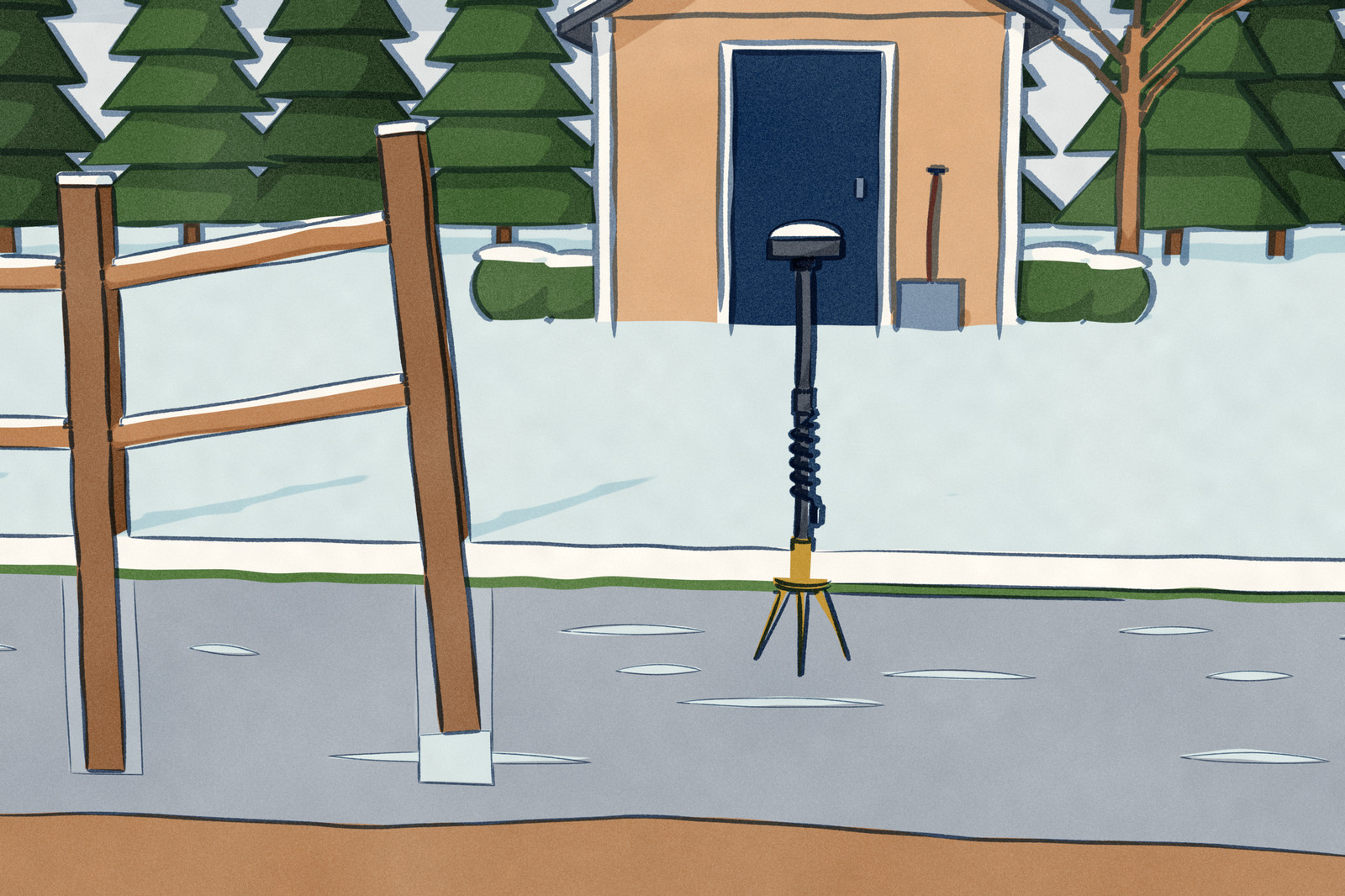
An RTK mower works out its position relative to the reference station. The corrections assume the station stands exactly where it stood when you mapped the lawn. Move the station and every stored boundary shifts with it on the ground.
So the map survives only as long as the station stays put. Leave it standing, unplugged, covered and unmoved, and you won’t need to delete the map and remap in spring. The station’s ground mount is two mounting poles on a trident ground stake, set in the lawn’s soil.
And soil moves. Where the ground freezes and thaws, frost heave pushes fence posts up and out of line, and a stake in the same lawn gets the same push. Mammotion’s documentation doesn’t say how far the station can shift before the mapped edges shift with it.
A wall gets the station off the soil. Mammotion sells an RTK wall mount kit for $139, pitched as a way to improve the satellite signal. In the coldest winters, a station on a wall or roof can come indoors and go back up without a remap, because its position hasn’t changed.
Robovations database
How often each LUBA 2 AWD task comes around
Mammotion LUBA 2 AWD
Blade inspection for debris wrap and grass buildup, 15 minutes.
Wipe the reference station antenna and check its view of the sky is still clear, 10 minutes.
Dock contacts cleaning and undercarriage mud removal, 20 minutes. The mower and dock are rated IPX6, so a gentle hose rinse is within spec; a pressure washer is not.
Rotate or replace the cutting blades. Two discs carry three blades each, so blades are consumed six at a time; Mammotion sells them in multipacks.
Firmware check and a fresh mapping pass over any landscaping that has changed, 30-45 minutes.
Battery performance testing and dock firmware update, 1 hour.
As neededWheel replacement. The Omni wheels are solid moldings that bolt off; there is no tire to repair or inflate.
Each LUBA 2 AWD upkeep task, placed on the interval at which it recurs. A larger dot marks a task that comes around more often.
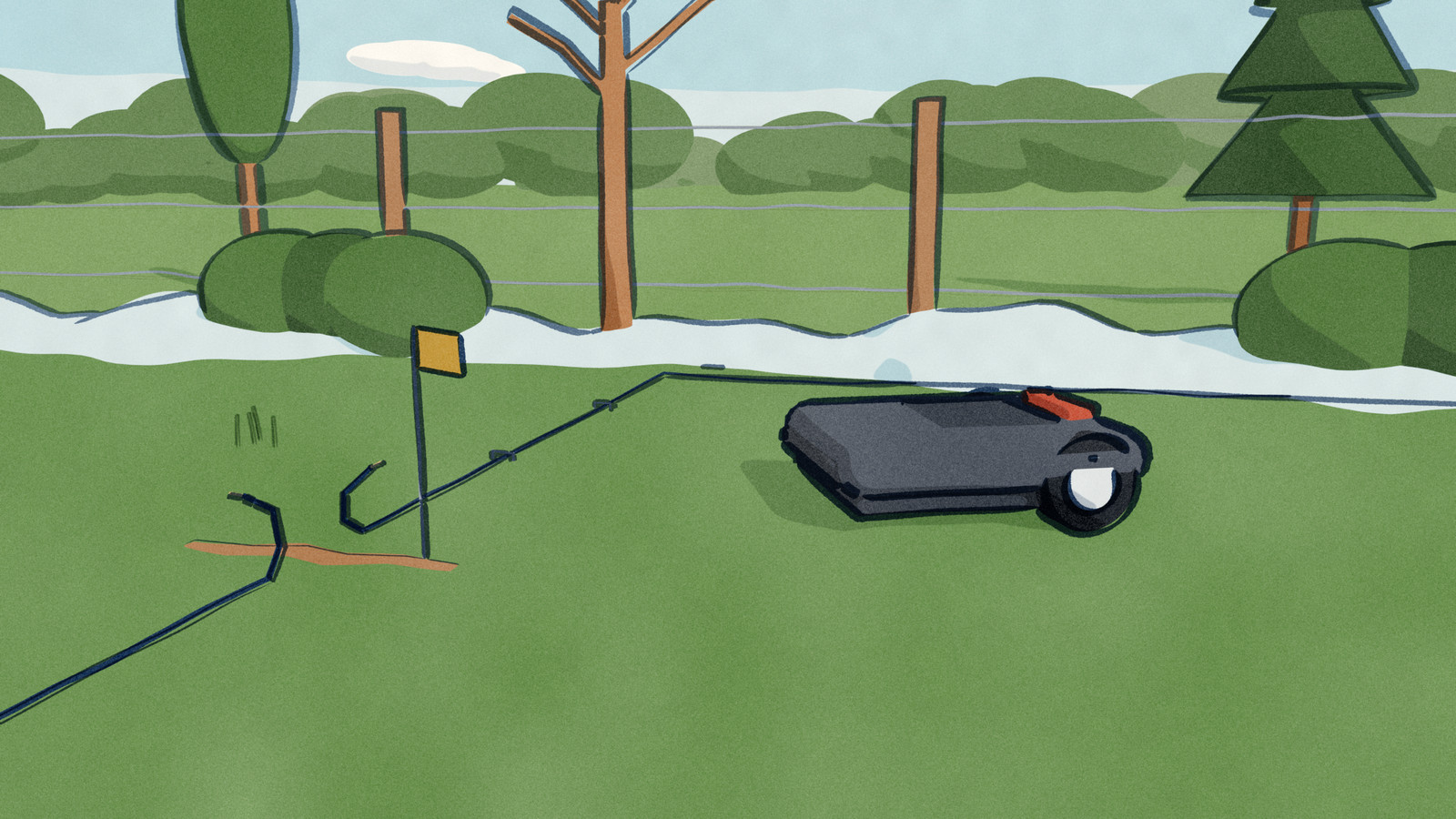
A buried wire has its own spring job. Husqvarna’s spring checklist asks you to walk the garden and check the boundary wire for pulled stakes and visible damage. A break anywhere in the loop cuts the signal the mower reads to find the edge, so the mower stops until the break is found and joined.
An Automower that uses a local reference station instead of a wire has less to do. If the station was stored for winter, it goes back on its mount and gets plugged in, and your season can start.
So what does the year come to? Blades are the easy part: a pack or two for a LUBA 2 AWD, about $50 to $100. The battery is the big line. If that $355 pack lasts as long as Husqvarna says an Automower’s does, two to five years, you’d set aside about $70 to $180 a year for it.
All in, a LUBA 2 AWD’s year comes to roughly $120 to $280 in parts, less than one replacement battery, with the 4G connection free the first year. The $139 wall mount is extra and paid once, if you want the station to come in for winter without costing you the map.
An Automower’s year is harder to total. Its blades start at $27 a pack, and its connection is covered for ten years. But the battery and the dealer winter service Husqvarna suggests, with firmware updates, diagnostics, new blades and a battery test, carry no price on its pages.
Then there’s the cost that never shows up as a price. Leave the LUBA’s station on its stake to keep the map, and the frost decides whether it still stands where the map thinks it does. You find out on the first mow of spring, when the mower either meets your lawn’s edges or misses them.