
Wybot Osprey 700
Cordless pool cleaner trading tether-for smart-mapping convenience in standard residential pools. Best suited for owners prioritizing cable-free operation and accepting seasonal cartridge replacement.
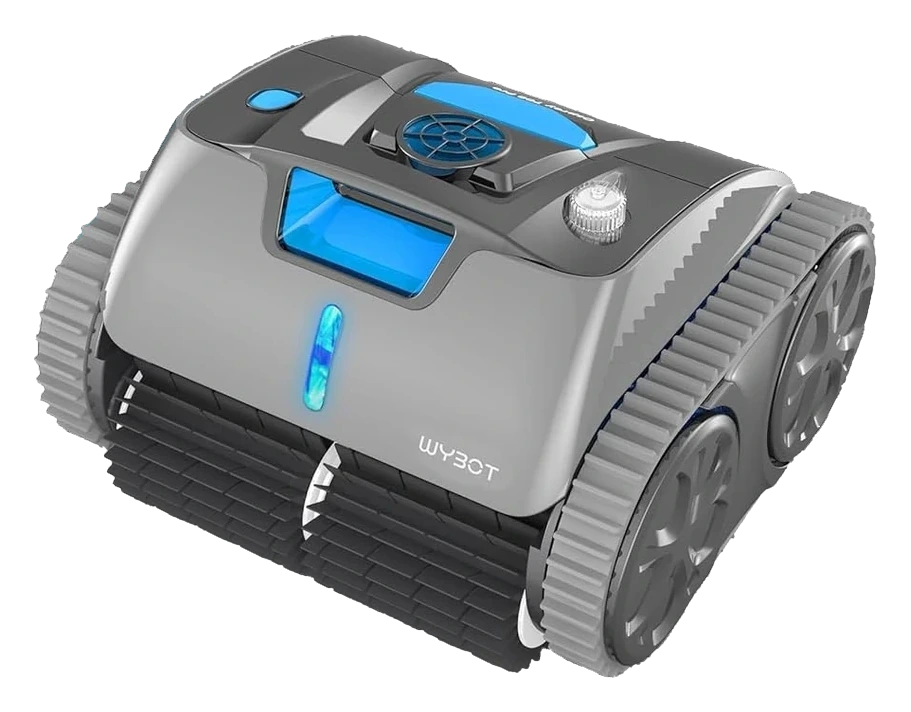
Will the Wybot Osprey 700 work in your pool?
Describe your pool using the controls. Each choice reads the spec sheet for you, flagging where the Wybot Osprey 700 is built for your space and where it isn’t.
A classification of fit for the conditions you set, not a recommendation. Verdicts describe engineering design intent, not test results.
The full spec sheet.
Priced below the category median, with every figure charted against the category below.
- Footprint
- 11.2 × 18.9 in · 7.5 in tall
- Weight
- 17.6 lbs•
- Battery
- 95 Wh · Li-ion
- Wi-Fi
- Supported
- Cycle length
- 110 min•
- Surfaces cleaned
- Floor, walls and waterline•
- Power type
- Cordless battery•
- Max pool length
- 60 ft•
- Filtration
- 180 micron•
Onboard A-star route planning driven by sensors and gyroscopes, dedicated wall-climbing path, floor and waterline coverage in a single cycle
Position shows where the figure sits across the tracked category, not a quality judgment.
Living with it.
Solid post-firmware; motor bearing noise and battery degradation at 18 months manageable via replacement.
Firmware v2.3 calibration reduced early motor noise from 2% of units. Battery capacity drops 15% by month 18; dock contacts develop mineral corrosion but cleaning prevents operational impact.
$589 to buy, then about $60 a year for the replaceable parts below. Over three years that is roughly $180 past the sticker price. Excludes electricity and any repairs.
- Cartridge
Replacement cadence from the maintenance schedule; prices shown where the source documents them.
CautionBrush surface reaches 480 rpm: Manual contact during operation risks skin abrasion; no auto-shutoff on human touch detection present.
NoteMisses small obstacles: Avoidance range is about 30 inches; small objects below that threshold go undetected.
CautionUngrounded power supply without mandated GFCI: 120V AC dock lacks ground-fault protection beyond standard breaker; GFCI outlet recommended.
How the assessment has moved.
Every announcement, release and reassessment behind the current classification.
-
Aug 2026 · AssessmentRobovations Score revised 62 → 57
-
Aug 2026 · AssessmentRobovations Score rescored under v4.2: 58 → 62
-
Aug 2026 · AssessmentRobovations Score rescored under v4.0: 71 → 58
-
Jul 2026 · AssessmentRobovations Score revised 68 → 71
-
Jul 2026 · AssessmentRobovations Score revised 75 → 68
-
Apr 2026 · AssessmentRobovations Score recorded at 75 of 100
-
Mar 2025 · NewsRetail price reduced to $699 from $799 launch MSRP
-
Jul 2023 · ReleaseLaunches commercially in North American market
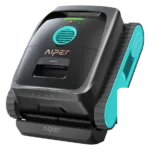
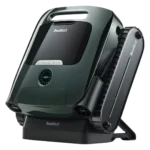
How Wybot Osprey 700 compares.

What people actually ask.
OperationDoes the Osprey 700 operate autonomously once it is in the water?
OperationWhat runtime does a full charge provide?
OwnershipHow often do filter cartridges need replacement, and what do they cost?
OperationCan the robot climb walls autonomously?
CompatibilityDoes the Osprey 700 require WiFi for basic operation?
OperationWhat happens if the battery depletes mid-cycle?
OperationIs winterization required for off-season storage?
OperationHow does the unit decide where to clean?
 III
III
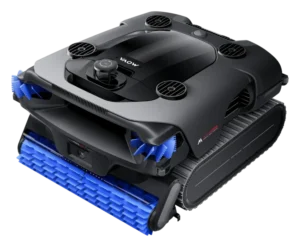
MOVA Rover X10
 III
III
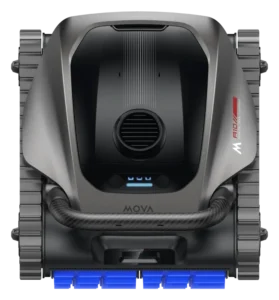
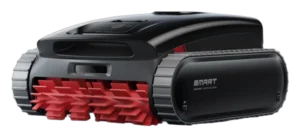
MOVA Diver A10
 III
III
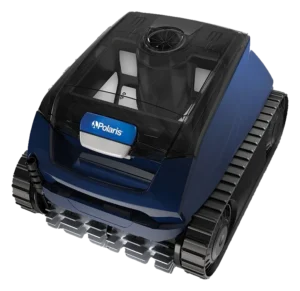
Roborock RockAqua P1
 III
III
Polaris EPIC 8520
Where it's sold
We may earn commission from qualifying purchases. This does not influence classification.
We are no longer finding a current new-stock listing for this robot. Remaining offers may be used, refurbished, or third-party — confirm the condition and price on the retailer’s page before buying.
Reference the Wybot Osprey 700 classification.
Embed the Autonomy Ladder™ mark or copy the citation. The mark is served from this record, so a reassessment updates it on your page automatically.
Get the embed code and citation
Scale proportionally only, up to 2× (536px wide)(224px wide). No recolouring, cropping, rotating, or re-typesetting.
Robovations. "Wybot Osprey 700: Autonomy Level III (Conditional Autonomy)." Autonomy Ladder™, assessed August 2026. https://robovations.com/robots/wybot-osprey-700-robotic-pool-cleaner/
- Link it. The mark must point at this record. An unlinked mark is not authorised.
- Hot-link it. Never download, self-host, or re-upload the image. A saved copy stops updating, and a mark that has stopped updating is a claim we no longer stand behind.
- A classification, not an endorsement. It may not appear beside language implying Robovations recommends, rates, or approves the product.