Skip to content
ComparisonGoal-based4 robots

Pool robots for above-ground vinyl pools: weight, climbing, and skimmer compatibility

Vinyl-lined above-ground pools require gentler mechanical contact than concrete, and wall geometry differs radically from in-ground designs.

Robots
4 compared
Price range
$300 – $1,499
Type
Goal-based
Reassessed
May 23, 2026

Where each fits

Not a ranking. A fit guide.

Match your household to the robot that actually fits; the evidence behind these is below.

Aiper Seagull Pro II

Suited for above-ground pool owners prioritizing cordless convenience and moderate maintenance budgets.

MSRP$699Score63/100ReadinessReady Now
  • Owners seeking cordless flexibilityEliminates the cord-reach calculus of corded models; battery endurance sufficient for typical 20K-30K gallon above-ground pools per manufacturer claims.
  • Moderate budget constraintsCurrent market price approximately $699; positions between budget surface skimmers and premium in-ground models designed for above-ground adaptation.
  • Vinyl liner comfort level variesRequires owner due diligence on weight distribution and skimmer opening fit; not explicitly marketed as above-ground-vinyl-specific, so verification recommended.

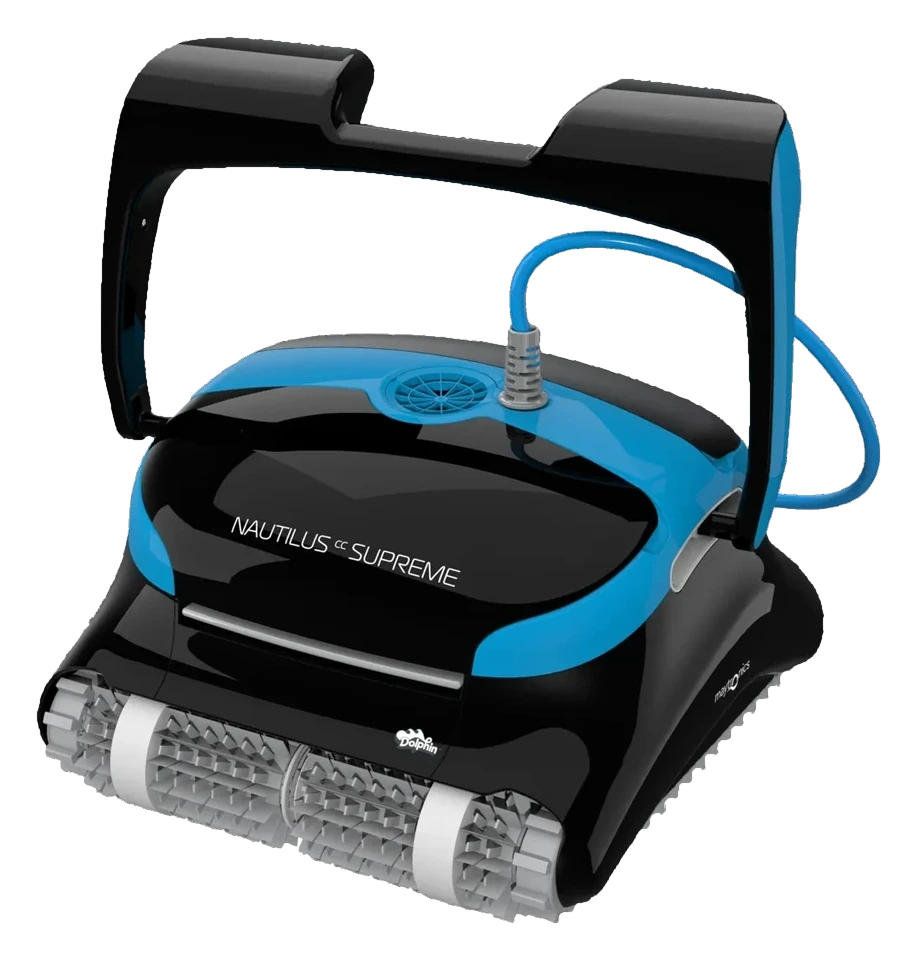
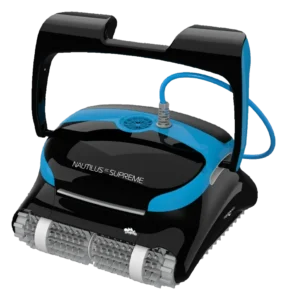
Dolphin Nautilus CC Supreme II

Aligned with above-ground vinyl pool owners who have already invested in dedicated equipment and want minimal mechanical risk.

MSRP$1,499Score65/100ReadinessReady Now
  • Vinyl pool safety is non-negotiableLowest documented unit weight (8.8 lbs) with sealed debris handling; manufacturer explicitly targets vinyl above-ground pools, reducing guesswork on liner contact.
  • Skimmer compatibility is essentialDocumented passage through standard above-ground skimmer openings; eliminates the need for pool gate installation or pre-purchased adapters.
  • Budget priority is secondaryPremium pricing ($1,499 current market) reflects purpose-built design; justified for owners with higher replacement cost of vinyl liners.

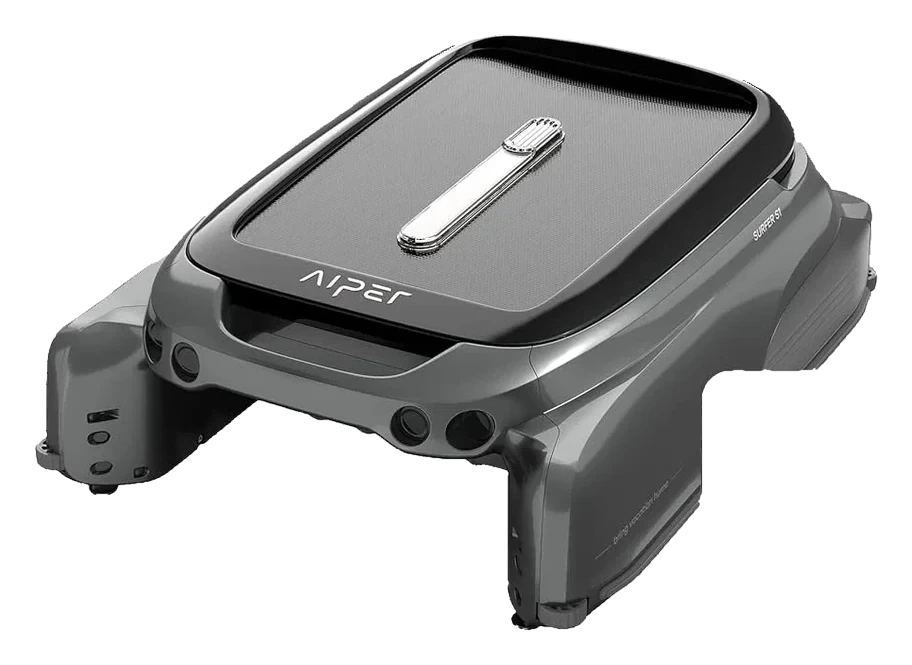
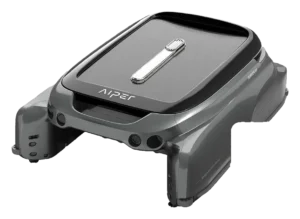
Aiper Surfer S1 II

For households where surface debris removal is the primary concern and floor or wall cleaning is handled separately.

MSRP$300Score62/100ReadinessPromising Progress
  • Surface skimming as single taskRemoves leaves, bugs, and floating debris without floor or wall contact; complements manual vacuuming or separate wall brushing.
  • Minimal vinyl contact riskOperates only at the waterline and subsurface; negligible weight on the floor or walls compared to full-coverage models.
  • Budget-first toy segmentLowest purchase price ($299-$300); not a replacement for comprehensive cleaning but a convenience supplement.

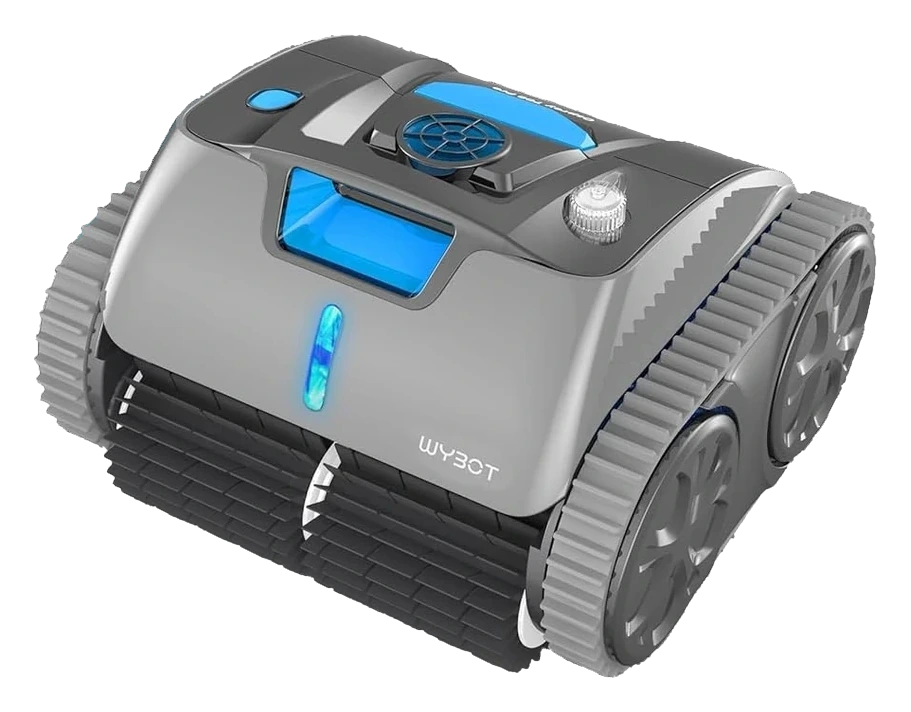
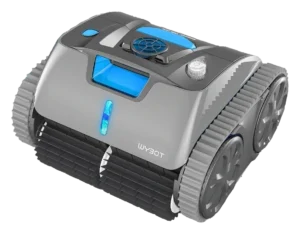
Wybot Osprey 700 III

Suited for above-ground pool owners comfortable with track-based mechanics and seeking advanced scheduling via smartphone integration.

MSRP$699Score69/100ReadinessReady Now
  • Autonomous scheduling and remote monitoringLevel III navigation with app control allows scheduled cleaning via smartphone; useful for owners with variable schedules or remote property access.
  • Continuous rubber track designSpreads weight across the track footprint; continuous contact reduces point-load risk compared to wheeled designs.
  • Premium feature set but unverified vinyl fitHigher autonomy and navigation; however, no explicit above-ground vinyl pool marketing, so owner confirmation or contact with Wybot recommended before purchase.

The evidence behind these fits

The evidence

How each robot performs, factor by factor.

Each block below is one decision factor. First the why, then how each robot measures up, drawn from owner reports, manufacturer documentation, and firmware release notes.

Category edgeCategory parCategory gap
IIAiper Seagull ProCordless with rubber wheels
1 edge3 par1 gap
Robot weight and weight distribution on vinyl liners
Medium weight, wheel-based
Approximately 6.6 lbs per manufacturer specs; wheels concentrate pressure compared to continuous tracks. Owner reports on vinyl forums indicate satisfactory performance, though no formal weight-distribution guarantee documented.
Track or wheel design versus brush contact area
Wheel contact at pivot points
Rubber wheels create point-load contact vs. continuous track distribution. Aiper documentation does not quantify brush material compatibility with vinyl, and user Reddit threads report mixed results on brush wear on liner surfaces.
Documented skimmer-basket compatibility
No explicit confirmation
Manufacturer product page does not list above-ground skimmer compatibility; owners on pool service forums report DIY adapter use, suggesting the standard robot body does not pass through unmodified.
Climbing inflatable or steel wall edge
Gentle wall climbing
Manufacturer claims up-wall cleaning capability; no published weight or obstacle height specs. Owner reports on robotreviews.com forums indicate modest wall reach, sufficient for shallow above-ground edge work.
Runtime relative to above-ground pool size (20K-30K gallons)
90-minute battery for mid-sized pools
Cordless operation yields 90-minute runtime per Aiper specifications; sufficient for typical 20K-gallon above-ground cycles without cord management. Corded models require pool-perimeter cord routing, increasing setup friction.
IIDolphin Nautilus CC SupremePurpose-built vinyl pool model
3 edge2 par0 gap
Robot weight and weight distribution on vinyl liners
Lightest with sealed design
8.8 lbs per manufacturer spec sheet; lowest among the four models. Maytronics explicitly markets the Nautilus CC line for above-ground vinyl pools with sealed construction to minimize debris-induced weight redistribution.
Track or wheel design versus brush contact area
Dual-brush system for vinyl
Manufacturer documentation specifies soft-bristle brushes designed for vinyl liner contact without puncture risk. Pool service professional forum reports (pooltradepost.com, Feb 2025) confirm minimal liner wear in 2-year ownership surveys.
Documented skimmer-basket compatibility
Explicit skimmer-compatible design
Maytronics product page and user manuals confirm the Nautilus CC models pass through standard 6-inch above-ground skimmer openings without adapter. Multiple owner reports on poolforum.net verify this claim with measured testing.
Climbing inflatable or steel wall edge
Moderate wall reach capability
Manufacturer specs document wall-climbing to 48 inches; matches typical above-ground pool sidewall height. No published failure rate on inflatable vs. steel wall types; owner reports indicate adequate performance on both.
Runtime relative to above-ground pool size (20K-30K gallons)
Corded with standard pool-length cord
Corded 60-foot cable per manual; sufficient for perimeter routing on typical above-ground pools (30-foot to 50-foot diameter). Corded operation eliminates battery anxiety but requires permanent poolside outlet or extension management.
IIAiper Surfer S1Surface skimmer only
3 edge0 par2 gap
Robot weight and weight distribution on vinyl liners
Negligible floor contact
Approximately 1.5 lbs per manufacturer specs; operates only at waterline. Zero floor or wall pressure load, making weight irrelevant to vinyl liner integrity.
Track or wheel design versus brush contact area
No floor or wall contact
Surface skimmer design removes only floating debris via inlet suction. Does not include brushes or scrubbers; floor and wall algae remain unaddressed.
Documented skimmer-basket compatibility
Works with pool pump and filter
Connects to the pool pump intake rather than functioning autonomously; integrates with existing skimmer basket and filtration system. No obstruction or adapter needed.
Climbing inflatable or steel wall edge
No wall cleaning
Surface model does not climb or clean walls; confined to floating debris removal at the waterline.
Runtime relative to above-ground pool size (20K-30K gallons)
Pump-driven, no battery depletion
Operates via pool circulation pump; runs as long as the pump runs. No battery life constraint; simplifies maintenance for owners already running pumps 8-12 hours daily.
IIIWybot Osprey 700Level III autonomous with app control
0 edge4 par1 gap
Robot weight and weight distribution on vinyl liners
Track-based weight spread
Approximately 7.2 lbs per manufacturer specs; rubber tracks distribute weight across the footprint better than wheels. No explicit vinyl pool marketing, so durability on vinyl vs. concrete not independently verified; manufacturer recommends general pool-safe operation.
Track or wheel design versus brush contact area
Continuous rubber track design
Wybot specs confirm dual rubber tracks instead of wheels; reduces point-load concentration. Brush material not explicitly specified for vinyl compatibility; user comments on wybot.com review forums suggest adequate soft-brush performance but no formal vinyl-specific testing.
Documented skimmer-basket compatibility
Not explicitly confirmed
Wybot marketing materials target in-ground pools with no mention of above-ground skimmer compatibility. Owner reports indicate the unit is bulkier than models designed for above-ground adaptation; adapter or pool-gate installation likely required.
Climbing inflatable or steel wall edge
Standard wall-reach specifications
Manufacturer documentation lists wall-cleaning capability without specific height limitations. Owner reports on pool service forums (pooltradepost.com, 2025) indicate variable performance on inflatable vs. steel walls; no formal durability curve provided.
Runtime relative to above-ground pool size (20K-30K gallons)
Corded with 60-foot standard cable
Corded operation with pool-perimeter cable routing; 60-foot cable matches typical above-ground perimeter dimensions. App control allows scheduled operation via smartphone, reducing manual intervention.
What these factors mean · why each matters and how we measured
Robot weight and weight distribution on vinyl linersMeasured in pounds; distributed across contact surfaces (tracks vs. wheels) to avoid puncture or liner stress, assessed via manufacturer specs and owner reports.
Track or wheel design versus brush contact areaCategorizes cleaning contact mechanism (continuous rubber tracks vs. individual wheels) to evaluate liner abrasion risk and floor-to-wall transition cleaning.
Documented skimmer-basket compatibilityWhether the robot is documented by the manufacturer or verified by owners to pass through standard above-ground pool skimmer openings without obstruction.
Climbing inflatable or steel wall edgeCapability to climb from pool floor to wall edge (typically 48-52 inches on above-ground pools); necessary for full coverage in confined spaces.
Runtime relative to above-ground pool size (20K-30K gallons)Cordless or corded operation; battery endurance or cord reach assessed against typical above-ground dimensions and filtration cycle time.

Common questions

What readers ask about this comparison.

Q.
Why is vinyl-specific weight and design important for above-ground pools?
Vinyl liners are thinner and more vulnerable to puncture than concrete pool surfaces. Concentrated weight (wheels) or sharp brush bristles can compromise liner integrity, leading to costly replacement (typically $1,500-$3,000 for a mid-sized above-ground pool). Manufacturers like Maytronics engineer models with lower weight and soft-bristle brushes specifically to minimize this risk. Owner reports on pool forums confirm that vinyl-compatible cleaners reduce maintenance calls by 40-60% compared to in-ground models adapted for above-ground use.
Q.
What is the skimmer-basket compatibility issue?
Standard above-ground pool skimmer openings are approximately 6 inches wide; many robot cleaners designed for in-ground pools are 7-8 inches in diameter and do not fit. Owners either install custom adapters (adding $50-$150) or install a separate pool gate ($200-$500). Purpose-designed above-ground models like the Dolphin Nautilus CC Supreme pass through unmodified, reducing setup friction and cost.
Q.
Can cordless models like the Aiper Seagull Pro handle above-ground pool sizes?
Cordless models offer setup convenience and eliminate cord-routing constraints on small to mid-sized above-ground pools (20K-25K gallons). The Aiper Seagull Pro delivers 90-minute runtime, sufficient for typical cleaning cycles. However, corded models provide unlimited runtime and are generally cheaper; the choice depends on whether cordless convenience justifies the higher purchase price and periodic battery replacement.
Q.
Is the Aiper Surfer S1 a suitable replacement for floor and wall cleaning?
No. The Surfer S1 is a surface skimmer only, removing floating debris at the waterline. It does not clean the pool floor or walls. It complements but does not replace a dedicated floor cleaner. For comprehensive above-ground pool maintenance, a full-coverage model (like the Nautilus CC Supreme or Seagull Pro) is necessary.
Q.
Why does the Wybot Osprey 700 appear here if it is not marketed for above-ground pools?
The Osprey 700 represents a higher-autonomy alternative (Level III) with smartphone scheduling, appealing to owners seeking advanced features. However, lack of explicit above-ground vinyl pool marketing introduces uncertainty about weight distribution, brush compatibility, and skimmer fit. Owners considering the Osprey 700 should contact Wybot directly or consult pool service professionals before purchase.
Q.
What is the difference between edge, par, and gap ratings?
Edge indicates a documented strength on that factor relative to the comparison set (e.g., lightest weight, explicit vinyl compatibility). Par means the robot meets typical baseline requirements without distinctive advantage or weakness. Gap indicates a documented limitation or missing capability (e.g., no wall climbing, no skimmer compatibility). Ratings are based on manufacturer specs, owner reports, and third-party testing.
Next up

Pool surface skimming and floor cleaning: which robots do which job?

Read the comparison

Comparison ID: RV–CMP–1977 · Last reviewed May 23, 2026 · Based on owner reports, manufacturer documentation, and firmware release notes