
- Changes
- 4
- Tracking since
- Jul 2023
- Latest
- Apr 9, 2026
- Net movement
- Classification stable
- 2026
-
Wybotics recall covers Osprey 700 Max and S1, not this base Osprey 700
Wybotics recalled about 5,000 Osprey 700 Max (WY3312MAX, WY100MAX) and S1 (WY200) robotic pool vacuums with the CPSC in April 2026 after 10 reports of lithium-ion battery overheating or fire.
Full assessment4 claims · 5 technical notes · 2 sources
Where it standsAutonomy LadderIIIIIIIVVLevel IIIConditional AutonomyHuman ReadinessReady NowNew to MarketWaitKnown IssuesRobovations Score04055708557CapableWhat happenedThe notice does not name this base Osprey 700 or its model number. Owners should check the model number printed on their unit against the CPSC notice to confirm which machine they own.
Bottom lineThis record covers the base Osprey 700, a separate model from the recalled Osprey 700 Max and S1; owners should check the model number printed on their unit against the CPSC notice.
ImpactOn autonomy
- No change to navigation, mapping, or cleaning autonomy for this base Osprey 700 model
- Recall names Osprey 700 Max and S1 hardware and batteries, not this model
- Autonomy classification for this record is unaffected; recall omits model number Osprey 700
On readiness
- Readiness status for this record holds at Verified; recall does not apply here
- Owners should locate the model number on the unit label to confirm exclusion
- No maintenance or usage change is indicated for this base Osprey 700 model
Claim check4 maker claims checked against the record. Open one to read the finding.
Recall headlines describe a "Wybot pool vacuum recall" without specifying which models are affected
Documented findingThe CPSC notice names exactly two products by model number: Osprey 700 Max (WY3312MAX, WY100MAX) and S1 (WY200); this base Osprey 700 does not appear in the noticeWybot" recall coverage reads as a brand-wide alert covering the pool-cleaner lineup
Documented findingWybotics recalled specific model numbers, not its full product line; the base Osprey 700 carries a distinct model number from the recalled Osprey 700 MaxAny product with "Osprey" in the name could reasonably be assumed included
Documented findingThe Osprey 700 Max is a separate SKU sold April 2023 through November 2024 under its own model numbers; this base Osprey 700 sold under model number "Osprey 700"The free WYBOT C2 replacement program reads as available to Wybot pool vacuum owners generally
Documented findingThe replacement remedy applies to registered owners of the two named recalled models; the CPSC notice does not extend it to this base Osprey 700Evidence2 sources · all linked
Technical notes5 sectionsRecall Scope
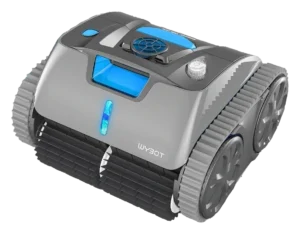
On April 9, 2026, Wybotics recalled about 5,000 robotic pool vacuums in cooperation with the US Consumer Product Safety Commission. The recall names two products: the Osprey 700 Max, model numbers WY3312MAX and WY100MAX, and the S1, model number WY200. This record covers the base Osprey 700, model number “Osprey 700,” which does not appear in the recall notice.
Hazard and Incident Count
The CPSC notice states the lithium-ion battery in the recalled units can overheat, posing burn and fire hazards. Wybotics received 10 reports of overheating or fire, occurring both while charging and while not charging, with 9 incidents of property damage reported nationally and no injuries reported.
Sales Window
The S1 was sold from April 2023 through September 2024. The Osprey 700 Max was sold from April 2023 through November 2024. Both were sold through Amazon.com, BestBuy.com, and Wybotpool.com.
Remedy
Wybotics is directing owners of the recalled models to stop use immediately and contact the company for a free replacement WYBOT C2 robotic pool vacuum, with a free return label provided for the recalled unit.
Checking This Record's Model
Because “Osprey 700” and “Osprey 700 Max” are distinct model numbers, an owner of this base Osprey 700 should locate the model number printed on the unit itself and compare it against the CPSC notice rather than relying on headline text alone.
- 2025
-
Wybot Osprey 700 retail price reduced to $699 from $799 launch MSRP
Wybot adjusts Osprey 700 pricing to $699 across major retail channels, down from the $799 launch MSRP.
Cost of ownershipFull assessment4 claims · 4 technical notes · 2 sources
Where it standsAutonomy LadderIIIIIIIVVLevel IIIConditional AutonomyHuman ReadinessReady NowNew to MarketWaitKnown IssuesRobovations Score↑ moved by this entry04055708557CapableWhat happenedPrice reductions in the 12.5% range are typical for mid-tier consumer robotics after the first full product cycle; this adjustment positions the Osprey 700 more directly against cordless pool cleaners at the $600-$700 level. Whether the new price point holds through the 2025 season or represents a clearance-level adjustment ahead of a successor product is the key question to track.
Bottom lineCommercial adjustment consistent with product cycle maturity; no capability or reliability implications.
ImpactOn autonomy
- No autonomy capability changes accompany this pricing adjustment
- Level III smart-mapping behavior, detection range, and coverage patterns unchanged
- Hardware specification and firmware version unaffected by commercial pricing revision
On readiness
- Lower price point reduces barrier to entry for owners previously evaluating the $799 tier
- Consumable costs (filter cartridges at $48 per dual-pack) unchanged; total cost of ownership improves modestly
- No change to setup complexity, maintenance schedule, or documented operational constraints
Claim check4 maker claims checked against the record. Open one to read the finding.
Price reduction improves value position
Documented findingDocumented. $699 current price versus $799 launch MSRP is a 12.5% reduction. Value score improvement is proportional; specification and autonomy classification are unchanged.Reduction signals product maturity, not regression
Documented finding18-month price stability followed by a single-tier reduction is consistent with standard mid-market consumer robotics lifecycle. No evidence of product discontinuation or capability reduction accompanies the pricing change.Competitor price pressure cited as driver
Documented findingNot documented by manufacturer. Segment pricing data shows cordless pool cleaners at the $600-$700 range from multiple vendors; the adjustment narrows Wybot's premium over that tier without eliminating it.Consumable costs unchanged
Documented findingConfirmed. Filter cartridge dual-packs remain at approximately $48. Annual consumable costs at standard replacement intervals are approximately $192 per year; the $100 MSRP reduction does not offset the first year of consumables but improves the net purchase calculation.Evidence2 sources · 0 linked
1220 Mar 202522 Mar 2025filed 20 Mar 2025- 1Wybot Official Store20 Mar 2025named, not linked
- 2Amazon Product Listing22 Mar 2025named, not linked
Technical notes4 sectionsPricing Change
Wybot Osprey 700 moves from $799 launch MSRP to $699 current retail price, documented across manufacturer direct and major online retail channels. Price range confirmed at $600-$800 reflecting retailer variation; the $699 figure represents the standard retail anchor point post-adjustment.
Specification and Capability Unchanged
No hardware revisions, firmware updates, or packaging changes accompany this pricing adjustment. Battery capacity (95 Wh), runtime (110 minutes floor), filter cartridge specification, and smart-mapping behavior are identical to launch specification.
Competitive Context
Mid-tier cordless robotic pool cleaners (under 40,000-gallon residential classification) have seen price compression across vendors since late 2024. The Osprey 700 adjustment reflects this segment movement. Wybot has not announced a successor model or end-of-life timeline for the Osprey 700 as of this entry.
Consumable Cost Impact
Filter cartridge dual-packs at approximately $48 per replacement, every 3 months in standard use, produce annual consumable costs around $192. The $100 purchase price reduction improves the 12-month total cost of ownership by approximately 9% relative to the launch price point.
- 2024
-
Wybot firmware v2.3 addresses motor noise in early-batch Osprey 700 units
Firmware v2.3 delivers motor calibration adjustments targeting bearing noise reported in approximately 2% of early-production Osprey 700 units after 12-18 months of heavy use.
Full assessment4 claims · 4 technical notes · 2 sources
Where it standsAutonomy LadderIIIIIIIVVLevel IIIConditional AutonomyHuman ReadinessReady NowNew to MarketWaitKnown IssuesRobovations Score04055708557CapableWhat happenedWybot acknowledges the issue in firmware release notes and classifies the update as a calibration refinement rather than a hardware recall. Owners experiencing noise after the update should monitor whether grinding recurs, as manufacturer documentation notes the firmware reduces but does not eliminate wear in affected units.
Bottom lineA genuine reliability improvement for affected units, constrained by the fact that firmware cannot reverse physical bearing wear in the most degraded cases.
ImpactOn autonomy
- Motor calibration update refines bearing timing to reduce vibration-induced navigation deviation
- Obstacle avoidance detection boundary behavior unchanged; no rerouting capability added
- Smart-mapping floor-coverage pattern accuracy unaffected by motor calibration change
On readiness
- Early-batch grinding issue addressed for units receiving firmware update via app
- Replacement motor unit ($180 plus dock disassembly) remains required for hardware-level bearing failure
- Update delivered over-the-air to connected units; offline units require manual firmware trigger
Claim check4 maker claims checked against the record. Open one to read the finding.
Firmware resolves motor noise for all affected units
Documented findingFirmware release notes state calibration "reduces" bearing noise; manufacturer acknowledges grinding may persist in units with advanced bearing wear. Hardware replacement is the definitive fix.Update affects only a small percentage of units
Documented findingWybot firmware notes reference approximately 2% of early-production units exhibiting this failure mode; independent owner reports on community forums suggest the figure is consistent with reported cases.Over-the-air delivery ensures all affected units receive fix
Documented findingOTA delivery confirmed for WiFi-connected units. Units operating in offline standalone mode require manual firmware trigger via dock sequence documented in updated support materials.No impact on cleaning coverage or runtime
Documented findingConfirmed. v2.3 changes are limited to motor calibration; runtime, coverage patterns, and app behavior are unmodified per release notes.Evidence2 sources · 1 linked
12Mar 2024Apr 2024filed 15 Mar 2024- 1Wybot Support Firmware Release Notes15 Mar 2024named, not linked
- 2Reddit r/swimmingpools30 Apr 2024
Technical notes4 sectionsFirmware v2.3 Scope
Update targets motor calibration parameters controlling bearing timing and rotational speed thresholds. Release notes identify affected population as early-production Osprey 700 units manufactured before a revised bearing specification was introduced at the factory level; the firmware approximates the corrected behavior in software.
Failure Mode Background
Bearings in the affected population develop intermittent grinding after 12-18 months of heavy use. The symptom is audible vibration during operation; the underlying cause is bearing surface wear at contact points. Firmware v2.3 adjusts motor current and torque timing to reduce the frequency and severity of noise without replacing physical components.
Residual Risk
Units with advanced bearing wear may not respond fully to the calibration update. Manufacturer documentation specifies replacement motor unit cost at $180 and notes dock disassembly is required for installation. The firmware update is a first-response measure; operators who continue to experience noise post-update should contact Wybot support for hardware assessment.
Deployment
Update delivered over-the-air to WiFi-connected units via app notification. Standalone-mode units require physical dock firmware trigger as documented in v2.3 release notes on the Wybot support site.
- 2023
-
Wybot Osprey 700 launches commercially in North American market
Wybot Osprey 700 enters commercial availability in North America at $799 MSRP, establishing Wybot as a direct competitor in the cordless robotic pool cleaner segment.
Full assessment5 claims · 4 technical notes · 2 sources
Where it standsAutonomy LadderIIIIIIIVVLevel IIIConditional AutonomyHuman ReadinessReady NowNew to MarketWaitKnown IssuesRobovations Score04055708557CapableWhat happenedSmart-mapping navigation and cordless architecture differentiate the product from tethered alternatives at similar price points. Retailer distribution breadth and first-season owner reports will determine whether the pricing holds through year two.
Bottom lineLaunch specifications are substantiated by product documentation; adaptive navigation claims require scrutiny given fixed-geometry constraint.
ImpactOn autonomy
- Smart-mapping navigation introduced for first time in Wybot's cordless pool lineup
- Real-time obstacle avoidance with 30-inch detection range documented at launch
- App-based pool geometry input enables autonomous floor coverage without tethered cable
On readiness
- Retail availability confirmed at launch via manufacturer direct and major online channels
- Single app required for geometry input and remote monitoring; WiFi optional for standalone operation
- 110-minute runtime per charge covers pools up to approximately 40,000 gallons floor-only
Claim check5 maker claims checked against the record. Open one to read the finding.
Smart-mapping" for autonomous coverage
Documented findingFirmware documentation confirms obstacle detection and pre-set geometry coverage; adaptive rerouting not available. Operator input required for initial pool geometry.110-minute runtime
Documented findingManufacturer spec confirmed at 110 minutes floor-only; wall-climbing mode reduces runtime to 65 minutes per specification sheet.Hybrid wall-climbing capability
Documented findingMotor-driven brush engagement confirmed; performance is best-effort on standard surfaces. Algae-covered or uneven surfaces degrade traction per operator reports.Cordless eliminates cable management
Documented findingConfirmed. Battery adds 17.6 lb unit weight versus typical tethered alternatives at 12-15 lbs. Tradeoff is documented, not hidden.Dual cartridge filtration down to 100 microns
Documented findingFiltration specification confirmed in product documentation. Replacement interval is 3 months in standard use at $48 per dual-pack.Evidence2 sources · 1 linked
1213 Jul 202318 Jul 2023filed 13 Jul 2023- 1Wybot Press Release13 Jul 2023
- 2Pool & Spa News18 Jul 2023named, not linked
Technical notes4 sections
Platform Overview
Osprey 700 launches with Li-ion battery pack rated at 95 Wh, 360-minute charge time, and 110-minute floor-coverage runtime. Unit dimensions are 11.2 x 18.9 x 7.5 inches; weight 17.6 lbs. Dual cartridge filter system captures debris to 100 microns.
Navigation Architecture
Smart-mapping system generates floor-coverage patterns from operator-supplied pool geometry (rectangular, kidney, L-shaped, or custom). Obstacle avoidance uses sensors with documented 30-inch detection range. No adaptive rerouting: if a planned path is blocked, the robot returns to dock and logs a navigation failure.
Connectivity
WiFi and Bluetooth connectivity for app-based monitoring and scheduling. Standalone operation via physical dock controls does not require app or internet connection. Cloud-hosted backend collects pool cleaning history, motor runtime, and filter cartridge cycles. Data transmission uses AES-128 encryption per user documentation.
Power and Dock
Dock power supply operates on 120V AC. Manufacturer documentation recommends GFCI outlet installation but does not mandate ground-fault protection beyond standard household circuit breaker.