Regulation
Recall, Lawsuit, or Regulatory Inquiry: What Actually Happens to a Robot You Own?
Wybotics is replacing about 5,000 overheating pool robots under a CPSC recall. A 2023 lawsuit over Ecovacs motors ordered nobody to fix anything while it ran. Italy's consumer authority searched Vorwerk's offices after Neato robots lost their cloud, and the FCC now blocks new foreign-made robots without touching the ones already sold.
A robot owner can hear about a recall, a lawsuit, a regulatory investigation and an import ban in the same season, often in the same alarmed tone. The four do not work alike. They start from different triggers, answer to different authorities, and bind different people.
Five machines in the Robovations database show where the lines fall, and why only one of the four obligates anyone to act on a specific unit.
Model number, not brand nameA Recall Names the Units It Covers and Sets the Remedy
On April 9, 2026, Wybotics recalled about 5,000 Osprey 700 Max and S1 pool robots in cooperation with the CPSC. The lithium-ion battery can overheat. Ten reports of overheating or fire had come in, nine with property damage.
The notice lists model numbers WY3312MAX, WY100MAX and WY200. The base Wybot Osprey 700 is not among them.
A recall is tied to model numbers, not to a brand.
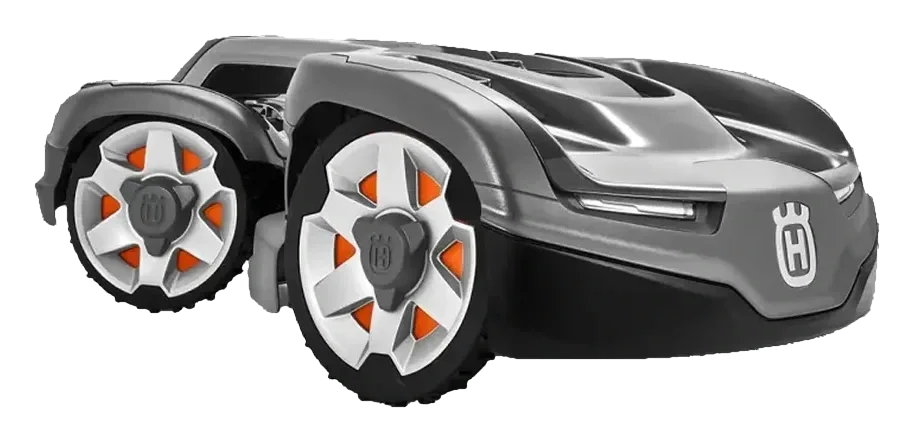
Husqvarna’s 2022 recall of the Automower 435X AWD and 535 AWD shows the other half, the remedy. Owners were told to stop using the mowers and install a software update, and units past 1,200 charging cycles got a free replacement battery, per the CPSC notice.
That notice covered about 1,400 units. Husqvarna reported five overheating incidents, two of them fires, all in Europe.
Term
RecallA corrective action for named models or serial ranges, carried out by the maker in cooperation with a regulator such as the CPSC. It tells owners what to do in the meantime and what remedy they receive.Allegation, not a findingA Lawsuit Alleges a Defect and Orders No Repair While It Runs
In 2023 a proposed class action, Khatib v. Ecovacs Robotics, alleged that Deebot robot vacuums carry a motor defect that causes early failure, per ClassAction.org. The complaint names models from the N79 to the X1 Omni, including the Deebot N8 Pro+.
It describes the failure as four beeps and a “main brush malfunction” error, and says Ecovacs had issued no recall and declined repairs once warranties expired.
Filing a complaint takes a plaintiff and a lawyer, not a regulator’s finding. A court can dismiss it, the parties can settle, or it can go to trial. Until then, nobody is ordered to fix a machine.
The sources read for this piece do not report how the case ended.
The N8 Pro+ remains classified at Level III. A classification records documented capability, so an allegation on its own does not move it.
Investigated, not yet orderedItaly Is Examining Whether Switching Off Neato’s Cloud Was Unfair
On October 6, 2025, Vorwerk announced it was phasing out Neato cloud services, citing cybersecurity and compliance requirements. Its support notice says the robots keep working manually: one button press starts a full-house run.
Anything that depended on the cloud went with it, even though the machines themselves still run.
In April 2026, Italy’s competition and consumer authority, AGCM, opened an investigation into Vorwerk Management and Vorwerk Italia over the shutdown, and inspectors searched both companies’ premises, per We Speak IoT.
Two days after the searches, Vorwerk offered a free Kobold VR7 to anyone who bought a Neato after May 2023 and used its cloud functions, without acknowledging any legal obligation.
An investigation compels documents and answers first. A fine or order comes only if it concludes against the company.
Authorization, not a defectAn Import Restriction Blocks New Models and Leaves Sold Ones Alone
On July 28, 2026, the FCC added foreign-produced advanced robotic devices to its Covered List. Equipment on the list cannot receive new FCC equipment authorization, which a radio-equipped device needs before it can be imported or sold in the United States.
The rule reaches forward, not back. As Gizmodo noted, a robot already approved for sale here may continue to be imported and sold.
The Segway Navimow H5 Pro, classified at Level IV, has no US price or date in the Robovations database. Segway representatives told Gizmodo they were confident it would reach the US.
No unit is found defective under this rule.
Four instruments, four obligations
What each one starts from and what it compels
| Instrument | Starts from | Who acts | What it compels |
|---|---|---|---|
| Recall | A defect in named models or serial ranges | The maker, with a regulator such as the CPSC | A remedy for the named units |
| Lawsuit | A plaintiff’s allegation | A civil court | Nothing until a ruling or settlement |
| Investigation | A regulator’s concern that a law was broken | A consumer authority such as AGCM | Documents and answers, then possibly a fine or order |
| Import restriction | A national security determination | The FCC | No new authorization for new models |
An owner whose robot appears in none of these is not holding a certified-safe machine. None of the four mechanisms has reached it, and that is all the absence shows.
A recall, a lawsuit, an investigation and an import restriction can land on one category in a single season, and only the recall requires anyone to fix a specific machine.