Explainer
Does a Robot Vacuum’s Self-Cleaning Mop Dock Keep the Pad Clean During a Run?
The vacuums examined here earn the same 'advanced' mop rating for the same reason: a dock that washes and dries the pad after each run. That rating says nothing about the fifteen or twenty minutes beforehand, when the pad is still dragging picked-up water room to room, and only one of them built hardware to address that stretch while the robot is still working.
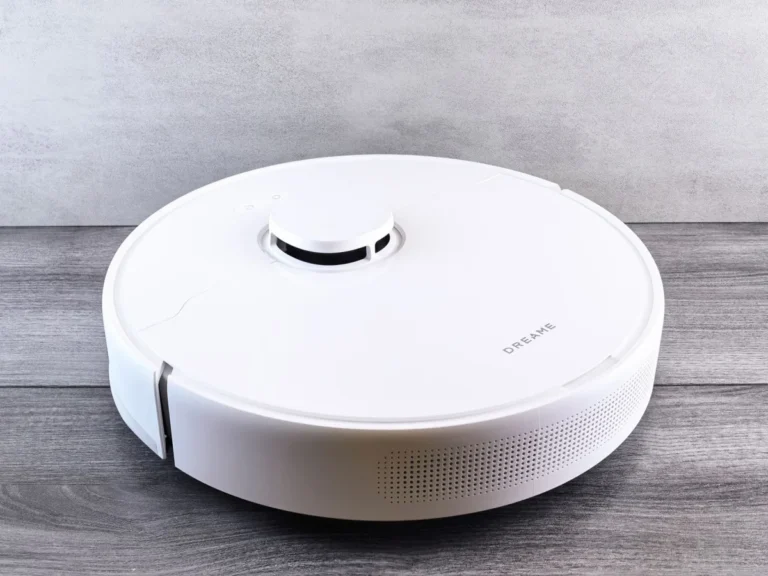
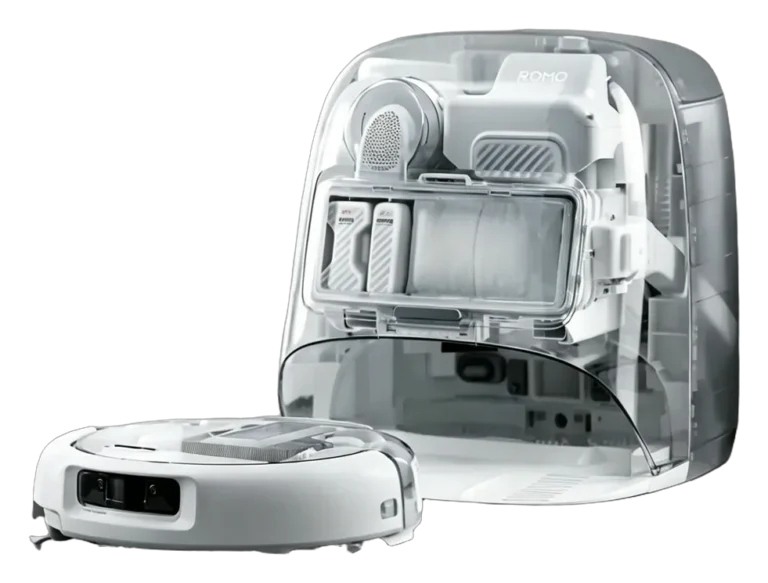
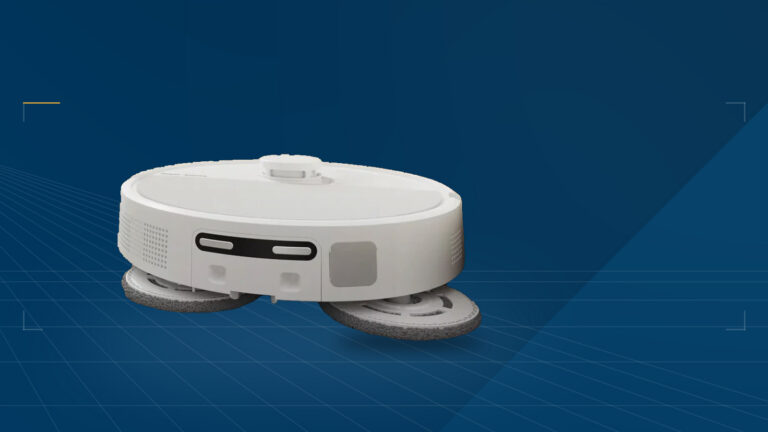
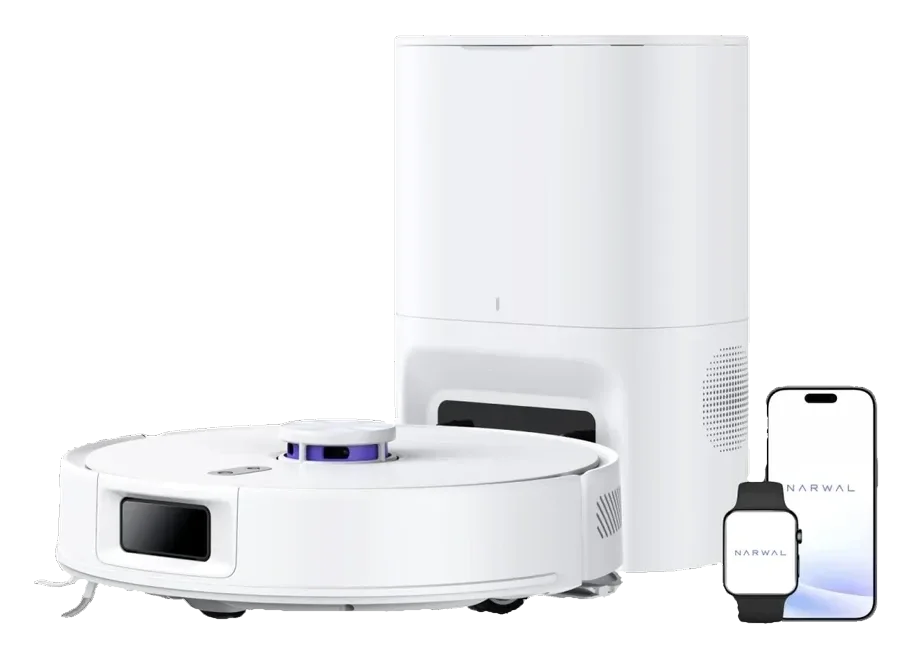
A robot vacuum’s mopping pad picks up dirty water in the first room it cleans and, unless something intervenes, carries a diluted version of that water into the next one. Robovations records mop hardware on a mop_capability field, and the top tier, advanced, is reserved for docks that wash and dry the pad automatically once the robot returns. Machines carrying that classification include the Dreame L50 Ultra, the Eureka J15 Max Ultra, the Narwal Flow 2, the Dreame L60 Pro Ultra, and the iRobot Roomba Max 775 Combo.
The classification answers one question: does the dock wash the pad between runs? It does not answer a different one, which is what the pad is doing to the floor for the stretch of the run before it gets back to the dock. That gap is where these machines diverge, and only one of them built hardware to address it while the robot is still moving.
What the dock tier measuresThe mop_capability field certifies the dock, not the run
Robovations grades mop hardware in three tiers. None means the machine has no mop pad or water tank at all, a straightforward vacuum-only design. Advanced means the dock actively washes and dries the pad between runs, without the owner touching it. Everything documented for the five machines above besides the vacuum-only iRobot Roomba Max 715 earns the advanced tier on that basis: the dock does the washing, not the owner.
The specifics differ by manufacturer but the pattern is the same. The Dreame L50 Ultra’s dock washes its pads in heated water and hot-air dries them. The Eureka J15 Max Ultra’s dock washes the pads in hot water and dries them with warm air. The Dreame L60 Pro Ultra’s dock washes its spinning pads with heated water, dries them and mixes detergent automatically. The iRobot Roomba Max 775 Combo’s AutoWash Dock washes its mop at the dock as well. In every one of these four, the wash happens after the robot docks.
Term
mop_capabilityA Robovations classification field recording whether a vacuum has no mop hardware, a passive pad the owner must wash by hand, or a pad the dock actively washes and dries. It states what the dock does between runs. It does not describe what the pad does to the floor while the robot is still cleaning.Dock-only wash vs. mid-run washTwo different places to wash a mop pad
For the Dreame L50 Ultra, the Eureka J15 Max Ultra, the Dreame L60 Pro Ultra, and the Roomba Max 775 Combo, the wash cycle is strictly an end-of-run event. Mid-run, the pad behaves like a pad with no washing hardware attached to it at all: it lays down water, picks up whatever is on the floor, and carries what remains into the next room, because nothing on the robot itself is cleaning the pad until docking triggers the cycle. That is not a flaw specific to these four designs. It is what washing the pad has meant on a robot vacuum since docks first added the feature: automation of a chore that used to happen at the sink, not a change to what happens between rooms.
A separate mitigation runs alongside the wash question on some of these docks: pads that lift automatically off the floor when the robot detects carpet, so water already picked up in a hard-floor room never touches the rug at all. On the Dreame L50 Ultra the pads lift with no mode change from the owner, and the L60 Pro Ultra stops mopping over carpet the same way. That protects the carpet specifically. It does nothing for the room-to-room carryover this piece is about, since the pad still carries whatever it picked up into the next hard-floor room it enters.
The Narwal Flow 2 is the one machine here built differently for that stretch of the run. Its FlowWash mechanism sits on the robot rather than the dock: a rolling track mop runs clean water across its fibers while a scraper strips the dirty water off in real time, during the pass rather than only afterward. The dock still washes and dries the track between runs, a 212 degree Fahrenheit full-cycle wash followed by 140 degree hot-air drying, so the Flow 2 carries both the mid-run mechanism and the same end-of-run cycle the other four rely on exclusively.
Figure
What an advanced mop dock automates
- Warm-air blowerhot-air dries it
- Clean water tankfills and drains the water tanks
- Sealed dust bagchanges the dust bag
- Onboard binauto-empties the dustbin
- Mop trackwashes the mop pad in heated water
- Mop trackreplaces the pad on wear
Where the tier and the test disagreeIndependent Testing Put the L60 Pro Ultra Below Average on Mopping
Dock hardware and in-run outcome are not the same measurement, and the Dreame L60 Pro Ultra shows the gap directly. Vacuum Wars found it used more water than its reviewers preferred, with a combined mopping score slightly below the category average. Navigation efficiency also landed slightly below average in the same testing. None of that is a defect in the dock’s washing hardware. The heated wash and automatic detergent mixing are real and documented. The mismatch is that automating the wash step did not, on this machine, translate into a better-than-average mopping result once the robot was actually running.
That is the clearest evidence available that advanced dock hardware and in-run mop quality are separate claims. A dock can wash and dry a pad thoroughly between runs and still sit behind the category on water efficiency and mop scoring during the run itself, because the two are measuring different parts of the cycle.
None of the other three dock-only machines examined here, the Dreame L50 Ultra, the Eureka J15 Max Ultra, and the Roomba Max 775 Combo, carry independent mop-performance testing in the sources gathered for this piece. Their advanced classification rests on the documented dock hardware itself: the wash temperature, the automatic detergent mixing, the dry cycle. It does not rest on a measured in-run water or dirt result, because none has been published for them yet. That gap in test coverage is common for mopping generally; independent reviewers measure suction in pascals far more often than they measure what a wet pad actually leaves behind.
Wash timing, by machine
Where the pad gets cleaned, and when
| Robot | Wash point | Dock cycle | Class |
|---|---|---|---|
| Dreame L50 Ultra | Dock only, after docking | Heated wash, hot-air dry | IIIConditional |
| Eureka J15 Max Ultra | Dock only, after docking | Hot wash, warm-air dry | IIIConditional |
| iRobot Roomba Max 775 Combo | Dock only, after docking | Dock wash, temperature not cited | IIIConditional |
| Dreame L60 Pro Ultra | Dock only, after docking | Heated wash, auto-detergent | IIIConditional |
| Narwal Flow 2 | On-robot scrape plus dock wash | 212F wash, 140F dry | IIIConditional |
| iRobot Roomba Max 715 | No mop hardware | Not applicable | IIIConditional |
A different kind of simpleA vacuum-only Roomba skips the question entirely
The iRobot Roomba Max 715 has no water tank, no pad, and no wash cycle to schedule at all. It carries a bagged AutoEmpty dock, but nothing on the machine ever holds water. That is not a lesser tier of mopping. It is the absence of the mechanism this entire question is about. An owner who wants to avoid the wash-point question altogether, whether it is handled at the dock or mid-run, gets there by choosing a vacuum-only machine and handling wet floors with something else.
What the label leaves outThe Tier Confirms a Hands-Free Wash, Not a Clean Pass
For a buyer comparing these machines, advanced mop_capability confirms one thing reliably: the pad will not need hand-washing between runs, and it will not wear out on the schedule a basic vibrating pad would. It does not confirm how much dirty water gets carried from room to room while the robot is still working, and among the machines examined here, only the Flow 2’s on-robot scraping addresses that stretch directly. The other four automate the wash step at the dock and leave the mid-run behavior exactly where it has always been.
The owner-facing chores also stay a constant no matter the tier. Across these machines, the parts that still require a person are the same short list:
- Filling and draining the dock’s clean and used-water tanks
- Refilling detergent where the dock mixes it automatically
- Replacing the pad itself once wear sets in
- Changing the dust bag on its own separate schedule
Robovations database
What this machine asks of you, and how often
Narwal Flow 2
No manual mop wash required; the dock washes the track and hot-air dries it between runs.
Clean filter; inspect the mop track for fiber buildup and hair wrap.
Replace side brush ($6-10); renew the mop track if matted.
Replace the sealed dust bag, which is what Narwal's 120-day rating covers. Heavy debris volume shortens it.
Every stop the record names, placed on the interval it comes round. A larger dot is a task that returns more often.
None of the docks eliminate that list. They automate the wash cycle, which is a real reduction in hands-on contact with dirty water. They do not automate the supply chain behind it, and advanced dock hardware, on its own, does not settle what happens to the pad between the moment it leaves one room and the moment it reaches the next.
This pattern is likely to persist as more of these docks reach the market. A wash cycle timed to the end of the trip is simpler engineering than one built to run mid-pass, which is one reason the Flow 2’s on-robot scraper remains uncommon rather than standard among advanced-tier machines. A buyer comparing a new dock-and-mop pairing gets more from asking directly when the wash happens than from the advanced label on its own, since that label was built to answer a maintenance question, not a mid-run one.
An advanced mop_capability rating certifies dock behavior between runs, not water behavior during one, and only one machine examined here built hardware for the second question.