Analysis
Pet hair and the tangle problem: what brush design discloses about autonomy limits
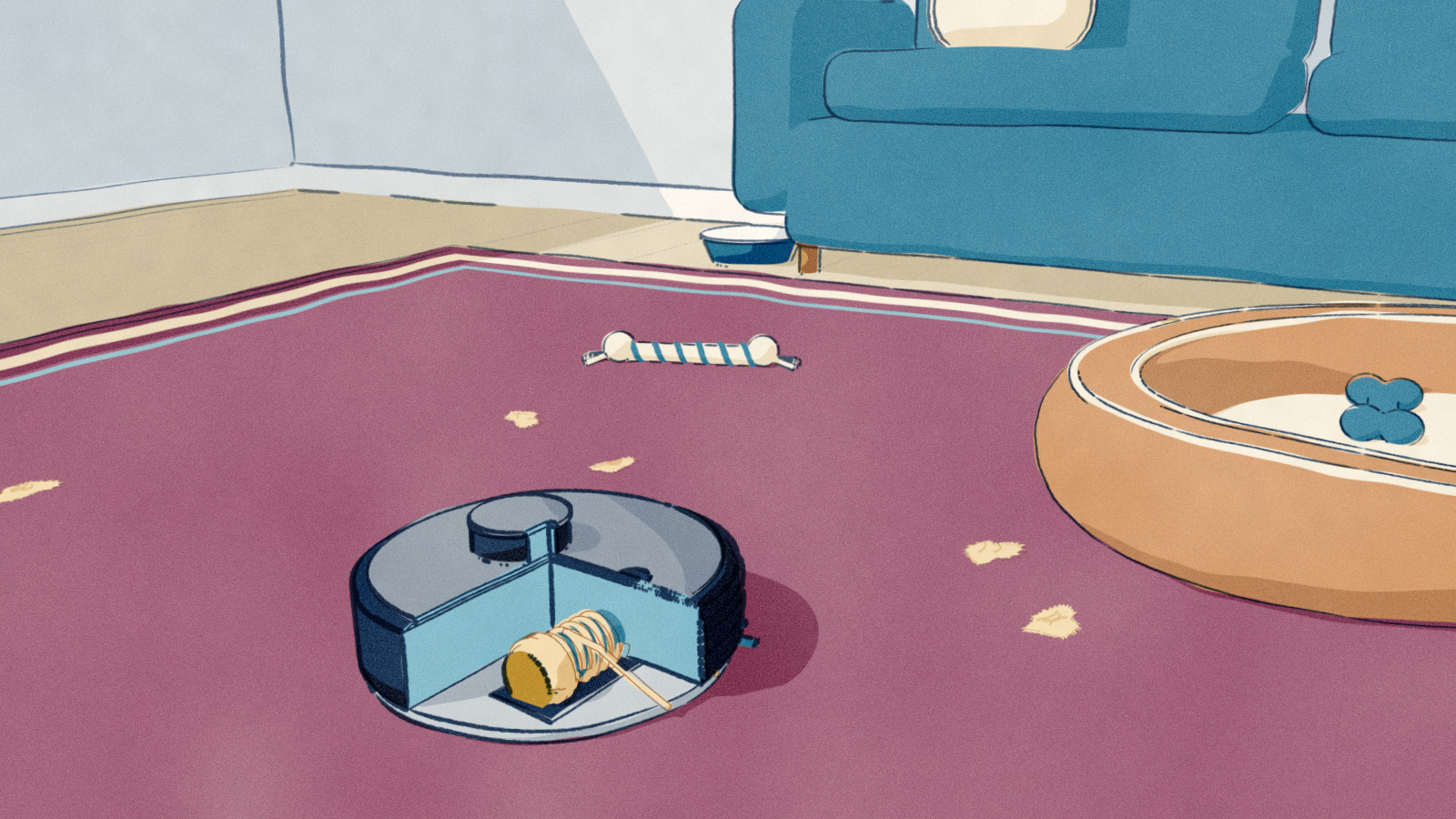
Robot vacuums at Level III can map a room, avoid a chair leg, and return to dock without human input. Pet hair routinely stops them anyway. The failure is not in navigation; it is in the brush roll, and most manufacturers have documented the maintenance interval while continuing to market past it.
A robot vacuum reaches Level III on the Autonomy Ladder by completing its cleaning domain end-to-end: map, plan, execute, dock, report. The classification holds when the environment is a predictable floor. Pet hair introduces a variable that most Level III robots cannot absorb without intervention, and the intervention is not occasional. Owner reports across product forums consistently describe brush-roll jams as the dominant strand event for households with shedding pets, outpacing navigation errors, cliff-detection misfires, and threshold obstacles combined.
This is a classification problem, not a marketing problem. A robot that requires weekly brush-roll clearing to complete its assigned runs is operating at Level III in a pet-free room and closer to Level II in a home with a German Shepherd. The capability gap is real, and manufacturers have disclosed enough about their design choices to map it clearly. The task here is to read those disclosures carefully and place them in the context of what autonomous operation actually requires.
Where tangles actually happenThe brush roll as the operational bottleneck
Robot vacuum brush rolls fall into two documented architectures: traditional bristle-and-rubber combination rolls, and single-material rubber or silicone extraction rolls. The distinction matters because pet hair behaves differently against each geometry, and the failure mode that results determines how often a human must intervene.
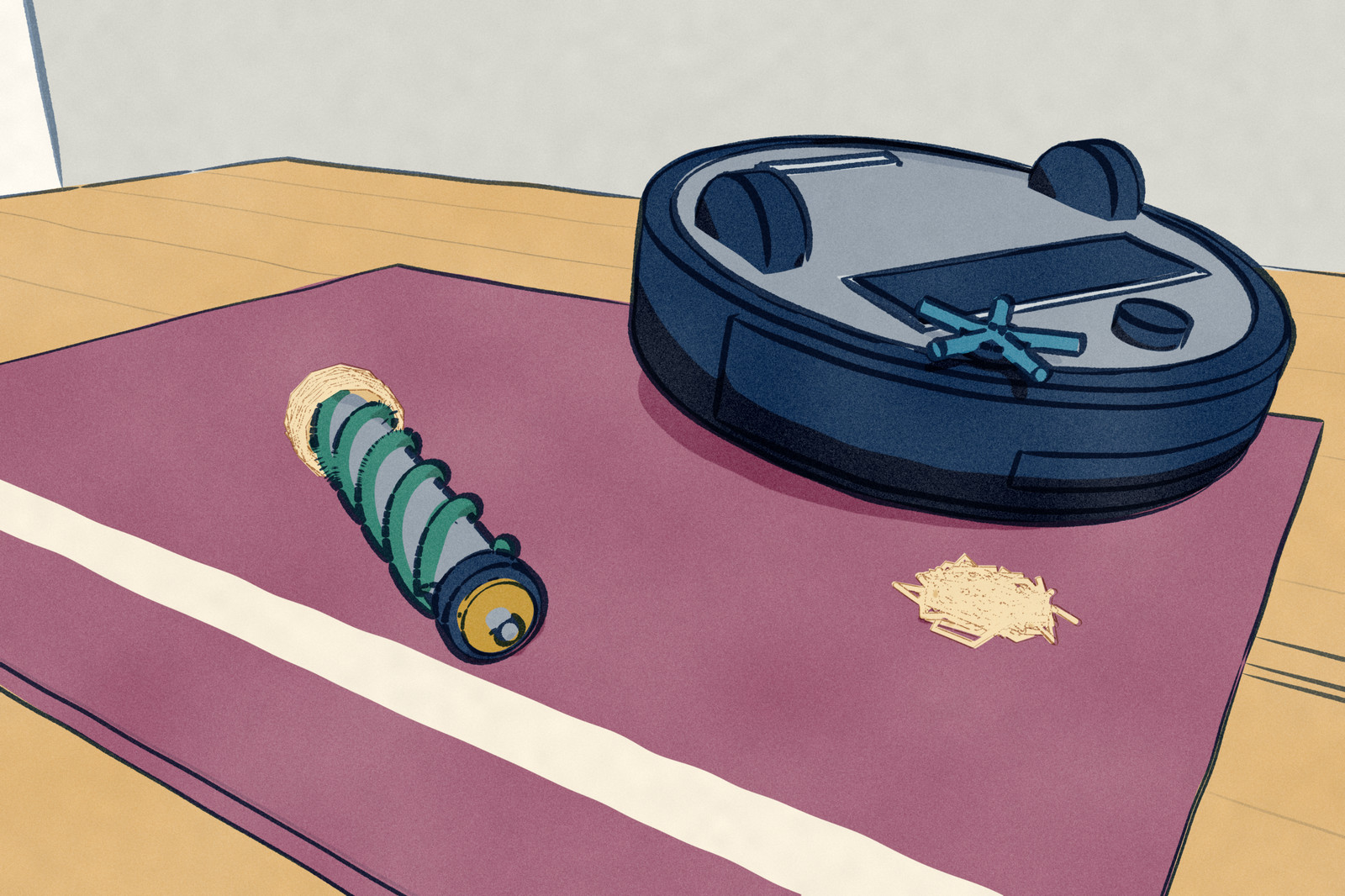
Bristle rolls use nylon tufts set into the roll body to agitate carpet fiber and lift debris into the suction path. Pet hair wraps around those tufts, accumulates at the end-cap bearing, and eventually generates enough friction to trigger the jam sensor. Owner reports on iRobot’s community forums document this pattern consistently on rubber-bristle combo rolls, where hair migrates toward the end caps rather than passing through the extraction zone. iRobot’s own maintenance guidance for the iRobot Roomba s9+ recommends cleaning the brush roll every one to two weeks in pet-hair environments, a disclosure that implicitly defines the intervention interval the autonomy promise depends on.
Rubber extraction rolls take a different approach: a soft-edged blade geometry that flexes rather than catches, passing hair into the debris path rather than accumulating it. Roborock’s documentation for its Q-series and Qrevo lineup describes the rubber roll design as reducing hair wrap, a claim owner reports partially corroborate. The Roborock Q5 Pro+, classified at Level III, receives markedly fewer jam reports in pet-hair contexts than bristle-combination designs in the same category, though fewer is not zero. The end-cap bearing remains a collection point on rubber rolls too, just a less aggressive one.
The third architectural category is the dual-brush system, where a central roll pairs with a side brush. Pet hair interacts with both surfaces simultaneously. Side brushes on all major platforms, including Eufy, Shark, and Roborock designs, accumulate hair at the shaft base. Owner reports on products like the Eufy Clean X9 Pro describe side-brush wrapping as a separate clearing task from the main roll, effectively doubling the maintenance surface a pet-hair household must manage. A jam on either component can stop the run.
Hair length and structure matter too, in ways manufacturers rarely specify. Long human hair and the coarse guard hair of double-coated dog breeds behave differently against the brush geometry. Long strands wrap tightly around the roll body and typically require cutting with a seam-ripper or scissors to remove without damaging the roll. Shorter undercoat hair from breeds like Huskies, Corgis, or Pomeranians tends to pack into the bearing zone rather than wrapping the roll body, creating a dense felt-like accumulation that resists the airflow path. Neither behavior is documented in spec sheets, but both appear consistently in owner accounts across forum threads on r/RobotVacuums and r/roomba, communities that have effectively crowd-sourced maintenance documentation the manufacturers have not published themselves.
Autonomy classification and hair-jam frequencyWhat the intervention interval reveals
The Autonomy Ladder definition for Level III requires end-to-end task completion within the operating design domain. Pet-hair households are, for most robot vacuums, outside or at the edge of that domain. The specification disclosure is where this becomes traceable, and where the classification system does its most useful work.
iRobot’s care guides for the Roomba Combo j7+ and the Roomba j7+ list brush-roll cleaning as a two-week interval task in high-pet-hair conditions. Shark’s documentation for the Shark IQ Robot Self-Empty XL recommends monthly brush-roll inspection in normal use, with more frequent attention called out for pet-hair homes. These are maintenance disclosures, not failure admissions, but they define the human-in-the-loop cadence that limits the robot’s autonomous run streak in practice.
Documented maintenance interval
2wk
iRobot care documentation recommends brush-roll clearing every one to two weeks in pet-hair environments, per iRobot support guides. At that interval, a robot completing daily runs still requires human intervention before its next unassisted two-week cycle ends.
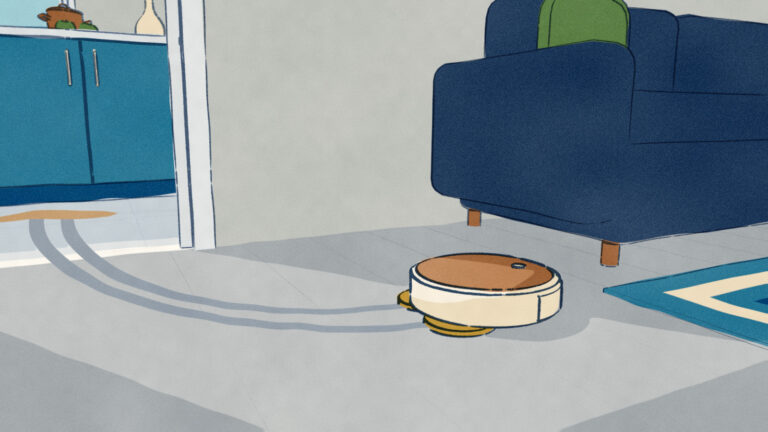
The math is straightforward. A robot completing one run per day requires 14 autonomous completions between interventions if the two-week interval holds. Most Level III robots clear that bar under typical conditions. In heavy-shedding environments, with breeds like Huskies or Golden Retrievers during seasonal coat changes, the interval compresses. Owner reports on r/roomba describe jam events occurring mid-run rather than between runs, which means the robot halts, sends an alert, and waits for manual clearing. The run is incomplete.
The autonomy classification applies to the robot design capability, not to its performance in any specific environment. Level III is a ceiling statement: this robot can complete its domain autonomously when conditions permit. Pet hair is a condition that narrows that permission window. A platform classified at Level III because it can map, navigate, complete, and dock without human direction is still classified at Level III even when a jam stops it mid-run; the classification does not demote. What changes is the owner-visible gap between the ceiling the robot was sold on and the operational ceiling it reaches in a pet-hair home. Classifying robots accurately requires naming that gap, not papering over it.
Self-clearing mechanisms and their limitsWhat docks can and cannot resolve
All-in-one dock systems address debris extraction from the dustbin: auto-empty bags pull fine particles and debris from the robot’s collection chamber at dock return. None of the consumer platforms in the current market include a dock-side mechanism for clearing or cleaning the brush roll. The dock cycle handles the bin; the brush roll stays the owner’s responsibility regardless of dock tier.
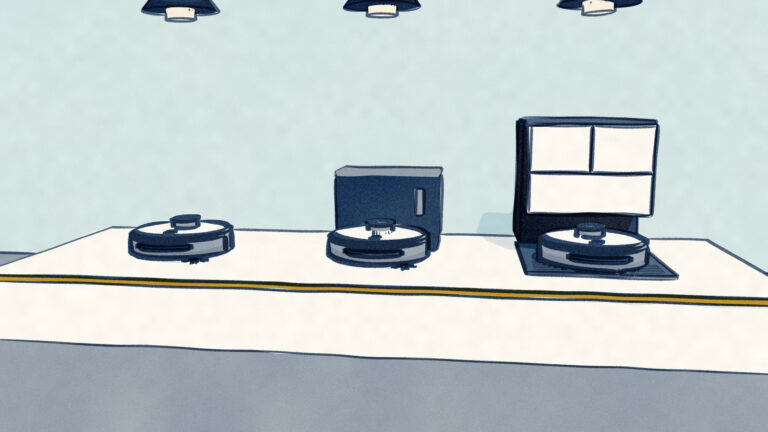
This is worth stating directly because all-in-one dock marketing consistently implies a higher degree of hands-off operation than the brush roll permits. The Roomba Combo j9+ and the Roborock Qrevo Master, both classified at Level III with comprehensive dock systems covering auto-empty and mop washing, still require manual brush attention on the same interval as their simpler stablemates. The dock automates debris disposal and mop rinsing; it does not automate the mechanical maintenance that pet hair makes necessary.
Dyson’s approach with the Dyson 360 Vis Nav centers on a full-width brush bar design that spans the robot’s entire cleaning width, eliminating the gap between side brush and main roll where debris concentrates on narrower platforms. Dyson’s published material describes the full-width bar as improving edge pick-up on carpet. The incidental benefit in pet-hair environments is fewer side-brush wrap events, since there is no side brush; the main bar remains subject to end-cap accumulation.
The logical next step in dock evolution would be a mechanism that pulls or combs the brush roll during the dock cycle, removing accumulated hair the way auto-empty removes dust. No manufacturer has shipped this capability at consumer price points as of mid-2026. The engineering constraint is real: brush rolls contact the floor during operation, picking up debris that includes not just hair but grit, threads, and fine particles, making an automated cleaning mechanism significantly more complex than a bag-based dust extraction system. Concept demos and third-party aftermarket tools exist for assisted manual roll cleaning, but they remain owner-operated tasks, not automated dock functions. The gap between what the dock handles and what the owner still handles is precisely where the hands-off marketing claim breaks down in a pet-hair environment.
Design transparency as a data pointHow manufacturers disclose the trade-off
The quality of maintenance documentation varies significantly across the category and is itself diagnostic information. Manufacturers that publish specific cleaning intervals by use-case type are disclosing that they have modeled the failure mode. Those that publish generic guidance have either not modeled it in user-facing terms or chosen not to publish the result.
- iRobot publishes use-case-specific intervals (general vs. pet-hair) in its care guides for the j-series and Max-series platforms, a practice that makes the limitation concrete and traceable before purchase.
- Roborock’s documentation describes the rubber roll design’s benefit qualitatively without quantifying an interval, leaving the maintenance cadence to owner discovery.
- Shark’s IQ and PowerDetect care documentation calls out pet-hair maintenance as a frequency modifier without specifying the interval explicitly, which is partial disclosure: the flag exists, the number does not.
- Eufy’s care guides for the X9 Pro line document both brush roll and side-brush clearing as separate maintenance tasks, which accurately reflects the dual-surface load a pet-hair household faces.
From a classification standpoint, the specificity of maintenance disclosure is a proxy for how well the manufacturer understands its product’s operational limits. A robot whose documentation acknowledges a two-week interval in pet-hair homes is a robot whose maker has mapped the edge of its operating design domain and chosen to publish that edge. That choice is worth noting. It also creates a basis for comparison: a household considering two Level III platforms can look for the one whose disclosed maintenance cadence fits the household’s tolerance for intervention, rather than discovering the cadence after purchase through trial and error.
Brush architecture comparison
Four platforms and their hair-management design
All four of these platforms carry a Level III classification. The brush architecture does not change that classification; the classification reflects navigational and task-completion capability under the documented operating conditions. What it does change is the practical autonomous run interval a pet-hair home can sustain without intervention. That interval is the information a household with a shedding animal needs before purchase, and the table above shows how unevenly it is published across the category. Two of the four platforms in the table leave the interval undisclosed, which means a buyer cannot compare on this dimension without consulting owner communities or requesting it directly from support.
Rubber roll adoption and the remaining gapWhat design evolution has and has not fixed
The shift toward rubber or silicone extraction rolls, visible across iRobot’s Max series, Roborock’s Q and Qrevo lines, and Shark’s PowerDetect range, represents a documented architectural improvement over bristle-combination predecessors. The iRobot Roomba Max 715 and the Shark PowerDetect NeverTouch Pro both ship with extraction-focused roll designs. Owner reports in pet-hair contexts consistently describe reduced, though not eliminated, jam frequency compared to older bristle-roll designs from the same manufacturers.
The remaining gap is the end-cap bearing. Rubber rolls reduce midroll accumulation but still concentrate hair at the axle ends where the roll meets the chassis. Clearing that accumulation requires the same manual process as clearing a bristle roll: remove the roll body, pull the wrapped hair from the bearing zone, confirm the bearing spins freely, reinstall. The geometry of the task has not changed; only the frequency with which it is triggered has decreased.
Suction-path geometry is a separate variable that affects how much hair reaches the brush roll in the first place. Some platforms route collected debris directly into the suction airstream from the roll housing, keeping hair moving through rather than accumulating; others funnel everything through a tight inlet that the roll contacts directly. The suction-path geometry is rarely published as a consumer-facing specification, but teardown analyses documented by community contributors on sites like r/roomba and independent vacuum-testing outlets provide partial maps of which platforms use separated debris channels and which combine the brush and suction paths in ways that concentrate hair load on the roll. That work supplements what manufacturer documentation omits.
Filter maintenance interacts with brush-roll performance in pet-hair environments as well. Robot vacuums capture fine particulate, including pet dander, through HEPA-class or multi-layer filters that require periodic cleaning or replacement. A clogged filter reduces airflow, which reduces suction through the brush-roll housing, which means hair that would ordinarily be pulled into the bin under full suction sits longer on the roll surface and wraps more aggressively. iRobot documentation for the j-series platforms notes that reduced suction from a dirty filter can affect overall cleaning performance; the connection to brush-roll accumulation is implicit in the airflow mechanics rather than stated directly. Manufacturers that publish filter cleaning intervals separately from brush-roll intervals may be modeling these as independent tasks when they are, in practice, interacting ones.
Term
Operating design domainThe set of conditions under which a robot is designed to operate autonomously. For most robot vacuums, this includes hard floors and low-pile carpet in pet-free or low-shedding environments. Conditions outside the domain, such as heavy pet hair, do not change the classification but do reveal where autonomous capability stops and owner involvement begins.No consumer robot vacuum ships with a mechanism that clears the brush roll or its end caps without owner involvement. The question for any shedding-pet household is not whether maintenance is required but at what interval the design makes it necessary, and whether the manufacturer has published that interval. When the documentation is specific, the owner can plan around it, scheduling a five-minute clearing session on the same cadence the robot expects it. When documentation is absent, the interval is discovered through experience, usually during a run that ends mid-room with an alert on the app and a half-cleaned floor that requires either manual completion or a second scheduled run after clearing. That second-run scenario is not Level III operation; it is Level II with extra steps, regardless of what the navigation architecture can otherwise accomplish.
Pet hair does not change a Level III robot’s classification. It defines the gap between the autonomy the robot delivers on an empty floor and the autonomy it delivers in the home it was sold for.