Analysis
How do robot vacuums detect carpet and switch cleaning modes?
Through three methods: motor-load sensing when brush resistance rises, underside infrared sensors reading floor reflectance, and downward cameras classifying texture before contact. These trigger preset responses like suction boost or mop-pad lift from a fixed rule table, which is conditional Level III execution, not adaptive reasoning.
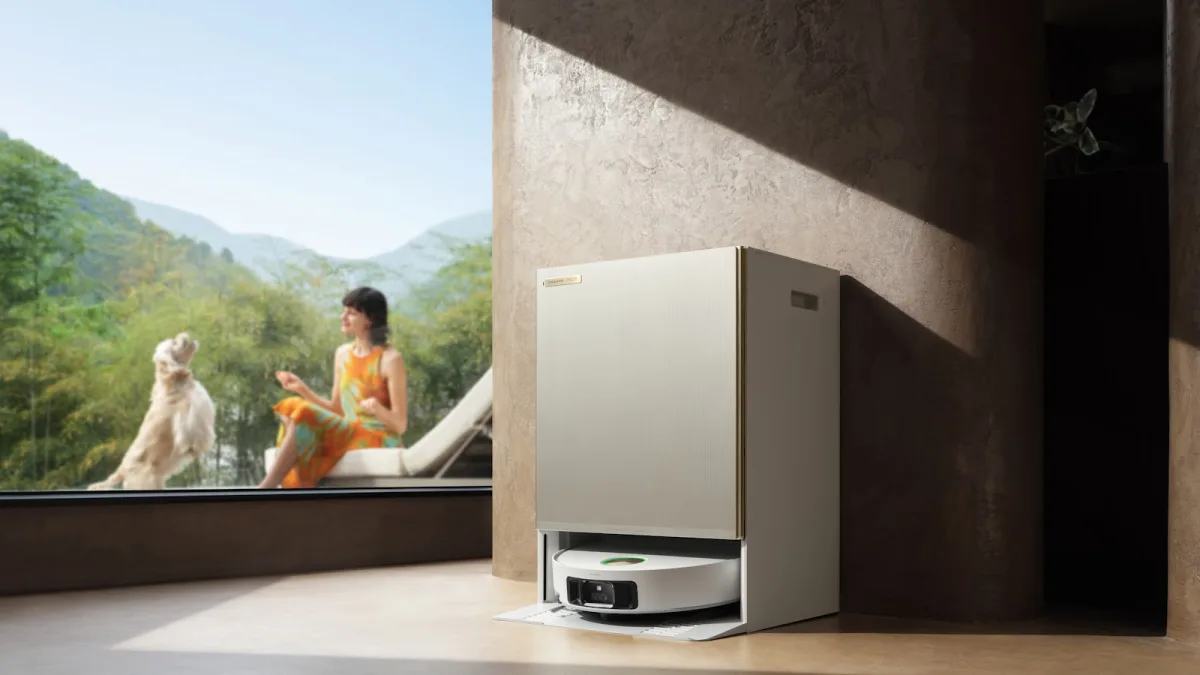
Photo by Dreame Vacuum Cleaner on Unsplash
Every mid-range robot vacuum sold in 2025 and 2026 ships with some form of surface detection. Marketing describes it in expansive terms: “AI floor recognition,” “intelligent material sensing,” “multi-surface adaptation.” The implicit promise is that a robot reads its environment and reorganizes its behavior accordingly. The classification question is narrower and more precise: does detecting a surface change the robot’s task, or does it only change the robot’s settings while the task stays the same?
The answer to that question is nearly always the latter. Understanding why matters for anyone placing these products on the Autonomy Ladder, and for any buyer weighing what a more expensive sensing implementation actually changes in day-to-day operation.
What sensors actually measureThe mechanics of surface detection
Consumer robot vacuums use two primary methods to infer surface type. The first and most common is motor-load monitoring: when the robot crosses from hard floor onto carpet, resistance against the brush roll increases, and the firmware interprets the torque change as a material transition. No dedicated floor sensor is required. This approach is documented in Roborock’s carpet boost feature and in iRobot’s floor-tracking system, both of which respond to motor current rather than a surface-specific sensor input.
The second method uses dedicated sensors — typically IR emitters and receivers mounted on the underside of the robot. A hard floor returns a different reflection pattern than carpet pile. The angle of reflection, the intensity, and the return time all differ. Ultrasonic sensing, used in older Neato Robotics platforms, extended this further, allowing robots to estimate pile height rather than just detect the presence of fibers. That distinction matters for mop-lift decisions: a robot needs to know whether a 3mm threshold of carpet pile requires mop retraction, not simply whether a textile is present.
Camera-based material classification, as documented in the Samsung Bespoke AI Jet Bot Steam Ultra, uses the onboard vision system to categorize floor material from above before the robot reaches the transition point. The robot identifies surface texture and color at a distance, adjusts settings in anticipation, and reaches the surface already configured. This is a meaningful latency improvement over motor-load detection, which reacts after the robot has already crossed onto the new surface and briefly operated with the wrong settings.
Term
Carpet boostA feature in which the robot automatically increases suction power when it detects carpet beneath the brush roll. Triggered by motor-load monitoring or a dedicated floor sensor, it returns suction to the lower setting when the robot exits the carpeted area. The task (vacuum this zone) does not change; the operating parameter does.Each method differs in precision, latency, and cost. Motor-load detection adds nearly zero hardware cost and is present in most models above entry-level. IR sensor arrays add a small sensor module and require calibration for different flooring types. Camera-based classification requires a downward-facing or multifunction camera and the compute to run a material-recognition model at speed. The hierarchy is real, and it produces different cleaning results. The autonomy classification does not change across any of these approaches, for reasons explored below.
Sensing vs. task-boundary shiftWhat adaptation looks like at Level III
A robot at Level III on the Autonomy Ladder (Conditional Autonomy) completes its assigned task end-to-end within a defined operating environment, without requiring human intervention during the run. The robot detects obstacles, replans around them, tracks coverage, docks when the battery is low, resumes, and signals completion. The human defines the zone and initiates the task; the robot handles execution entirely within the established conditions.
Surface detection fits cleanly within Level III when it changes how the robot executes an already-assigned task. The Roborock Saros 20 Sonic, classified at Level III, documents carpet boost in its product specification: suction increases automatically on carpet and returns to the baseline on hard floor. The robot does not change its coverage plan because of the surface transition. It does not skip zones, alter its path, or signal the user. It finishes the same mission with adjusted settings applied to each surface segment. That is conditional autonomy executing exactly as the classification describes.
The more substantive case is mop-lift behavior. The Dreame L40 Ultra Gen 2 and the Ecovacs Deebot T50 Pro Omni both document automatic mop-pad retraction when the robot detects carpet beneath it. Without this feature, operating a wet mop on carpet is a predictable error that produces a wet rug, not a clean floor. With it, the robot detects the transition and raises the mop assembly before contact. Both robots remain at Level III.
Mop lift height
3cm
Documented mop-pad retraction height on Dreame L40 Ultra Gen 2 per Dreame product specifications — the clearance figure that determines whether the assembly clears medium-pile carpet without contact.
Why mop lift is still Level IIIThe character of the decision
Mop retraction is a more consequential behavior than suction boost. Carpet boost improves cleaning quality; mop retraction prevents a type of damage that requires the user to intervene and dry the rug. The stakes are higher, the decision happens faster, and the downstream consequence of failure is more disruptive. A case could be made that the decision type is different in kind from simply raising suction power.
But in autonomy classification terms, the character of the decision is the same: a condition is detected, a rule is applied, a parameter changes. The task scope remains the mission originally assigned. The user did not need to intervene. This is Level III executing a larger and more capable task envelope, not a reclassification-warranting shift in decision type. The Autonomy Ladder measures how independently a robot manages its task, not how catastrophic the consequences of getting the task wrong would be.
What distinguishes Level IV (Environmental Autonomy) from Level III is the ability to adapt the operating mission itself, not just the parameters of execution. A robot that detects an unprogrammed condition, reasons about what the appropriate task response is, and revises its mission accordingly is approaching Level IV. No current consumer vacuum documents this behavior. The Narwal Freo Z10 Ultra, which documents mid-run dock returns to clean mop pads before resuming, is a useful illustration. The robot monitors pad saturation, determines the pad is too dirty to continue cleaning effectively, and docks for a wash cycle before resuming. Owner reports on r/Roborock and r/VacuumCleaners describe analogous behavior in Roborock’s mop self-cleaning routines. These decisions are closer to the Level III/IV boundary than surface-type detection — but they are still executing within a pre-defined response set, not reasoning about novel conditions outside the training parameters.
Where sensing expands the taskThe narrow path toward Level IV
Genuine environmental adaptation at Level IV would require the robot to encounter a surface condition outside its programmed response set and formulate a new task response. Concretely: a robot that detects sand tracked in from outside and independently decides to add a second pass on the entryway zone before proceeding would need to recognize that the standard single-pass mission is insufficient for the specific contamination level, and add a task component that was not in the original plan. No current consumer robot documents this. What some manufacturers market as “AI floor adaptation” is, in every documented case, a rule-based response: if detected condition X, apply setting Y. The rule set may be large and the sensor may be accurate, but the behavior is deterministic and closed.
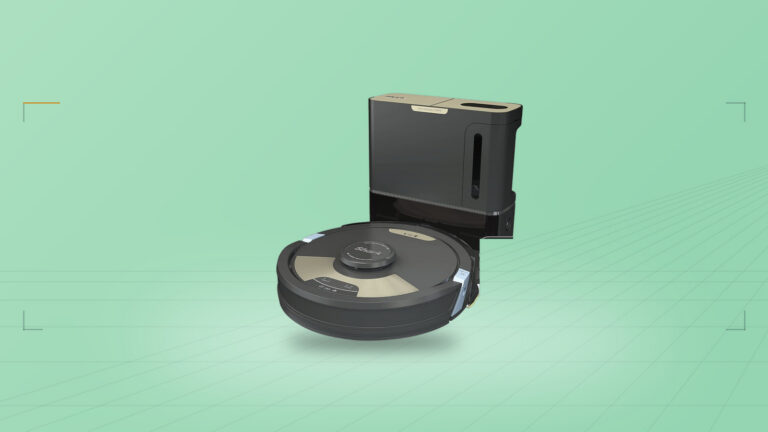
The Shark PowerDetect UV Reveal, at Level III, documents UV illumination to reveal residue invisible under normal light. This extends what the robot can perceive — UV-reactive soil patterns that cameras and IR sensors cannot detect. It does not change how the robot responds to what it perceives. The UV pass is a fixed component of the cleaning cycle, not a reactive decision triggered by residue quantity or distribution. The robot treats every run as a UV-pass run; there is no threshold at which it decides a UV pass is unnecessary. Per Shark’s product documentation for the PowerDetect line, the UV LEDs illuminate the floor continuously during operation; the “detection” surfaces residue for the user to observe, not for the robot to reason about.
Similarly, the Samsung Bespoke AI Jet Bot Steam Ultra uses vision to classify floor material and adjust brush speed and suction. The classification is more sophisticated than motor-load monitoring. The decision tree after classification is pre-specified. All of these products sit appropriately at Level III.
Robovations classification
Surface detection methods across five Level III vacuums
| Robot | Detection method | Adaptive behavior | Class |
|---|---|---|---|
| Roborock Saros 20 Sonic | Motor-load monitoring | Carpet boost (suction parameter) | IIIConditional |
| Dreame L40 Ultra Gen 2 | IR sensor array | Mop pad retraction on carpet | IIIConditional |
| Ecovacs Deebot T50 Pro Omni | IR sensor | Mop pad retraction | IIIConditional |
| Shark PowerDetect UV Reveal | UV-LED illumination | Fixed UV pass per cycle | IIIConditional |
| Samsung Bespoke AI Jet Bot Steam Ultra | Camera-based material classification | Suction and brush speed adjustment | IIIConditional |
Reading the marketing claim accuratelyWhat the autonomy language is actually describing
Manufacturers frame surface detection as evidence of intelligence, and that framing is not inaccurate — it is incomplete. A robot that detects carpet and raises suction is doing something a robot without that sensor cannot do. The relevant question for classification is not whether the behavior is real, but what category of decision it represents and what the practical consequences are for users with different floor plans.
A decision that selects a value from a predetermined response table is expert system behavior. That is the correct design for a consumer product in this category, and it is exactly what Level III Conditional Autonomy describes. The robot handles a defined set of conditions reliably and without human direction. The phrase “AI floor recognition” implies something more adaptive is occurring. Per manufacturer documentation across every model reviewed here, it is not — and that is not a criticism. Expert-system surface adaptation, implemented reliably, is a genuine capability improvement over a robot that cannot detect surface type at all. The classification label does not diminish the practical value.
What does change is how buyers should compare two Level III robots with different sensing implementations. A camera-based material classifier costs more to implement than motor-load monitoring. The buyer is getting better latency, better precision at transitions, and potentially better behavior on mixed-surface floors. They are not buying a different autonomy tier. Both robots sit at Level III; the more sophisticated sensor earns its price by improving performance within that tier, not by reaching a different rung of the Ladder.
The more consequential performance gap between Level III robots involves exception handling rather than surface detection. A robot that can identify a sock on the floor and navigate around it rather than ingesting it, or that detects a wet spot from a spill and avoids it, is making a different category of decision than one that raises suction on carpet. Object recognition for exception handling is documented in several current Level III vacuums, including models in the Ecovacs Deebot T50 and Roborock Saros series, per manufacturer feature sheets. That capability — identifying unplanned objects in the operating domain and acting on them — is the genuine boundary condition between the strongest Level III robots and any future Level IV classification in the vacuum category.
Surface-type sensing, for all its marketing emphasis, sits lower on that capability hierarchy than object recognition does. It is a cleaner-performing robot; it is not a more autonomous one. The distinction is load-bearing for buyers choosing between models, and for analysts placing those models on the Ladder.
Surface detection improves cleaning quality within Level III and belongs there. The boundary to Level IV runs through task revision, not parameter adjustment — and no consumer vacuum has crossed it.