Investigation
What Does DJI’s Local Data Mode Actually Turn Off on the ROMO P2 Robot Vacuum?
DJI's fix for the flaw that let an outside researcher watch through nearly 7,000 Romo cameras will not ship with the vacuum advertising it. The company's September announcement leads with a privacy mode that does not exist until the next quarter, alongside suction and mechanical claims no outlet has independently checked.
The DJI ROMO P2‘s official announcement leads with a specific promise: a Local Data Mode that cuts the vacuum’s internet connection, stops camera and microphone streams from reaching DJI’s servers, and lets an owner delete stored data on demand. DJI’s Trust Center describes it as a way to keep footage local instead of synced to the company’s cloud.
That promise arrives after an outside researcher gained live access to thousands of the original Romo’s cameras, microphones and stored floor maps earlier in 2026, by exploiting a gap in DJI’s own cloud backend rather than any flaw in the hardware itself. Local Data Mode does not ship with either new model when EU orders open this month.
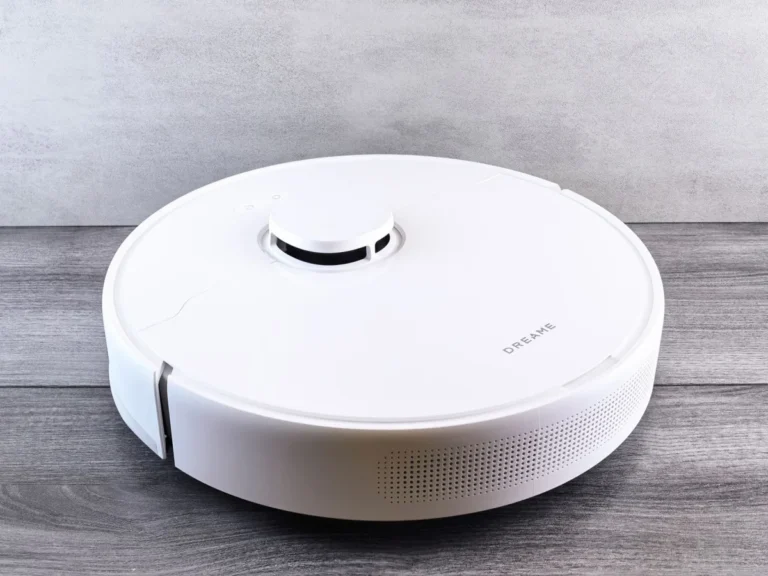
DJI is not a new name in consumer robotics, but it is a new name in floors. The ROMO line is the drone maker’s first attempt at a home-cleaning device, arriving into a category where camera-equipped devices already carry a documented history of cloud missteps, and where DJI’s own brand carries a separate, unrelated history of government scrutiny over data handling in its aircraft.
What the first Romo exposedA Backend Permissions Gap Exposed Thousands of Homes
Sammy Azdoufal was not attacking anyone. He built a personal side project, a custom app meant to drive his own Romo with a game controller instead of DJI’s own app. Once his client authenticated with DJI’s servers, it began receiving data streams from roughly 7,000 other units spread across at least 24 countries.
What reached him included live camera feeds, audio and 2D floor plans of strangers’ homes. The cause was not a flaw in the vacuum itself but a permissions gap on DJI’s backend: once a client authenticated, it could subscribe to data channels well beyond its own registered device.
DJI deployed server-side updates to fix the backend validation flaw and paid the researcher a $30,000 bug bounty, saying it found no evidence that user data was misused.
Reported by DroneDJ, March 2026
The incident became the reference point every outlet now cites when covering the ROMO P2’s privacy pitch. That history is why a feature description alone is not the same as a fix already delivered.
Nothing about the exposure required breaking into a home network or defeating encryption. It required only a working account and an app willing to ask DJI’s own servers for more than its owner’s single device, which is what makes a backend permissions gap harder for an outside buyer to evaluate than a locked door: there is no way to inspect it from outside the company.
Robot Vacuums
The feature that ships laterLocal Data Mode Arrives After the Robot Does
Local Data Mode is DJI’s structural answer to that incident, not a patch to the exposed permissions but a new user-facing control. Per the company’s Trust Center, switching it on disconnects the DJI Home app from the internet so photos and video cannot sync to external servers, and lets an owner disable the camera and microphone or delete stored data at any time. DJI frames the feature as sitting alongside encrypted map storage, which the company says already applies to ROMO devices regardless of whether Local Data Mode is active.
The distinction matters because encryption in transit says nothing about who can request the data once it arrives. The February breach did not defeat any encryption; it exploited who was allowed to ask for what.
Term
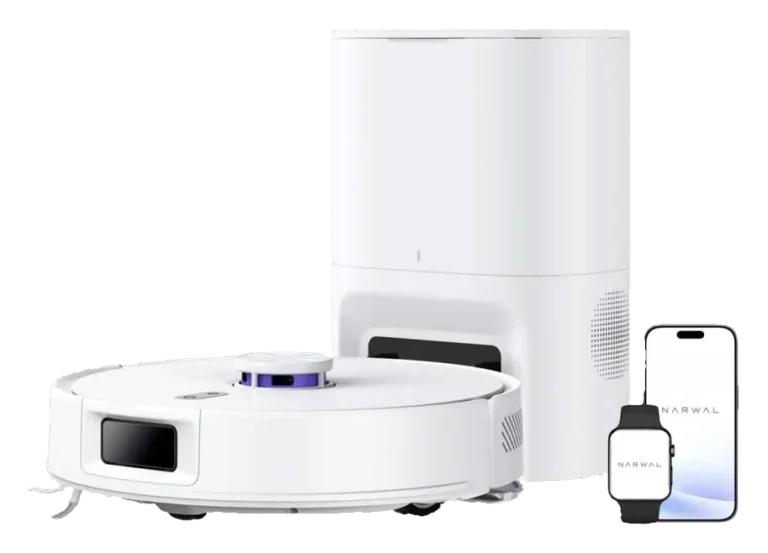
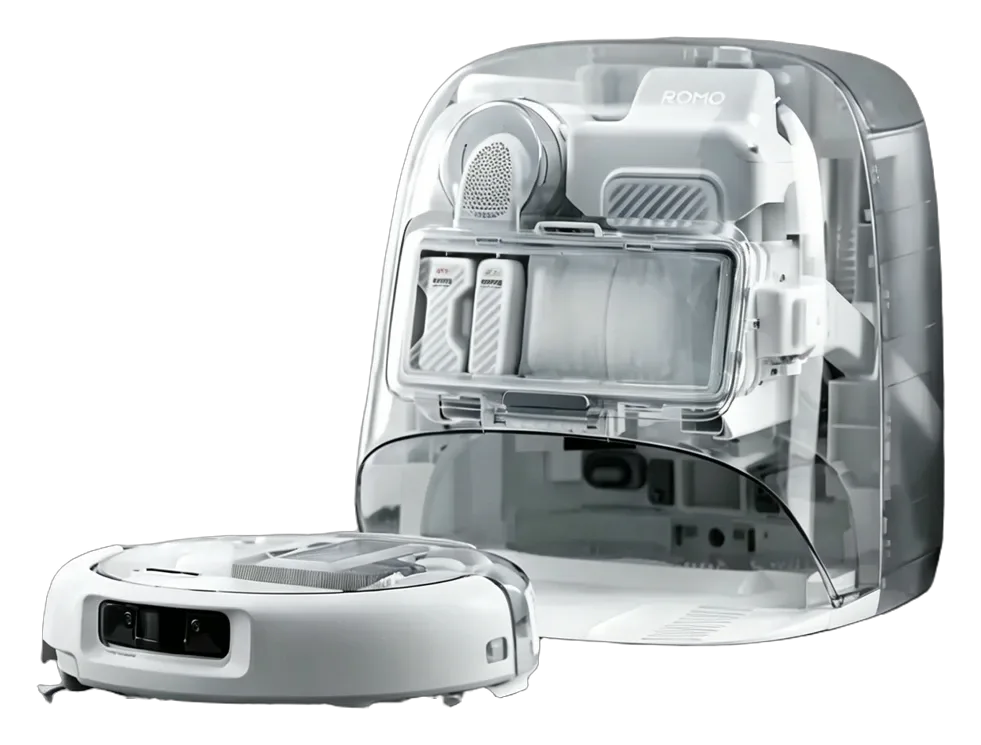
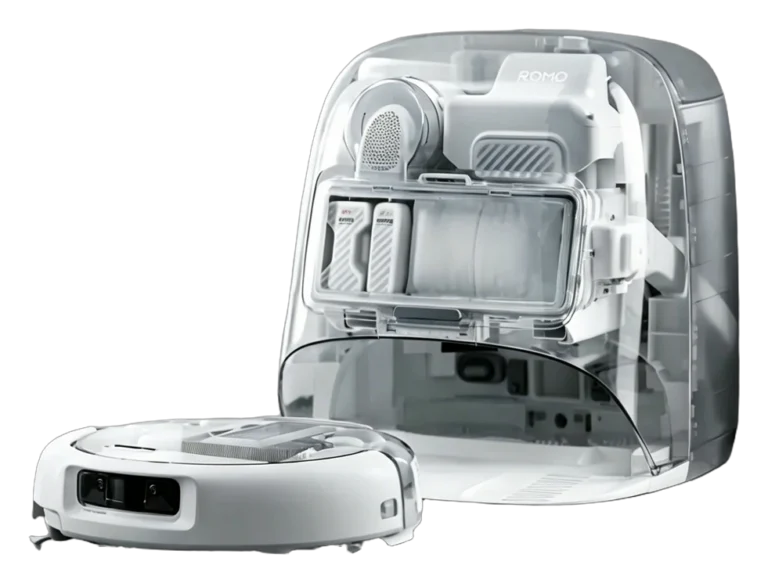
Local Data ModeA DJI Home app setting for the ROMO line that cuts the app’s connection to the internet, blocking camera and video uploads to DJI’s servers for as long as it stays enabled.None of that exists at launch. DJI’s own announcement places Local Data Mode in the fourth quarter of 2026, a separate release arriving after EU orders for the P2 and its cheaper sibling, the A2, open in September. The P2 starts at EUR 1,299 with a translucent base station; the A2 starts at EUR 1,199 with a white one, and DJI’s announcement does not document any other spec difference between the two.
Buyers ordering at launch have nothing to enable yet. One retention control already exists: DJI’s Trust Center lets an owner turn on automatic deletion of captured footage every 14 days. What happens to map data, which that control does not cover, is not itemized in the DJI material cited here.
EU buyers ordering this month remain covered by the bloc’s general data protection rules regardless of when Local Data Mode ships; that legal backstop exists independent of any DJI product setting. No equivalent regulatory floor applies where the ROMO P2 is not yet sold.
DJI Trust Center, September 2026
What leaves the ROMO P2 before Local Data Mode ships
- Stays putMap and compute are hardware you own, so the same three streams never leave the building.
- The crossingAnything over this line is held on a vendor server, under their retention policy rather than yours, for as long as they choose.
Numbers nobody has checked yetThe Suction, Arm and Leg Figures Rest on DJI Alone
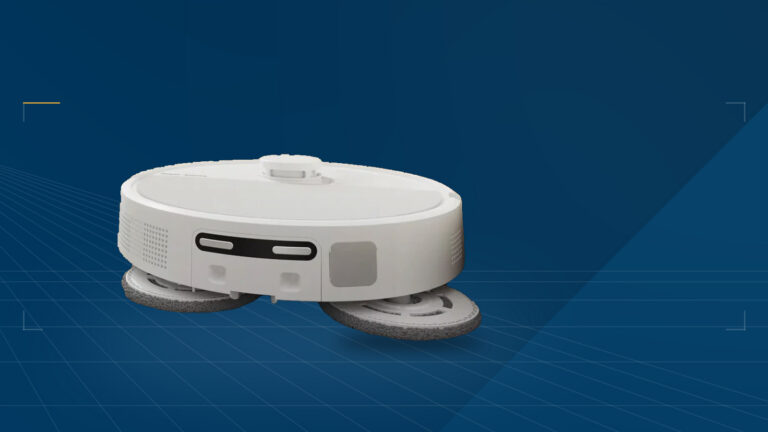
Privacy is not the only claim resting on DJI’s own materials alone. The company lists 36,000 Pa of suction, an extending LiDAR-guided mop arm with a 123-degree swing built to reach under low furniture, and legs rated to climb obstacles up to 8.5 cm, figures repeated in Engadget’s coverage of the launch without independent measurement.
The arm and legs are also new mechanically, not just new to DJI. An extending arm that lowers under furniture and legs that lift the chassis over an 8.5 cm ledge both introduce moving parts and failure points a flat, wheeled vacuum does not have, and DJI’s announcement does not describe how either behaves if it jams mid-cycle.
No outlet has clocked sustained suction on carpet, timed the arm’s reach under furniture, or tested the legs against an actual 8.5 cm ledge. DJI’s own IFA demonstration is still the only public showing of any of it.
That absence of a track record is a specific classification gap, not a vague caution: a moving arm and climbing legs are new mechanisms for this product line, so there is no owner-reported wear pattern, no teardown, and no repair-cost history to weigh against the price.
The translucent shell DJI carried over from the first Romo is, for now, the only part of the product a buyer can actually inspect before the rest of the claims are tested. Robovations’ own skip-for guidance names this directly: buyers wanting a proven arm or leg mechanism are told to wait, since neither has independent testing behind it yet.
Robovations database
Where DJI ROMO P2 sits
Measured against every published robot in robot vacuums
full rangemiddle halfmedianthis robot
- Suction203 in robot vacuums36,000med 10,000
Why no US date is setNo price, no retailer, no ship window
DJI has not published a US price, retailer or ship date for either ROMO 2 model. The gap is not purely a marketing decision: on July 28, 2026 the FCC added foreign-made mobile robots to its Covered List, blocking new device models from the equipment authorization required to sell in the US, per Tom’s Hardware. The rule catches any ground robot heavier than 4.4 lbs carrying an environmental sensor and a network link of at least 200 kbps, a description wide enough to reach nearly any camera-equipped vacuum.
DJI drones were already covered: the FCC added foreign-made drones, DJI’s included, to the Covered List in December 2025. Existing robot vacuums already certified for US sale are unaffected; only new device models are blocked from clearing authorization, and the ROMO P2 has not been through that process at all, so it has no existing US listing to fall back on while a new one is pending. A US buyer evaluating the ROMO P2 today is evaluating a product with no confirmed path to a US shelf, not merely an unannounced one.
What ownership costs are still unpublishedDJI Has Not Priced the Filters or Dock Consumables
Robovations’ record on the ROMO P2 lists a maintenance routine built from DJI’s own documentation, and it is notably incomplete on cost. The published cadence covers what needs doing; it does not yet cover what any of it will cost to keep doing.
- Weekly: clear the main brush and the extending mop arm mechanism of hair and debris.
- Weekly: rinse or replace mop pads. DJI has not published a pad-wash cycle for this dock.
- Monthly: check and clean side brushes and sensor housings.
- Every 3 to 6 months: replace the filter. DJI has not published a filter price for this model.
Onboard bin and dock bag capacity are also undocumented, so how often the dock itself needs attention beyond emptying is not yet knowable from published material. For a dock built around self-emptying as its core pitch, that is a real gap rather than a minor omission. None of these are unusual gaps for a first-generation product on its own, but they compound with the unknowns above rather than offsetting them.
Where the classification actually restsLevel III Rests on the Navigation Stack Alone
Robovations classifies the ROMO P2 at Level III on the Autonomy Ladder, based on triple-sensor LiDAR navigation and AI-based obstacle classification documented in DJI’s own materials. That rests on the navigation architecture alone, the part of the announcement DJI has described in the most technical detail.
The record carries no Robovations Score. The ROMO P2 is out of scope for scoring because it is not yet shipping or purchasable, so there is no field data on failure rates, software stability or maintenance burden to measure against. Robovations’ own pre-release assessment sits at 72 out of 100, reflecting an established manufacturer entering a new mechanical design with no track record on the parts that are new.
Triple-sensor LiDAR with AI obstacle classification is common on current Level III vacuum-mops. What is new here is the arm and legs layered on top of an otherwise familiar navigation stack, not the navigation itself.
Five unknowns, and where the line sitsFive Named Unknowns Sit Behind the Pre-Release Number
The pre-release number names five specific unknowns rather than a general wait-and-see: whether the ROMO P2 ever reaches US retail, how the arm and leg mechanism holds up over repeated use, what Local Data Mode restricts once it ships, how the P2 differs from the A2 beyond color and price, and whether reviewers confirm the published suction figure.
DJI’s own product FAQ answers that last comparison with color and price alone, which leaves open whether the A2 carries the same arm, legs and suction rating as the P2, or a reduced set under a lower price.
Robovations’ fit-for guidance names hard-floor homes wanting arm-assisted mopping and buyers comfortable being early adopters of a first-generation mechanism as the two profiles this robot suits today. The skip-for guidance names US buyers wanting to purchase at launch, and anyone wanting the privacy mode from day one, as the two profiles it does not: a control that does not exist yet cannot be verified either.
DJI is marketing a fix for the exact failure that exposed thousands of ROMO cameras, but the fix is not in the box shipping this month, and neither is independent confirmation of the numbers printed beside it.