Lifecycle
What Happens to Your Robot Vacuum When the Manufacturer Shuts Down the Servers?
Vorwerk promised Neato's cloud would run five years past the brand's 2023 shutdown. It lasted under three, and when the servers went dark on November 30, 2025, the vacuums kept vacuuming while their schedules, no-go zones, and saved maps simply vanished. Which capabilities live on a robot and which live on a company's servers rarely appears on any spec sheet, until the day it matters.
On this page13 sections
- The day the app stopped answering
- Real-time navigation almost always runs locally
- Almost everything downstream of it does not
- The arrangement suits the manufacturer too
- Invisible until something breaks
- The cloud phase-out, in practice
- Manufacturers rarely publish this map
- A wire-guided mower keeps its core task local
- Camera flagships and the cloud
- A shutdown does not delete the robot, it strands it
- A few things are checkable before that day
- Reading a dependency before you buy
- The comparison nobody publishes
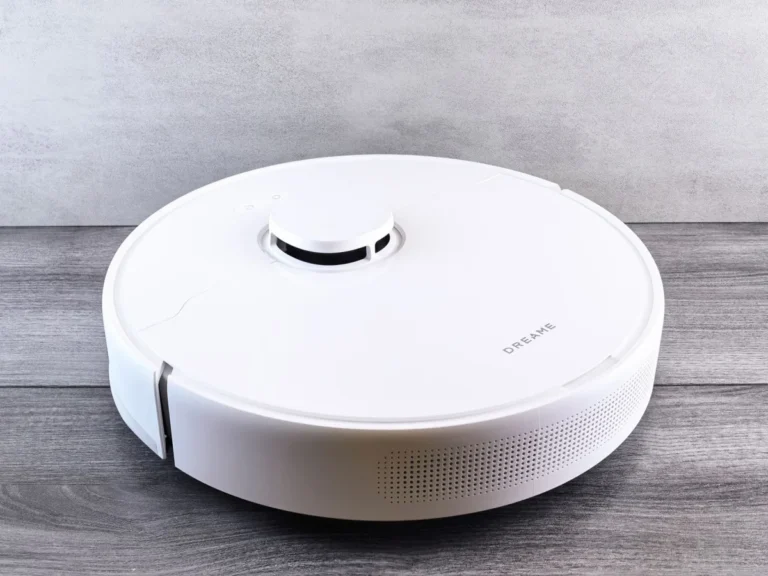
Neato Robotics wound down in 2023. Vorwerk, the German appliance maker that owned the brand, discontinued Neato that year, but stated at the time that its cloud services would keep running for at least five years, giving existing owners a long runway before anything about daily operation would change.
That runway got cut short. Vorwerk announced a phase-out in October 2025, and Neato’s cloud infrastructure shut down completely on November 30, 2025, well short of the five years promised in 2023. Some coverage describes the phase-out itself running through the fourth quarter of 2025, with the final cutoff landing at the end of November.
What owners lostThe day the app stopped answering
Coverage from Engadget, Gizmodo, TechRadar, Vacuum Wars, and IEEE Spectrum documented the fallout in similar terms: MyNeato app connections stopped resolving, scheduling and remote start went dark, and smart home platform integrations that had linked Neato vacuums to Alexa or Google Home routines broke.
The cleaning schedules, virtual no-go zones, and saved room maps that owners had built up over years of use, all stored in the app rather than on the robot, were deleted along with the backend that held them.
What the shutdown did not do is turn the machines into scrap. Neato vacuums still run as manual, button-operated cleaners; the hardware kept functioning the day the servers went dark.
The more useful question this raises is not whether a shutdown like this happens again to some other brand, but which parts of any robot a person owns are actually stored on the machine itself, and which parts were always somebody else’s to keep running.
On-device versus off itReal-time navigation almost always runs locally
Real-time navigation is the part of a consumer robot that almost always runs locally. Simultaneous localization and mapping, the process a vacuum or mower uses to build and continuously update a picture of its surroundings while moving through them, has to execute on the machine itself, because a round trip to a remote server is too slow for dodging a chair leg or a garden hose in real time.
Roomba-class vacuums, LiDAR-guided mowers, and vision-based flagships all compute this core loop on board, whatever their marketing copy chooses to call it.
Everything downstreamAlmost everything downstream of it does not
Almost everything downstream of that core loop tells a different story. Multi-floor map storage, cleaning or mowing schedules, remote start and monitoring, voice assistant bridging to Alexa or Google Home, firmware delivery, and increasingly the AI models used for camera-based object recognition depend on a live connection to servers the manufacturer, not the owner, operates and pays to keep running.
- Persistent multi-floor map storage, so a robot remembers layouts room by room rather than remapping from scratch.
- Scheduling, remote start, and remote monitoring, routed through the manufacturer’s own app and backend.
- Voice assistant bridging to platforms like Alexa or Google Home, which typically requires a cloud handshake.
- Firmware delivery and version management, pushed from the company’s servers rather than stored on a memory card.
- Camera-based AI object recognition, in at least some current implementations, though the split between on-device and cloud inference is rarely specified.
Robovations tracker
What has actually changed
2 recorded updates for Neato D8
- Italian regulator opens formal inquiry into Vorwerk over Neato cloud shutdown
The Italian Competition Authority (AGCM) carried out inspections of Vorwerk on April 22, 2026, opening a formal investigation following consumer complaints received between November 2025 and April 2026 about connected robot vacuums losing cloud-dependent features. The D8 is among the models cited, as its scheduling, remote start, and no-go zone features were discontinued in the Vorwerk cloud phase-out. The investigation is open; no finding of wrongdoing has been issued, and owners should monitor AGCM proceedings for any consumer remedy outcome.
Setback - Vorwerk announces Neato cloud services phase-out in Q4 2025
Vorwerk announced on October 6, 2025 that Neato cloud services would be phased out during Q4 2025, citing advanced cybersecurity standards, compliance obligations, and regulatory frameworks that made the legacy cloud infrastructure impractical to maintain. For D8 owners, this removes scheduling, no-go zones, map management, and remote start; the robot retains manual single-button operation. The exact shutdown date and detailed phase-out timeline were not published, so owners should monitor Vorwerk support channels for specifics.
Setback
Why the split existsThe arrangement suits the manufacturer too
That split exists partly because it suits the manufacturer as much as the owner, at least while the company stays in business. Cloud-hosted scheduling and app control let a company ship new features through a software update rather than a firmware flash to every unit already sitting in a home, and let it collect usage data that feeds future models.
The incentive does not disappear when a brand is discontinued or absorbed into a parent company; it simply transfers to whichever entity ends up owning the servers, Vorwerk in Neato’s case, until that entity chooses to stop maintaining the infrastructure.
Architecture
What stays on the robot, what depends on the vendor
- Stays putMap and compute are hardware you own, so the same three streams never leave the building.
- Saved mapsCrosses the wall. Anything over this line is held on a vendor server, under their retention policy rather than yours, for as long as they choose.
- SchedulesCrosses the same wall to the same server.
- Remote startCrosses the same wall to the same server.
Why the split stays hiddenInvisible until something breaks
None of this is disclosed consistently across the category. Product pages advertise smart scheduling and AI recognition as capabilities of the robot itself, without saying where the computation for either one actually happens.
Whether the underlying processing runs on a chip inside the housing or in a data center the company operates elsewhere is rarely specified anywhere a buyer can check before paying for it, and the distinction typically only becomes visible after something goes wrong.
A robot vacuum or mower is not the only category built this way, but the stakes read differently here than they do for a smart speaker or a streaming box. A speaker with a dead cloud backend is a decorative object.
A robot with a dead cloud backend is still a machine with a motor, a battery, and moving parts capable of doing the physical job it was built for, cutting grass or picking up dust, on whatever local logic survives the shutdown. How much of that physical capability remains reachable without the app is the question the rest of this piece is trying to answer, category by category.
What Neato's shutdown deletedThe cloud phase-out, in practice
The Neato case is useful precisely because it is documented rather than hypothetical. Robovations’ own reassessment of the discontinued Neato D8 records that the 2023 closure ended firmware updates and OEM parts production, and that the October 2025 phase-out announcement was followed by the shutdown of cloud services roughly a month later.
Zone scheduling and no-go zones stopped working across the affected models. The LaserSmart LiDAR hardware kept mapping the room it was placed in, because that part of the product had never left the machine.
Both Neato records examined here show slightly different flavors of the same failure. The Neato D8 reverts to single-button manual operation: one press launches a full-house run with no app in the loop, drawing on the onboard LiDAR that already knew the space.
The earlier Neato Botvac D7 Connected, which introduced app-drawn no-go lines to the category in 2018, degrades a step further, falling back to pattern or random-walk cleaning once the cloud-stored boundaries are gone. Neither robot went inert. Each lost the capability that had stored the most of its identity off the device.
An undisclosed specManufacturers rarely publish this map
Navigation method earns a line on most spec sheets: LiDAR, vSLAM, EPOS, whichever applies. Cloud dependency does not get the same treatment anywhere in the category. The gap looks less like one company’s individual reporting failure than a shared industry norm, and it is named plainly here rather than papered over with a guess about any specific product’s architecture.
Wire, satellite, and serviceA wire-guided mower keeps its core task local
A wire-guided robot mower sits at the simplest end of this spectrum. Its core task, following a buried boundary loop and cutting the grass inside it, is handled entirely by onboard sensors reading the wire’s signal as the mower moves.
Past a scheduling app used to set start times, there is comparatively little left for a vendor’s servers to be responsible for. If the company that made it vanished tomorrow, the mower would likely keep mowing inside its existing wire on whatever schedule was last set locally, with no cloud round trip required for the boundary logic itself.
The Husqvarna Automower 435X AWD NERA complicates that picture without moving the underlying dependency into the cloud. Its EPOS satellite positioning system computes centimeter-accurate virtual boundaries on board, supporting a Level IV classification, and does not route real-time position data through a remote server the way a scheduling app does. The positioning math happens inside the mower as it crosses the lawn, session after session.
Term
EPOSHusqvarna’s satellite-based virtual boundary system. It replaces a buried perimeter wire with positioning computed on the mower itself, though manufacturer documentation calls for annual calibration through an authorized service center.That annual service requirement is a different shape of manufacturer dependency than Neato’s cloud shutdown, a service contract rather than a server that can simply be switched off, but it is a dependency all the same, and it is one a wire-guided competitor at a lower price point simply does not carry.
The lawn still gets cut either way; what differs is who a household depends on to keep the boundary accurate over years of ownership.
Where these sit
The rung each one is classified at
Robovations database
Where Neato D8 sits
Measured against every published robot in robot vacuums
full rangemiddle halfmedianthis robot
- List price214 in robot vacuums$599med $800
- Runtime186 in robot vacuums100med 180
The recognition gapCamera flagships and the cloud
Camera-based flagship vacuums sit at the far end of the same gradient, carrying the most invisible dependency of the three. The Roborock Saros 20 navigates using a vision-based system Roborock calls StarSight, with no traditional LiDAR sensor at all, and recognizes more than 200 obstacle types according to the robot’s own listed specifications. Its core SLAM loop runs on board for the same latency reasons every other robot in this piece does.
What is not documented, in Roborock’s published specifications or anywhere else checked for this piece, is whether the object-recognition model itself, the part of the system that tells a sock apart from a phone charger or a resting cat, performs that inference locally on the robot’s own processor or leans on cloud compute the way the scheduling and firmware layers already do.
That is not a gap in this reporting. It is a gap in what the manufacturer discloses at the point of sale, and it is exactly the kind of undocumented dependency that stays invisible right up until the day servers somewhere go quiet.
Three architectures
What stays local, what depends on the vendor
| Robot | On-device | Vendor-dependent | Class |
|---|---|---|---|
| Neato D8 | LaserSmart LiDAR mapping, single-button manual run | App scheduling, no-go zones, map sync, remote start (all discontinued) | IIIConditional |
| Roborock Saros 20 | StarSight vision-based SLAM, routine cleaning runs | App control, firmware delivery, voice assistant bridging, undocumented recognition compute | IIIConditional |
| Husqvarna Automower 435X AWD NERA | EPOS satellite positioning, mowing execution | App scheduling, annual EPOS calibration service | IVEnvironmental |
What outlasts the serversA shutdown does not delete the robot, it strands it
The mechanism connecting all three robots is simple once it is stated plainly. A server shutdown does not delete a robot. It deletes whatever was never actually running on the robot in the first place, and in doing so, it reveals after the fact how much of the product’s advertised value lived somewhere else the whole time. For a wire-guided mower, that subtraction is small, limited mostly to scheduling convenience.
For a robot whose defining convenience was app-based scheduling, persistent multi-floor memory, or a camera model that depends on a remote server to recognize what it is looking at, the subtraction can remove most of what a household actually relied on day to day, while the physical machine keeps spinning its brushes or blades exactly as before.
The practical testA few things are checkable before that day
A few things are checkable before that day arrives, even without a manufacturer disclosure built for the purpose.
- Whether support documentation states that basic start, stop, and return-to-dock functions work from a physical button, independent of the app.
- A company’s own track record with previously discontinued products in the same line, where one exists, which is a documented data point rather than a guess.
- Whether a setup guide describes maps and schedules as stored on the device, in the app, or both, since the two are not always the same.
What is checkableReading a dependency before you buy
None of this predicts which company shuts a service down next, and naming one here would be speculation rather than classification. What the Neato case documents is a mechanism, not a forecast: a company can promise a runway, in this instance five years starting from a 2023 shutdown, and end it well before that runway is up, without any hardware failing on its own terms.
The distinction that ends up mattering years into ownership is not how capable a robot’s sensors were on launch day. It is how much of what makes the robot useful was ever stored anywhere the manufacturer, rather than the owner, has the power to turn off.
What the spec sheet omitsThe comparison nobody publishes
A spec sheet lists sensors, runtime, and suction or cutting width because those numbers are easy to verify and compare against a competitor. It does not list which of a robot’s advertised behaviors depend on a server the buyer will never see, because no one in the category has been asked to publish that list yet.
Vorwerk’s decision to end Neato’s cloud early did not change what the D8 and the D7 Connected were capable of on the factory floor the day they shipped. It changed what they were capable of doing on an ordinary morning three or four years after purchase, and that later timeframe is the one most robot ownership actually happens in.
The Neato shutdown did not break a robot. It deleted the parts of it that had never lived on the machine, leaving the parts that had. What survives a server outage is decided in the architecture, long before the outage happens.
Robovations Score v4.2
What the 40 is made of
Neato D8
- Capability40% of the score58med 66
What it does without you.
- Dependability40% of the score20med 66
Whether it keeps doing it.
- Ownership burden20% of the score43med 67
What it asks of you.
this robotcorpus median
Bar length is the pillar's score out of 100, against the corpus median. Each pillar's weight is printed beside its name. Value and price are published alongside the score and never averaged into it.