Analysis
How much should a robot vacuum cost? What each price band actually buys
Robot vacuum prices span roughly $1,200 among the models compared here, yet every one lands in the same Level III classification. That gap buys a mop-washing dock, a longer auto-empty interval, and a camera trained to dodge a charging cable, not a robot that reasons through a house it has never mapped.
Every robot vacuum compared here, from a $599 LiDAR-equipped model to a $1,799 flagship, is classified at Level III (Conditional Autonomy) on the Robovations Autonomy Ladder. Each one maps a home, plans a route through it, and finishes a cleaning job without a person steering it room to room.
None of them decides to clean a house it has never mapped, and none negotiates a space it was not given time to learn first. That shared behavior is what the classification records, and it holds at every price in this comparison.
The roughly $1,200 spread between the cheapest and most expensive vacuum in this set does not move that classification. It moves what surrounds the classification: dock automation, mop-washing cycles, self-emptying intervals, and how often a camera stops short at a charging cable. Price in this category tracks convenience hardware, not decision-making capacity.
What buys convenience, and what would actually buy a higher autonomy tier, are not the same purchase. Sorting out what changes at each band, and what stays fixed across all of them, means putting navigation hardware, classification score, and dock architecture side by side and reading them against the Ladder rather than against the sticker.
Same ceiling, different costLevel III, regardless of the price tag
Neato D8 carries a $599 MSRP and a Robovations classification score of 67. Dreame Matrix10 Ultra carries a $1,799 MSRP, roughly three times the price, and a score of 62.
Both are classified at Level III. The score gap between them is five points; the price gap is twelve hundred dollars. If price purchased autonomy, that relationship would run in the other direction, with the more expensive robot sitting higher on the Ladder. It does not.
Roborock Qrevo MaxV, at $1,199.99, holds the highest classification score in this comparison at 75. That score reflects navigation execution and documented reliability, not a higher rung on the Ladder.
A 75 and a 56 can occupy the same Level III box for different reasons: one robot executes conditional autonomy cleanly, another does a comparable job with more owner-reported friction. Neither reaches the threshold Robovations reserves for Level IV, which requires operating across spaces the robot has not been mapped for in advance.
Two robots in this comparison share the lowest classification score, 56, at very different prices. Yeedi S20 Infinity Ultra lists at $999. Miele Scout RX3 lists at $1,299, with a street price that has settled closer to $899.
Neither the LiDAR-plus-camera navigation on the Yeedi nor the camera-based vSLAM on the Miele lifted the score above the entry-band robots. Score in this system tracks execution and documented reliability signals, not sensor category and not price. A more elaborate sensor stack is an input to the classification, never a shortcut past it.
[rv_ans_distribution robot=”neato-d8″ metric=”price,suction,runtime,cost5″]
Why the map is the ceilingHow each robot decides where to go caps all of them
The reason price cannot buy a higher tier here comes down to how each robot decides where to go. Every vacuum in this comparison runs some form of SLAM, whether the sensor is a spinning LiDAR turret or a forward-facing camera.
The robot builds a map on an early pass, locates itself inside that map, and plans coverage against it. That loop is the mechanism of Level III: conditional autonomy that depends on a learned representation of the space it is working in.
Term
SLAMSimultaneous localization and mapping. The robot builds a map of a space while tracking its own position inside that map, using LiDAR ranging or camera features. It is the navigation foundation under every robot in this comparison, and it requires the space to be learned before the robot can plan a full pass through it.The ceiling sits exactly there. None of these robots reasons through a floor plan it has not already learned, and none adapts to a room rearranged mid-clean beyond routing around the new obstacle. A more expensive sensor stack changes the fidelity of the map and the accuracy of localization. It does not change the requirement that a map exist first, and that requirement is the specific dependency holding every robot here at Level III rather than Level IV. Environmental Autonomy, the next rung, would demand a machine that performs its task across spaces it was never configured for in advance.
Adding a camera to a LiDAR robot, or a second processor to run object recognition, sharpens perception inside the existing loop. It does not remove the mapping precondition, and manufacturer specification sheets across this price range describe richer sensing without describing a robot that dispenses with the learned-map requirement.
What $600 buysThe entry band: $599 to $600
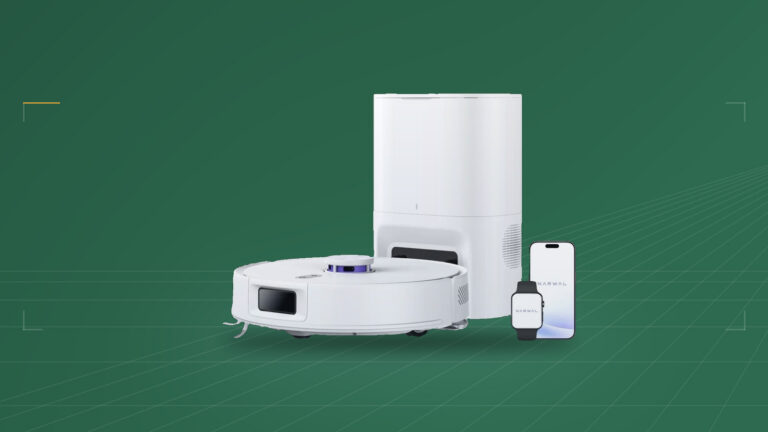
At $599, Neato D8 pairs LiDAR-based mapping, Neato’s LaserSmart system, with a defined-pass cleaning routine and a standard charging dock. There is no self-emptying base, no automated mop-pad wash cycle, and no camera layered on top of the LiDAR ranging. The robot maps, plans, cleans, and returns to a dock whose only job is to recharge it.
Ecovacs Deebot N20 Pro+ sits within a dollar of the D8’s MSRP, at $599.99, using a different LiDAR system built on dToF ranging and marketed as TrueMapping. The two robots land at comparable scores, 67 and 68. At this band, LiDAR mapping has become close to standard equipment; what varies is dock simplicity and how cleanly the obstacle software handles cables, shoes, and pet waste.
Neither entry-band robot ships with the auto-empty dust bag or the mop-lifting mechanics that begin appearing closer to $900. A buyer at $599 trades dock convenience for a lower sticker price, not autonomy scope. Owner reports on r/robotvacuums describe emptying the onboard bin by hand every few cleaning cycles as the main recurring task at this band. The Level III ceiling is identical either way.
What $900 addsThe middle band: $799 to $999
Three vacuums in this range add camera-based perception on top of LiDAR mapping. MOVA P70 Pro Ultra, $799 MSRP and discounted to roughly $679, pairs LiDAR with a camera and AI-driven obstacle avoidance aimed at recognizing object types rather than ranging distance alone.
Yeedi S20 Infinity Ultra, at $999, follows a similar formula. Neither addition moves the classification off Level III; it changes what the robot avoids, not what kind of decision it is permitted to make on its own.
Narwal Freo Z10 Turbo lists at $899.99 MSRP and has been selling closer to $559.99, putting its street price inside the entry band despite a middle-band list price.
Its documented differentiator is carpet-focused floor detection rather than a camera system, an example of the middle band spending its extra cost on floor-type handling instead of object recognition. Its score, 60, is the lowest of the three middle-band robots, evidence that added hardware alone does not raise the score when execution lags.
Camera-based obstacle avoidance at this band typically works by classifying object types a household is likely to encounter, cables, shoes, and pet waste, so the robot can steer around them rather than only detecting that something is there. Manufacturer specification sheets describe the categories a camera system recognizes; independent verification of hit rates against untested objects is not part of that documentation, which is one reason navigation architecture and Autonomy Ladder classification track separately.
A camera that identifies more object types does not, by itself, qualify a robot for a higher rung. The Ladder measures what the robot decides to do next without a person present, not how many labels its perception system can attach to what it sees.
Robovations database What comes back, and how oftenMopping hardware vs decisionsMopping is mechanical, like the dock
Mopping is the other place the middle and upper bands spend money, and like the dock, it is mechanical rather than cognitive. Entry systems drag a damp flat pad behind the robot. Higher bands add vibrating or rotating pads that apply pressure to the floor, and pad-lifting mechanisms that raise the mop when the robot detects carpet so it does not drag moisture across a rug.
MOVA P70 Pro Ultra and the upper-band Ecovacs and Dreame models list rotating or lifting mop assemblies among their headline features. These systems change how thoroughly a hard floor is wiped and how well the robot keeps water off carpet. They do not change the decision loop.
A lifting mop is an actuator responding to a floor-type reading; the robot still cleans only the map it was given, in the order it planned. Mopping quality and autonomy tier are independent axes, which is why two robots with very different mop hardware sit on the same rung of the Ladder.
Where the dock money goesThe top band: $1,199 to $1,799
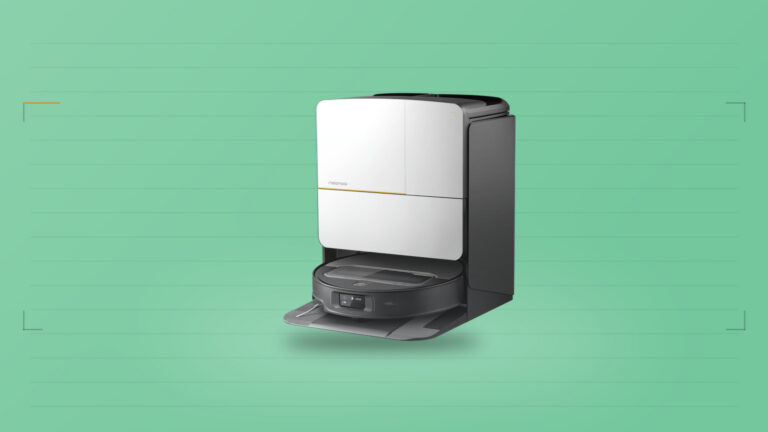
Above $1,200, spending shifts largely to the dock and to maintenance automation rather than to navigation hardware. At this tier, LiDAR or camera-based navigation is close to assumed; the differentiation buyers pay for sits in the base station. Roborock Qrevo MaxV, at $1,199.99, adds an RGB camera and structured light on top of its PreciSense LiDAR SLAM, aimed at finer-grained obstacle identification.
eufy Omni E25, $1,299.99 MSRP and discounted to roughly $529.99, and Miele Scout RX3, $1,299 MSRP and roughly $899 currently, land in the same tier by different routes. The Miele uses camera-based vSLAM rather than LiDAR, the only vacuum in this comparison to do so at this price point.
That base-station spending typically covers water tanks for mop washing, heating elements for pad drying, and a larger dust bag rated for a longer auto-empty interval, features that live entirely outside the navigation stack.
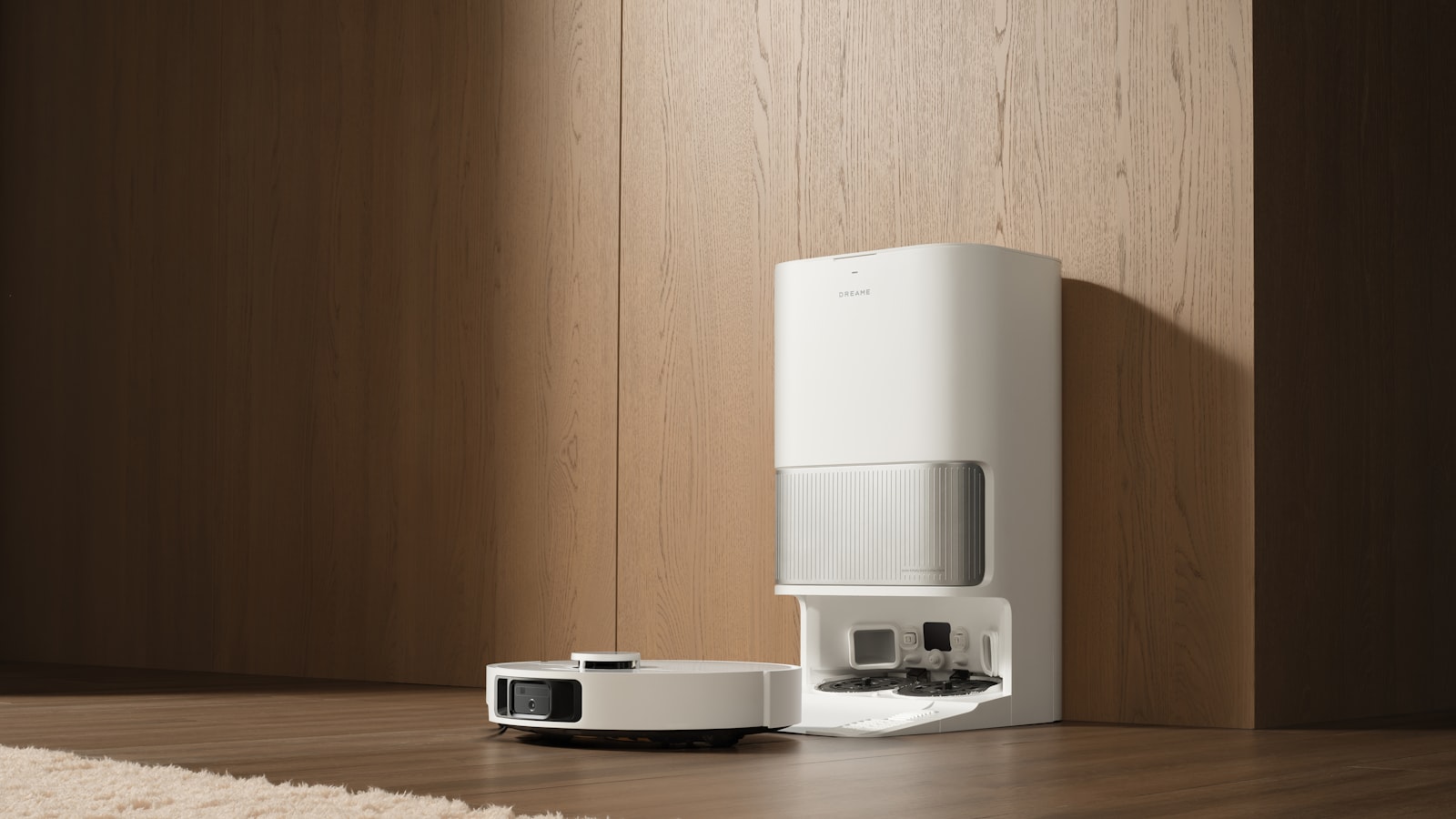
Ecovacs Deebot X9 Pro Omni, at $1,599, and Dreame Matrix10 Ultra, at $1,799, the two most expensive robots here, both combine LiDAR with a camera for obstacle avoidance.
What separates them from the $599 band is not the presence of LiDAR, which most of this list already carries. It is the dock: automated mop-pad washing and drying, self-emptying bins rated for months rather than weeks, and hot-water or detergent cycles the cheaper docks do not attempt.
Owner reports collected on r/robotvacuums describe mop-washing docks reducing how often a mop pad needs hand-cleaning, without eliminating filter and roller maintenance. None of that dock automation is an autonomy capability under the Ladder’s definition. It is a maintenance capability, and it is the largest single thing the top band is selling.
eufy Omni E25 scores 63, twelve points below the Roborock Qrevo MaxV despite a similar MSRP and a comparable list of dock features. The gap traces to LiDAR SLAM execution and dynamic obstacle avoidance documented in owner reports, not to a difference in what the dock physically does.
A shared price band buys similar categories of hardware. It does not buy shared execution quality, and the classification score is where that difference surfaces.
Six robots, one tier
Navigation hardware and price, side by side
| Robot | MSRP | Navigation | Class |
|---|---|---|---|
| Neato D8 | $599 | LiDAR SLAM (LaserSmart) | IIIConditional |
| Narwal Freo Z10 Turbo | $899.99 | LiDAR plus carpet-focus floor detection | IIIConditional |
| Roborock Qrevo MaxV | $1,199.99 | LiDAR SLAM (PreciSense) plus RGB camera | IIIConditional |
| Miele Scout RX3 | $1,299 | Camera-based vSLAM | IIIConditional |
| Ecovacs Deebot X9 Pro Omni | $1,599 | LiDAR plus camera plus AI obstacle avoidance | IIIConditional |
| Dreame Matrix10 Ultra | $1,799 | LiDAR SLAM plus camera plus reactive obstacle avoidance | IIIConditional |
Price spread, same ceiling
3x
The most expensive vacuum compared here costs roughly three times the least expensive one. Both are classified at Level III, Conditional Autonomy.
What price does not changeThe rung stays fixed
None of the ten vacuums compared here, at any price, operates outside Level III. Level IV would require a robot that adapts to a floor plan it has never seen, without a mapping pass first, and none of these is documented to do that.
A $1,799 vacuum with a self-washing dock and a $599 vacuum with a plain charging base are, in that specific sense, the same robot wearing different amounts of hardware around the same conditional-autonomy core.
Price in this category buys convenience and maintenance automation, not a higher rung on the Autonomy Ladder. Every robot vacuum here, cheap or expensive, still needs a floor plan it has already learned.