
Roborock Saros 10R
Dock integration is the headline. Dust emptying, an 176°F mop wash with 131°F forced drying, automatic detergent dosing from a 20 oz reservoir, automatic pad removal and up to 70 days of dust storage in one station. Navigation is StarSight 2.0, an active-emitter stack that ranges without room light. Mature Level IV, not a new capability story.

Will the Roborock Saros 10R work in your home?
Describe your home using the controls. Each choice reads the spec sheet for you, flagging where the Roborock Saros 10R is built for your space and where it isn’t.
A classification of fit for the conditions you set, not a recommendation. Verdicts describe engineering design intent, not test results.
Living with it.
Under 12 months in market; S-series track record positive but Saros 10R dock durability unproven.
Unprovenowner-reported arc
Roborock S-series shows consistent firmware cadence and low critical-failure rates. Owner forums positive for core navigation. Dock pump and seal durability is open question; pump clogs reported in hard-water areas after 6+ months.
The independent record is still forming. Failure modes are listed once an outside source reports them.
Review app notification for tank status; empty dock tray if detergent foam overflow occurs.
Clear side brush debris to maintain edge pickup. The DuoDivide dual parallel roller is rated at a 0 percent hair tangling rate, so unwinding hair from the main is not the routine task it is on single-roller machines.
Refill the 20 oz detergent reservoir; empty and refill the clean water tank.
Replace in dock base (Roborock bags approximately $15 for 3-pack); dock dust storage runs up to 70 days at typical use.
Replace main and side brush set (approximately $20–$30 per set); replace HEPA filter.
Inspect dock pump and for mineral buildup; descale hot-water circuit if in high-mineral water area.
Replace when the fabric is matted or thinning. Roborock publishes no wash-cycle interval for them.Typical for robot vacuums: every 3-6 months
$1,599 to buy, then about $63 a year for the replaceable parts below. Over three years that is roughly $189 past the sticker price. Excludes electricity and any repairs.
- Typical for robot vacuums: every 3-6 monthsWhere to buy Dust bag
- Typical for robot vacuums: annuallyWhere to buy Main brush
- Typical for robot vacuums: every 3-6 monthsWhere to buy Mop pad
Replacement cadence from the maintenance schedule; prices shown where the source documents them. Part links may earn a commission and do not influence the classification. All parts at Roborock
-
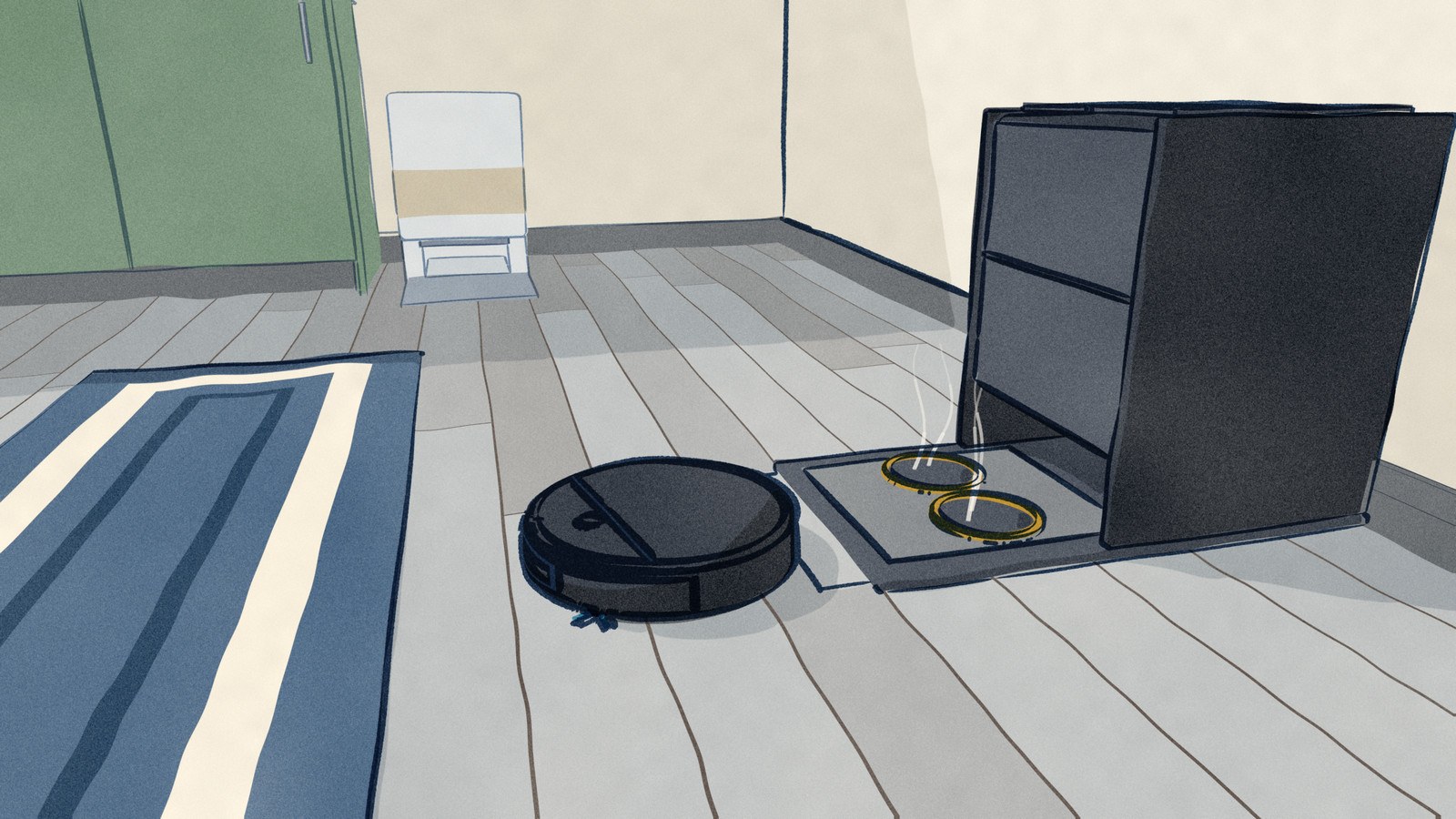
CautionHot-water dock 58C heat riskKeep children and pets away during mop wash cycle.
-
CautionLow-probability risk near water connections in high-moisture areas.
-
Obstacle detection latency edge casesPotential low-force contact at high speed on dark flooring.
The full spec sheet.
Priced above the category median, with every figure charted against the category below.
- FootprintThe width, depth and height of the robot itself, without its dock.
- 13.78 in dia · 3.14 in tall•
- WeightThe robot alone, without its dock, as the maker states it.
- 9.04 lbs•
- BatteryStored energy in watt-hours; a larger pack runs longer, not harder.
- 92 Wh · Li-ion
- Wi-FiThe bands the robot can join; many models need a 2.4 GHz network to set up.
- 2.4 GHz only
- VoiceThe assistants the maker's app links to; the robot itself does not listen.
- Alexa, Google Home
- Onboard dustbinThe bin inside the robot; an auto-empty dock moves its contents into a bag.
- 270 mL•
- Threshold climbThe tallest lip the robot is rated to cross; a door sill is about 0.8 in.
- 1.6 in•
- Mop liftHow far the mop pad rises when the robot crosses carpet.
- 22 mm•
- Dust bagA bag inside the dock that the dock empties the robot's bin into; you replace the bag.
- 2.7 L✓
- Water tankThe clean-water tank that feeds the mop, on the robot or in the dock.
- 69 mL•
StarSight Autonomous System 2.0: dual-transmitter solid-state LiDAR + 21,600-point 3D time-of-flight array + VertiBeam lateral sensing + RGB camera (108 object types)
Position shows where the figure sits across the tracked category, not a quality judgment. Suction in Pascals has no standard test method, and the published figure is a peak-mode claim, so it is comparable only within a brand and generation.
How the assessment has moved.
Every announcement, release and reassessment behind the current classification.
-
Sep 2026 · AssessmentAutonomy Ladder reclassified III → IV
-
Sep 2026 · AssessmentRecord status: Verified → Pending
-
Aug 2026 · AssessmentRobovations Score rescored under v4.2: 75 → 80
-
Jul 2026 · AssessmentRobovations Score recorded at 75 of 100
-
Feb 2025 · ReleaseGoes on sale in the US at $1,599
-
Jan 2025 · AnnouncementUnveiled at CES 2025 with StarSight solid-state nav
How Roborock Saros 10R compares.
What people actually ask.
OperationHow does the Saros 10R dock differ from earlier Roborock self-cleaning docks?
OperationDoes the Saros 10R have a robotic arm?
OperationHow does the 10R keep wet pads off carpet?
OperationWhat ongoing consumables does the dock require?
OperationIs the Saros 10R suitable for multi-floor homes?
OperationHow does it handle dark floors or low-light rooms?
OperationIs the privacy model cloud-mandatory?
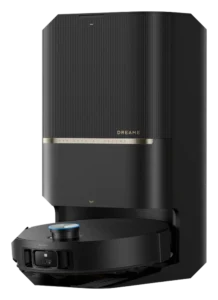 IV
IV
Dreame L60 Pro Ultra Robot Vacuum
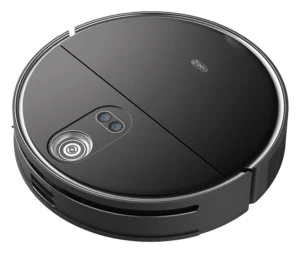 IV
IV
360 Robot Vacuum Cleaner S10
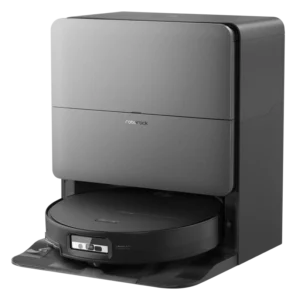 IV
IV
Roborock Saros 20 Sonic
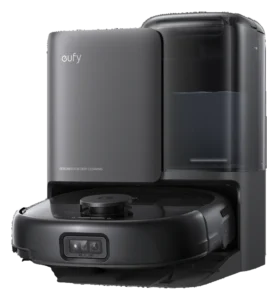 IV
IV
eufy Omni E25
Where it's sold
We may earn commission from qualifying purchases. This does not influence classification.
Reference the Roborock Saros 10R classification.
Embed the Autonomy Ladder™ mark or copy the citation. The mark is served from this record, so a reassessment updates it on your page automatically.
Get the embed code and citation
Scale proportionally only, up to 2× (536px wide)(224px wide). No recolouring, cropping, rotating, or re-typesetting.
Robovations. "Roborock Saros 10R: Autonomy Level IV (Environmental Autonomy)." Autonomy Ladder™, assessed September 2026. https://robovations.com/robots/roborock-saros-10r/
- Link it. The mark must point at this record. An unlinked mark is not authorised.
- Hot-link it. Never download, self-host, or re-upload the image. A saved copy stops updating, and a mark that has stopped updating is a claim we no longer stand behind.
- A classification, not an endorsement. It may not appear beside language implying Robovations recommends, rates, or approves the product.