What does a robot vacuum-mop combo leave for its owner to do?
Washing docks now scrub a robot's mop in hot water and dry it with hot air. The jobs they took over had to go somewhere.
On this page4 sections
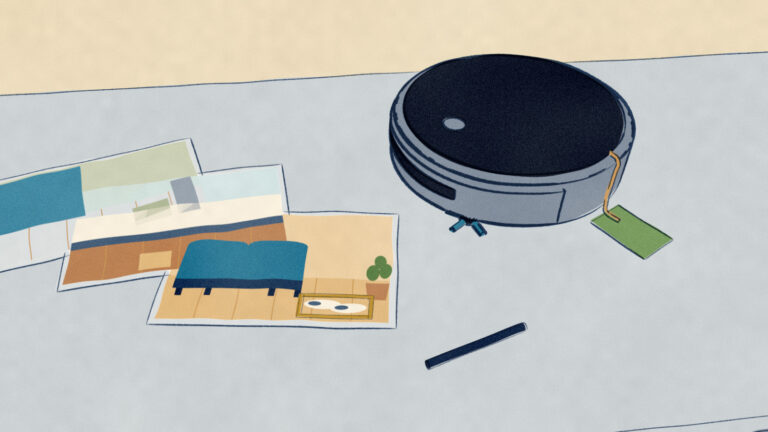
In a hands-on review of the iRobot Roomba Combo j9+, one reviewer put its upkeep into a single sentence: “Wash the mop pads after a few runs, add more water when necessary, and make sure the Roomba’s bristles aren’t getting tangled with hair.”
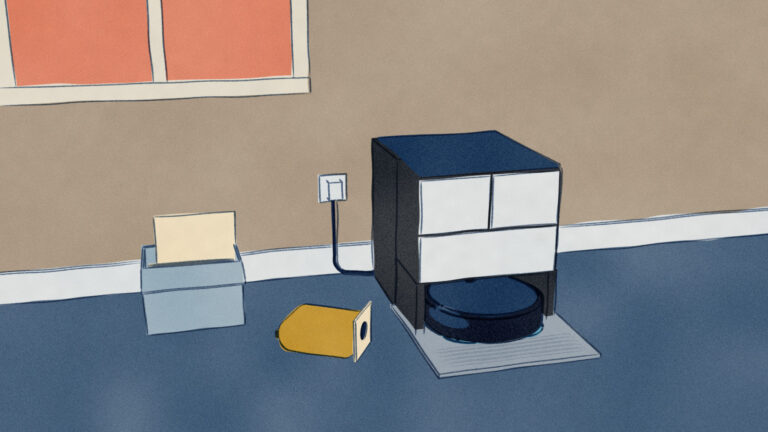
The dock handles two other jobs. It empties the robot’s bin for up to 60 days and refills its mopping liquid for up to 30. The pad stays with you. That reviewer was washing it by hand and swapping in a clean one after two or three runs.
Other makers moved the pad washing into the dock itself, as Roborock did with the station that comes with the S8 MaxV Ultra. So what’s left for you once a dock washes the mop? The chores move with the hardware, into the station’s tanks, its dust bag and its filters, and not all of them are easy to reach.
What the dock took over
Figure
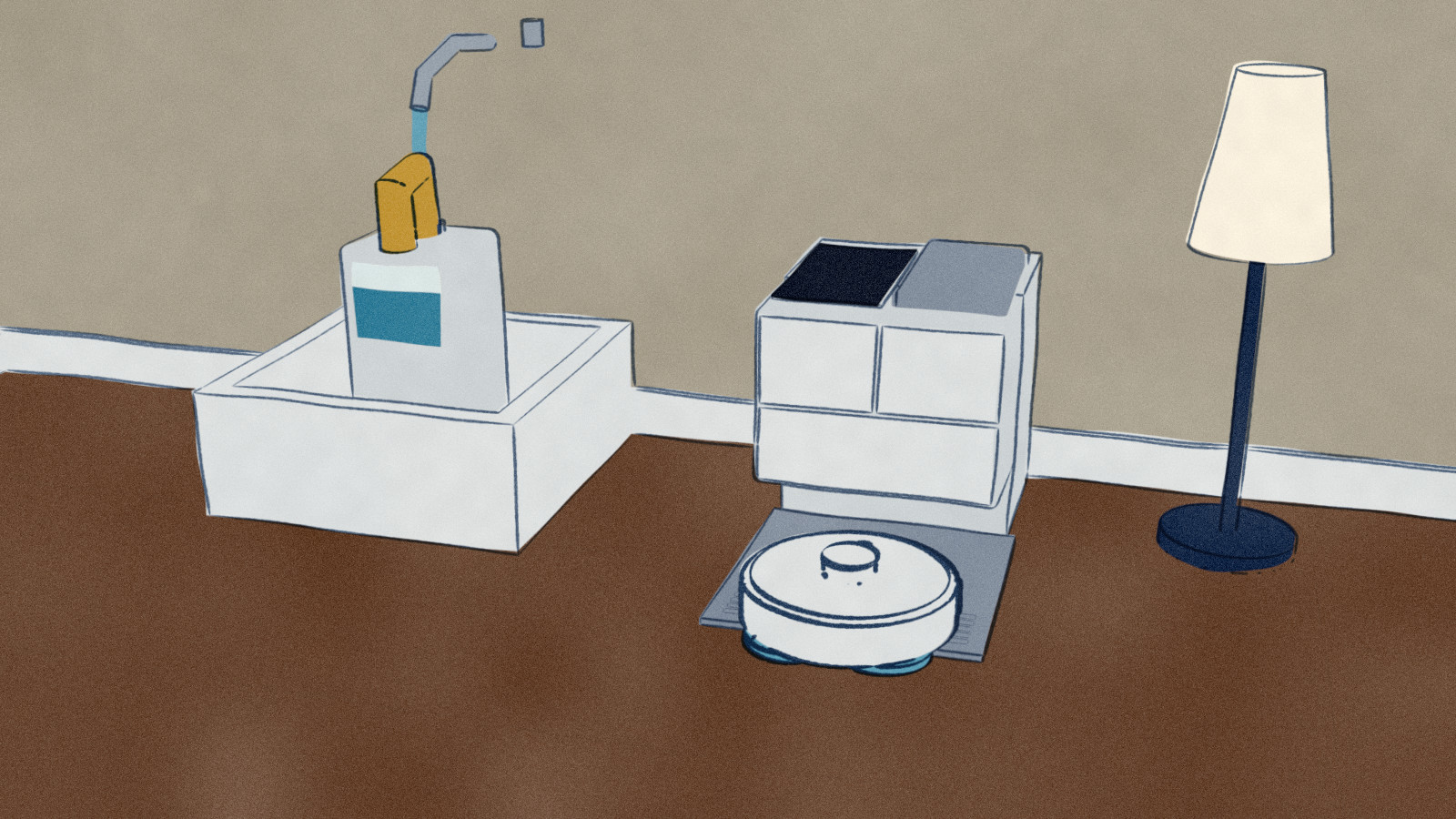
What the dock handles and what it leaves
- Clean water tankFilled by hand without a water line
- Dirty water tankPoured out by hand
- Sealed dust bagChanged by hand when it fills
- Onboard binEmptied after and partway through a run
- Mop padsWashed in hot water and dried with hot air
- BrushesHair picked out by hand
After a run, and partway through one, the S8 MaxV Ultra’s station empties the robot’s bin into a bag. Then it washes the mop in 140°F water and dries it with air just as hot. Docks differ on the heat: the Qrevo Edge station washes at 167°F and dries at 113°F.
The station also tops up the robot’s water tank “when needed,” cleans itself and doses detergent from a tank of its own. The bag is the slow chore. It needs changing roughly every seven weeks, more or less often depending on your home and how you run the robot.
Refilling the robot’s tank only moves water from one container to another. On a dock with no water line, you still fill the clean-water tank and pour out the dirty one. The station for Ecovacs’ Deebot X2 Omni, for one, carries a 4-liter tank for clean water and a 3.5-liter tank for dirty.
How often does that come round? About once a week, going by a tester who ran the S8 MaxV Ultra at home: “the water tank only needs to be refilled every five to seven days.” The 30-day figure for the j9+ describes a different setup, a dock that refills the robot’s mopping liquid and leaves the pad washing to its owner.
Water is the one chore a washing dock can’t take over by itself. That takes plumbing, and Roborock sells a sibling of this robot named for it: the S8 Max Ultra with Refill & Drainage System. For your home, it means putting the dock within reach of the pipes.
Term
Water lineA dock with a water line is connected to the home’s plumbing. It draws clean water from a supply pipe and sends dirty water down a drain, so no water is carried to or from it by hand.Rugs and the lifting mop
Roll a damp pad across a rug and the rug gets wet, so each of these robots raises its mop. The S8 MaxV Ultra’s lifts up to 20 mm over carpet, and the X2 Omni’s lifts 15 mm. The j9+ goes further and swings its pad up onto the top of the robot.
A lift height works like a ceiling on pile. If your rug stands taller than the lift, the pad still meets it damp. Parking the pad on top of the robot, as the j9+ does, takes pile height out of the equation for that machine.
The corner a round robot cannot reach
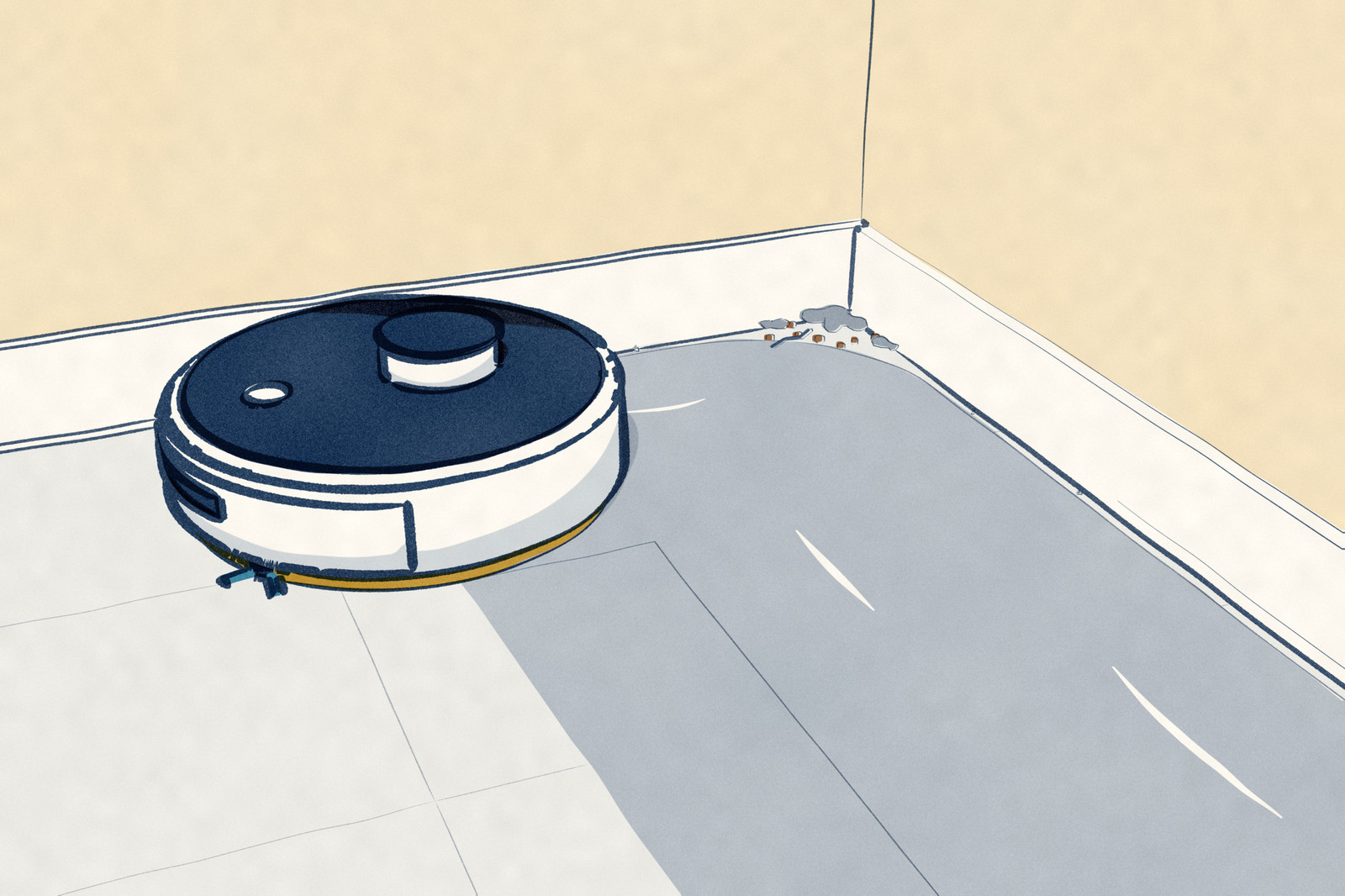
Push a round robot into a corner and its body meets the two walls at two separate points, some distance out from where they join. A pad mounted under the middle of that body stops shorter still. Makers have gone after the leftover crescent with hardware.
Roborock added a small spinning side mop to the S8 MaxV Ultra and quotes a figure of 1.68 mm “along the edge.” The Qrevo Edge carries a FlexiArm side brush and an edge-mopping system. Ecovacs changed the shape instead, giving the X2 Omni a square body and an “outstretched mopping pad” that reaches closer to corners.
Did any of it reach the corners in a real house? The same tester ran the side mop on his own floors: “Edge Mopping cleaned the baseboards and other trim pieces found all around my house.” That covers the trim. He measured nothing in the corners themselves, so that crescent may still be a job for you and a cloth.
What the owner still does
Every job that used to follow each run now happens in the dock: the bin, and on a washing dock the pad as well. The rest comes round less often, and it is spread between the robot and the station:
- Filling the clean-water tank and emptying the dirty one on any dock without a water line, about weekly on the S8 MaxV Ultra.
- Washing the pad by hand where the dock does not, as on the j9+.
- Picking hair out of the brushes, the last item in that j9+ upkeep sentence.
- Changing the dust bag, roughly every seven weeks on the S8 MaxV Ultra.
- Cleaning inside the dock, filter included.
And the dock stays where it is plugged in, usually on one floor. Carry the robot to another floor and it works there without its station, and on that floor the pad and the bin are hand work again.
Mud shows where the dirt itself ends up. On the j9+, a muddy pad comes off by hand as soon as the run is over, before it spreads mud across your floors. On the S8 MaxV Ultra the dock washes the pad, so the mud goes into the station instead.
The station’s water filter “tends to get caked in dirt and mud,” its tester wrote. He found no easy way to clean it short of “sitting on the floor and reaching into the machine with a wet cloth.”