
Autonomy Library·Reference
What does “self-cleaning” actually mean on a robot?
“Self-cleaning” names a family of dock services: self-emptying, mop washing, mop drying, brush detangling. They shift maintenance from daily to weekly or monthly. They do not remove it: bags, tanks, trays, and filters still cycle through your hands.
Counts are live·reviewed July 5, 2026
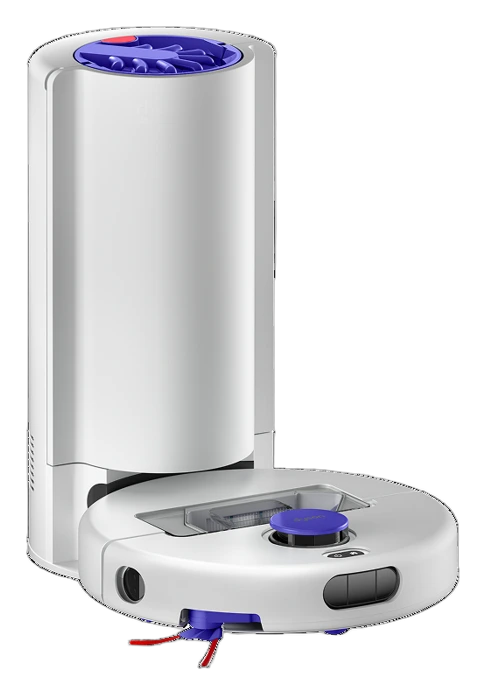
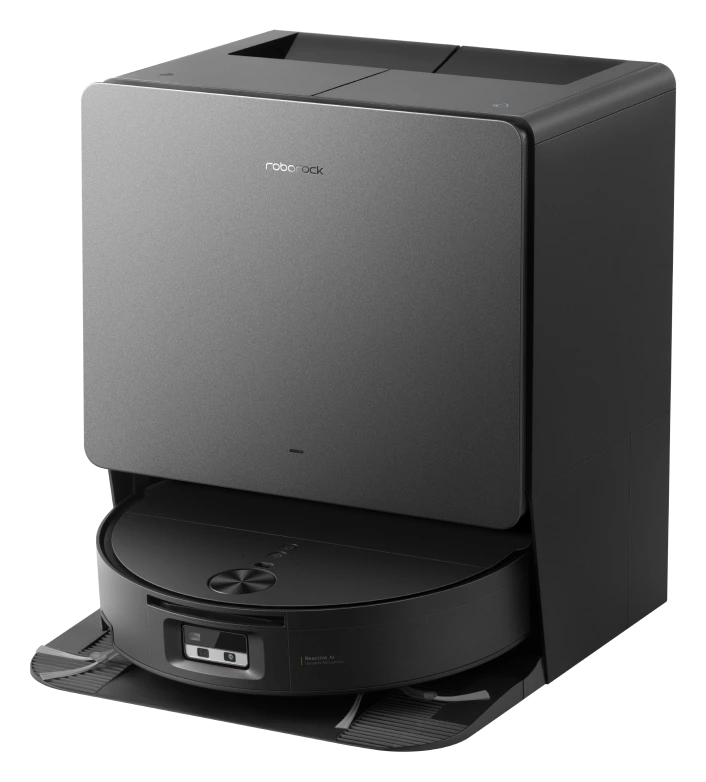
What the dock does, and what your hands still do
- 1
Clean water tankRefilled by hand
- 2
Dirty water tankEmptied by hand
- 3
Sealed dust bagReplaced when it fills
- 4
Onboard binEmpties into the dock on every return
- 5
Mop padsWashed and dried between runs
What “self-cleaning” actually names
The phrase covers a family of dock services that grew up around robot vacuums and mops: emptying the robot’s bin into a larger bag, washing and drying mop pads, refilling water tanks, and cutting tangled hair off brushes.
Each is a real mechanism doing real work, and each has a boundary the marketing usually omits: the dock services the robot, and a person services the dock.
The claim and the remaining work
| The claim | What still needs a person |
|---|---|
| Self-emptying | The dock bag fills and must be replaced, typically on a cycle of weeks. Bagless docks trade this for a bin to empty and dust exposure. Sensors and ports clog and need clearing. |
| Mop washing | Clean-water tanks need refilling and dirty-water tanks need emptying and rinsing. The wash tray itself accumulates residue and needs regular scrubbing. |
| Mop drying | Drying prevents odor between runs. It does not clean the tray, the tanks, or the pads’ eventual need for replacement. |
| Brush detangling | Reduces hair wrap on the main brush. Side brushes, wheels, and casters still collect hair, and heavy tangles still need scissors. |
| Filter maintenance | Almost universally manual. Filters need tapping out or washing on a regular cycle and replacement over time. No mainstream dock cleans the robot’s filter. |
Maintenance shifted, not removed
The honest description of a full-service dock is that it converts daily chores into weekly or monthly ones. That is a genuine improvement, and for many owners it is the difference between a robot that gets used and one that gets shelved.
It is also different from “you never touch it”, which is how the feature is commonly read. Maintenance is one of the five kinds of human work in the robot autonomy assessment, and dock services move it rather than remove it.
How this affects assessment
Dock services are weighed in the maintenance dimension of the Robovations Score and in the residual-work picture behind the autonomy classification. A robot is not marked autonomous because its bin empties itself; it is assessed on everything the owner still does across a month of ownership.
Questions
Are self-cleaning robot vacuums really self-cleaning?
Partially. The dock empties the robot, washes and dries mop pads, and refills tanks. A person still replaces bags, refills and empties water tanks, scrubs the wash tray, maintains filters, and cleans the dock itself. The work shifts from daily to weekly or monthly; it does not disappear.
What does a self-emptying dock actually do?
After a run, the dock suctions the robot’s small bin into a larger bag or canister, so the robot can run for weeks without per-run emptying. The bag then becomes the consumable a person replaces.
Do mop-washing docks clean themselves?
No. The wash tray and the dirty-water tank collect exactly what was mopped off the floor and need regular emptying, rinsing, and scrubbing. Some docks add hot water or tray-rinse cycles that lengthen the interval; none removes it.
How often do dock bags need replacing?
Commonly on a cycle of several weeks, varying with home size, pets, and run frequency. The bag is a recurring consumable cost that belongs in any ownership calculation.
Does self-cleaning raise a robot's autonomy level?
Not by itself. It reduces maintenance frequency, which is one input among several. The autonomy level is set by the robot’s independent operation across the whole job, including navigation, recovery, and the human work that remains.
Robot Vacuum Autonomy·Robot Autonomy·Robot Obstacle Avoidance·Robot Subscription Gate·Full library
Browse classified robot vacuums →·Robovations Score methodology →
Cite this page
Robovations. “What Does “Self-Cleaning” Actually Mean on a Robot?” Robovations Autonomy Library. Last reviewed July 5, 2026. https://robovations.com/robot-self-cleaning-claims/