How do you know when a robot company stops supporting a model you own?
A robot can outlive the company’s interest in it. What Neato, Sony and a federal survey of smart-product makers show about when owners find out, and where to look.
On this page3 sections
On October 6, 2025, a notice addressed to the “Neato Robotics community” went up on Neato’s support site. Vorwerk, the parent company that had closed Neato Robotics in 2023, was phasing out the Neato cloud. The robots would keep cleaning, the notice said, if owners started them by hand: “Simply press the button once to launch a full house run.”
The same notice explained why the cloud had outlasted the company. Before Neato closed, it said, “we had committed to providing five years of cloud services for our products,” and Vorwerk had kept the platform running “in order to honour the original five-year service promise.” The promise had been public since the closure itself. When the shutdown of Neato was announced in May 2023, IEEE Spectrum’s Evan Ackerman reported Vorwerk’s pledge of “five years of parts and service availability, along with enough software support to keep current cloud services operational and secure.”
Vorwerk’s stated reason for ending the service early was that “cybersecurity standards, compliance obligations, and regulatory frameworks have advanced significantly” since 2023, and that updating the old infrastructure “would not be technically meaningful.” The notice kept the manufacturer warranty in force. It said nothing about parts, the other half of the 2023 pledge.
What Neato owners lost, and what came after
Figure
A capability leaving after the sale
- The updateOne day, unannounced in any specification. Nothing physical left the machine on it.
- What stoppedThe dashed run is the service the buyer paid for and did not get.
- Hardware unchangedThe sensor and the radio it used are both still fitted and still working.
- Still runningunchanged by the update
- Withdrawnhardware unchanged, permission removed
Dennis Knake, writing for We speak IoT in January 2026, listed what went with the cloud: app control, map management, scheduling, targeted room cleaning and no-go lines. By his account the service was offline by December 2025, and the affected machines included the Neato D8, D9 and D10, all launched at IFA 2020.
In Italy, the shutdown reached a regulator. On April 22, 2026, officials of the AGCM, the country’s competition and consumer authority, inspected the premises of Vorwerk Management and Vorwerk Italia with help from the Guardia di Finanza’s special antitrust unit. The authority’s press release the next day said the companies had shut down the Neato cloud services, “causing the device to lose its essential functions,” and opened proceedings on the ground that this could amount to “a misleading and aggressive practice” under articles 20, 21, 22 and 24 of Italy’s Consumer Code.
On April 24, two days after the inspections, Vorwerk announced an exchange program for customers in Europe, We speak IoT reported. The program notice on Neato’s support site says anyone who bought a Neato robot since May 2023 and actively used its cloud features can trade it for a free, current Kobold VR7 robot vacuum. It calls the offer “a voluntary measure by Vorwerk without any legal obligation.”
Sony named what would continue
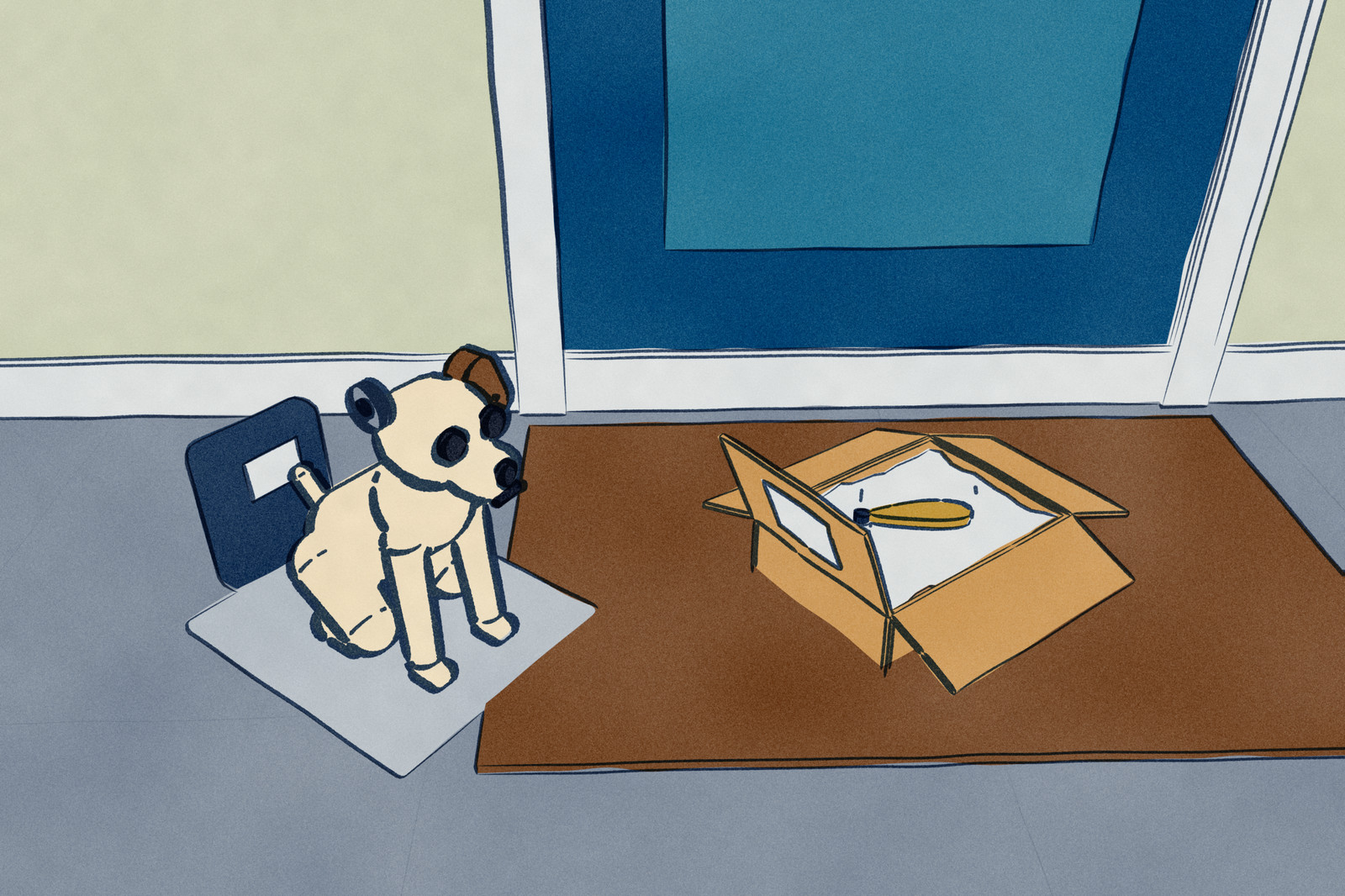
Sony put the end of a sale and the terms of support into one statement. On June 25, 2026, as Tech Xplore reported, the company said Japanese sales of the aibo ERS-1000 robot dog would end once stock ran out, while sales in the United States would continue. Tech support, replacement parts and the online cloud plans that store each dog’s memories would be maintained.
The ERS-1000 went on sale in 2018 and sold 20,000 units in its first six months, according to the same report. On what follows it, Sony said only: “While we are unable to provide any specific details regarding future product plans at this stage, we will continue to expand our range of new products and services so that aibo remains a partner cherished by its owners.” The report gives no end date for the support Sony promised.
For aibo, the cloud plan carries the dog’s memory and personality. Sony’s US page for the AI Cloud Plan says the service lets the robot “store its memories of things that it’s seen and heard, and develop its unique personality,” and that a subscription “is required in order to enjoy all the features of an aibo.” Each dog includes an initial three-year subscription, and renewal is listed at $300 a year. Sony’s Japanese store lists the three-year aibo basic plan at 99,000 yen paid up front, or 3,278 yen a month over 36 months, on a page that now notes the ERS-1000 series is no longer sold.
Where a support window is written down
In November 2024 the Federal Trade Commission released a staff study of 184 connected products, among them hearing aids, security cameras and door locks. The makers of 161 did not say on their websites how long the product would receive software updates, and broader internet searches found no support information for 124 of them, about two-thirds. The agency said that leaving it out, for a product sold with a written warranty and costing more than $15, may violate the Magnuson-Moss Warranty Act.
Consumers stand to lose a lot of money if their smart products stop delivering the features they want.
Samuel Levine, Director of the Bureau of Consumer Protection, Federal Trade Commission
Levine’s advice in the same release was that shoppers “should ask questions and consider how long their product will last.” Neato’s buyers had a published answer in May 2023: five years. A robot bought that month had lost its app control, maps and schedules by December 2025, two years and seven months later.