
Worx Landroid Vision Cloud WR320
The WR320 eliminates the perimeter wire entirely, trading boundary labor for RTK accuracy and satellite dependency. A mower for owners willing to rely on continuous satellite coverage and accept AI-camera privacy trade-offs.
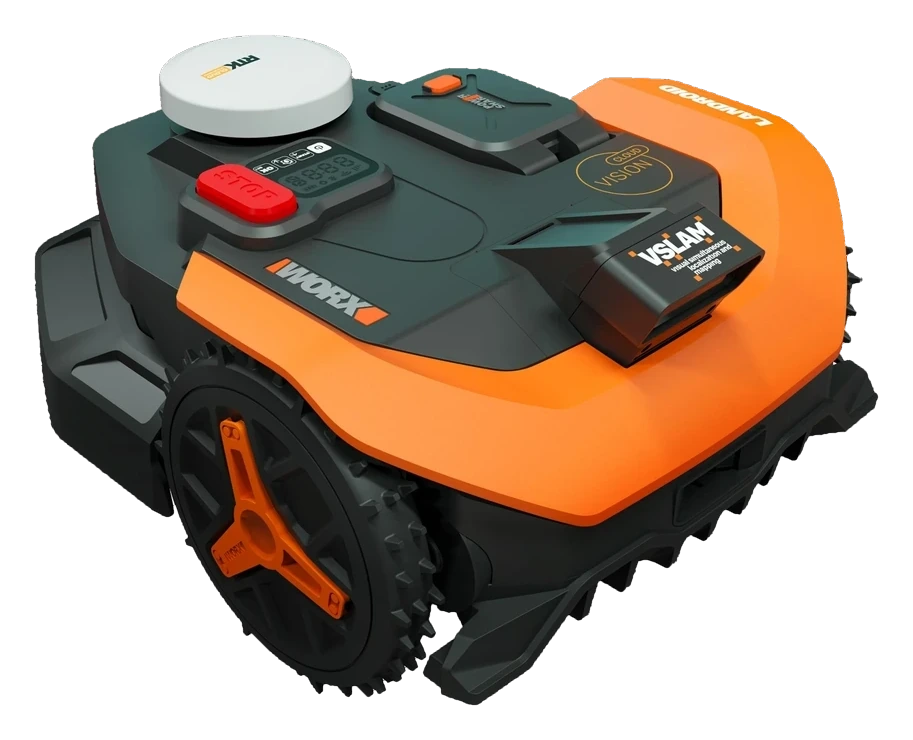
Will the Worx Landroid Vision Cloud WR320 work on your yard?
Describe your yard using the controls. Each choice reads the spec sheet for you, flagging where the Worx Landroid Vision Cloud WR320 is built for your space and where it isn’t.
A classification of fit for the conditions you set, not a recommendation. Verdicts describe engineering design intent, not test results.
Living with it.
New product; RTK plus camera integration proven on test fleet.
Unprovenowner-reported arc
Worx has shipped RTK-based Landroid models for three years; the Vision Cloud adds AI-camera obstacle detection. Manufacturer testing confirms centimeter-accuracy positioning and camera-based object detection on demo units. Field owner-report cadence pending wider retail availability.
The independent record is still forming. Failure modes are listed once an outside source reports them.
Inspect for grass clumping or damage; clean dock charging contacts if wet storage is used.
Check wheel treads for debris; clean sensors (, RTK antenna) for dust or pollen buildup.
Review and update yard boundary mapping in app if landscaping changes; test RTK signal strength across the yard.
Before winter storage, drain water from motor housing, clean , and store mower indoors in a dry location. Before spring use, recharge dock and recalibrate RTK positioning.
Replace assembly (~$40-60 per set of two blades) after 50 mowing sessions or winter storage; inspect charging dock for corrosion and clean contacts.
$1,199 to buy, then about $80 a year for the replaceable parts below. Over three years that is roughly $240 past the sticker price. Excludes electricity and any repairs.
- Annually$40–60
Replacement cadence from the maintenance schedule; prices shown where the source documents them. Part links may earn a commission and do not influence the classification. All parts at Worx
-
On-board camera streams images to Worx cloud for model training. No local-only mode.
-
RTK signal dependencyMower requires continuous satellite RTK access; dense canopy impairs accuracy.
The full spec sheet.
Priced below the category median, with every figure charted against the category below.
- FootprintThe width, depth and height of the robot itself, without its dock.
- 20.9 × 24.2 in · 11.1 in tall✓
- WeightThe robot alone, without its dock, as the maker states it.
- 31 lbs✓
- Wi-FiThe bands the robot can join; many models need a 2.4 GHz network to set up.
- Supported✓
- Cutting width
- 8.7 in✓
- Cutting height range
- 1.6-3.5 in✓
- Max area
- 21,800 sq ft✓
- Max slope
- 30%✓
- Blade system
- 3 blades✓
- Boundary method
- RTK Cloud with V-SLAM, no boundary wire✓
- Drive layout
- Two-wheel drive✓
RTK satellite positioning + AI-camera obstacle detection + virtual geofencing
Position shows where the figure sits across the tracked category, not a quality judgment.
How the assessment has moved.
Every announcement, release and reassessment behind the current classification.
-
Sep 2026 · AssessmentAutonomy Ladder reclassified IV → III
-
Sep 2026 · AssessmentRobovations Score revised 62 → 66
-
Sep 2026 · AssessmentRecord status: Provisional → Pending
-
Aug 2026 · AssessmentRecord status: Verified → Provisional
-
Aug 2026 · AssessmentRobovations Score rescored under v4.2: 66 → 62
-
Jul 2026 · AssessmentRobovations Score recorded at 66 of 100
-
Apr 2026 · UpdateOwner reports confirm satellite positioning limitations
-
Feb 2026 · ReleaseReaches commercial retail in North America
Show 1 earlier entryHide earlier entry
-
Jan 2025 · AnnouncementUnveiled at CES 2025 Las Vegas
How Worx Landroid Vision Cloud WR320 compares.
Mammotion, Ecovacs, and Worx Wire-Free Mowers: What Fits?
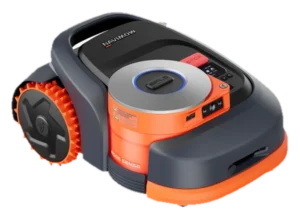
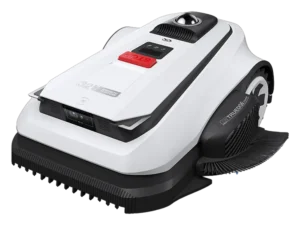
Four robot lawn mowers now classify at Autonomy Ladder Level IV without a buried wire: the Mammotion YUKA mini 2 1000H, Ecovacs Goat O1000 LiDAR PRO, and Worx Landroid Vision…
Do robot mowers actually avoid kids and pets?
Four robot mowers marketed as family-yard-ready use three distinct avoidance architectures. This comparison tests whether each platform’s claims about obstacle detection translate to documented behavior around low, fast-moving subjects like…
What people actually ask.
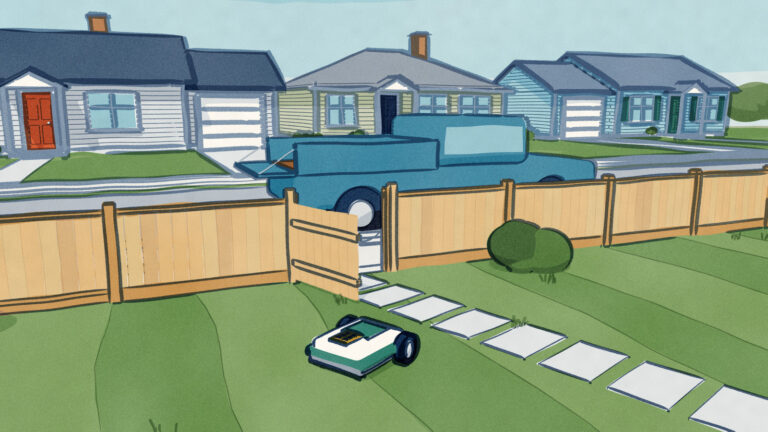
OperationDoes the Worx Landroid Vision Cloud WR320 require a buried perimeter wire?
OperationWhat happens to the WR320 if RTK satellite signal drops during mowing?
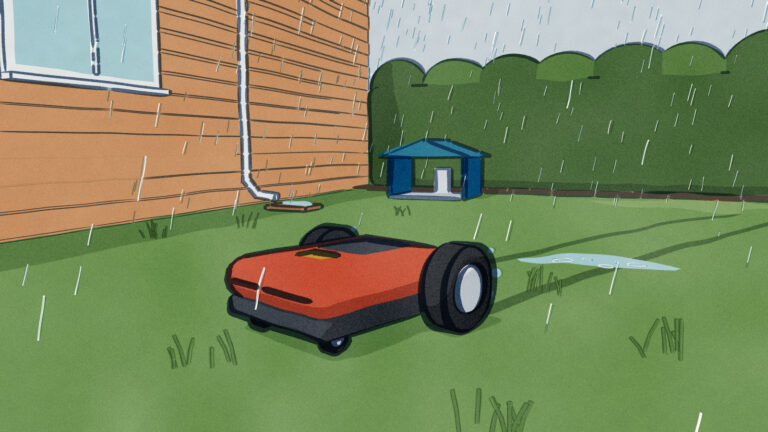
OperationCan the Worx WR320 handle wet grass or morning dew?
OwnershipHow often does the WR320 need blade replacement, and what is the cost?
OperationWhat data does the Worx Landroid Vision Cloud WR320 collect, and can it be disabled?
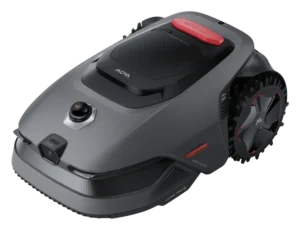
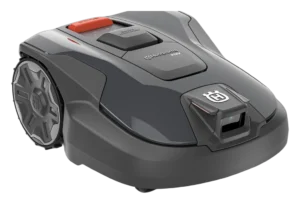 IV
IV
Husqvarna Automower 312V
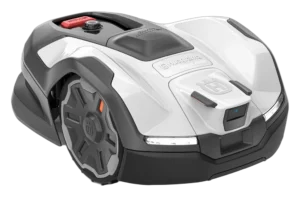 IV
IV
Husqvarna Automower 405VE NERA
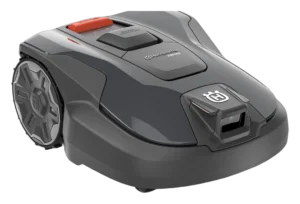 IV
IV
Husqvarna Automower Aspire R6V
Where it's sold
We may earn commission from qualifying purchases. This does not influence classification.
Reference the Worx Landroid Vision Cloud WR320 classification.
Embed the Autonomy Ladder™ mark or copy the citation. The mark is served from this record, so a reassessment updates it on your page automatically.
Get the embed code and citation
Scale proportionally only, up to 2× (536px wide)(224px wide). No recolouring, cropping, rotating, or re-typesetting.
Robovations. "Worx Landroid Vision Cloud WR320: Autonomy Level IV (Environmental Autonomy)." Autonomy Ladder™, assessed September 2026. https://robovations.com/robots/worx-landroid-vision-cloud-wr320/
- Link it. The mark must point at this record. An unlinked mark is not authorised.
- Hot-link it. Never download, self-host, or re-upload the image. A saved copy stops updating, and a mark that has stopped updating is a claim we no longer stand behind.
- A classification, not an endorsement. It may not appear beside language implying Robovations recommends, rates, or approves the product.