
- Changes
- 3
- Tracking since
- Jan 2025
- Latest
- Apr 20, 2026
- Net movement
- Wait to Ready Now
- 2026
-
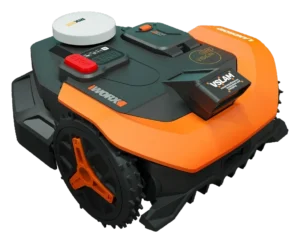
Worx Landroid Vision Cloud WR320 owner reports confirm satellite positioning limitations
Owner reports from the WR320's first full mowing season document RTK signal degradation under heavy tree canopy, corroborating manufacturer-stated satellite-coverage requirements.
Full assessment4 claims · 4 technical notes · 2 sources
Where it standsAutonomy LadderIIIIIIIVVLevel IVEnvironmental AutonomyHuman Readinessmoved by this entryReady NowNew to MarketWaitKnown IssuesRobovations Score04055708566CapableWhat happenedReports separately confirm the wire-free setup process and AI obstacle detection operate as documented.
WatchingFor: whether Worx issues guidance or a software update addressing canopy-heavy yard configurations.
Bottom lineFirst-season owner experience validates the wire-free architecture for yards that match the documented operating environment; canopy density is the clearest real-world limiter of the Level IV performance claim.
ImpactOn autonomy
- RTK signal degrades under dense tree canopy per owner reports, consistent with satellite navigation limitations
- AI camera obstacle detection confirmed operational for common yard objects by early owners
- Mow-path planning functions autonomously once satellite lock is established in open areas
- Canopy conditions above the threshold Worx documents cause the mower to default to recovery or dock behavior
On readiness
- Wire-free setup process confirmed by owners as dock placement plus app-based yard mapping
- Owners with open or lightly shaded yards report consistent autonomous operation
- Owners with significant canopy cover report positioning errors requiring manual intervention
- Product is appropriately classified as Ready Now for the documented operating environment; mismatched yards lower effective readiness
Claim check4 maker claims checked against the record. Open one to read the finding.
Works in any yard without wire
Documented findingOwner reports confirm reliable performance in open-sky suburban yards; heavy-canopy environments produce positioning errors consistent with RTK satellite limitations documented in general RTK literatureAI camera avoids obstacles autonomously
Documented findingOwner reports confirm avoidance of common objects (toys, hoses, furniture); edge cases in low-light or unusual-object scenarios not yet systematically documentedSetup is simple without buried wire
Documented findingOwner reports confirm dock placement plus app mapping is the primary setup task; mapping sessions take multiple mow cycles to optimize path coverage in irregular yard shapesCloud connectivity is reliable
Documented findingNo widespread connectivity outage reports in the post-launch period observed; individual owners in low-signal areas report intermittent positioning issues tied to satellite coverage, not cloud-server availabilityEvidence2 sources · 1 linked
121 Apr 202620 Apr 2026filed 20 Apr 2026- 1Worx Community Forum Owner Reports1 Apr 2026
- 2Retailer Customer Reviews WR32012 Apr 2026named, not linked
Technical notes4 sectionsOwner Report Patterns
Post-launch owner reports, collected from forum discussions and retailer review platforms, describe two primary experience categories. Open-sky suburban yards with fewer than approximately 20% canopy coverage report consistent autonomous mowing with minimal intervention after initial mapping. Yards with mature deciduous trees over the primary mow area report RTK signal interruptions that cause the WR320 to pause cycles, return to dock, or require position reset via the app.
Autonomy Level Scope Clarification
The satellite-positioning dependency establishes a practical operating-design domain for Level IV classification: open-sky or lightly shaded residential lawns under 0.5 acres with stable satellite coverage. Canopy-heavy environments fall outside this domain. The classification holds for the documented environment; it does not transfer to environments where RTK signal is obstructed.
AI Camera Performance
Owner reports describe successful obstacle avoidance for garden furniture, hoses, children’s toys, and similar common objects. No systematic documentation of failure cases was available in the period reviewed. Low-light and dawn-dusk performance under AI camera was not comprehensively reported at this stage.
Software State
No firmware update addressing canopy performance was announced by Worx in this period. The RTK positioning architecture is hardware-constrained; software-only improvement of satellite performance in obstructed environments has documented limits.
-
Worx Landroid Vision Cloud WR320 reaches commercial retail in North America
Worx released the Landroid Vision Cloud WR320 at $1,799 MSRP through direct and retail channels in early 2026, completing the transition from CES announcement to purchasable product.
Full assessment5 claims · 4 technical notes · 2 sources
Where it standsAutonomy LadderIIIIIIIVVLevel IVEnvironmental AutonomyHuman Readinessmoved by this entryReady NowNew to MarketWaitKnown IssuesRobovations Score04055708566CapableWhat happenedShipping units confirm the RTK plus AI-camera architecture described at announcement.
WatchingFor: early owner reports on satellite reliability in varied yard conditions and documentation of cloud connectivity uptime.
Bottom lineCommercial release confirmed the core architecture claims from the CES announcement; early-owner performance documentation in real yard diversity remained the open verification item at launch.
ImpactOn autonomy
- Production units confirmed RTK plus AI-camera architecture as announced at CES 2025
- Wire-free operation validated at retail; no perimeter-wire installation required in shipping product
- Cloud dependency for RTK positioning confirmed as operational architecture, not optional feature
- Level IV classification contingent on satellite signal quality in buyer's specific yard environment
On readiness
- Commercial availability established; product ships from Worx direct and authorized retailers
- MSRP set at $1,799, positioning above wire-based Landroid models
- No perimeter-wire installation required reduces setup to dock placement and app-based yard mapping
- Cloud connectivity requirement means owners need stable satellite coverage for full autonomous operation
Claim check5 maker claims checked against the record. Open one to read the finding.
No wire installation needed
Documented findingConfirmed in production hardware; yard boundary is set digitally through the Worx app using RTK positioning dataWorks in any yard
Documented findingManufacturer specs document slope limits (25% maximum) and satellite-coverage requirements; performance in heavily shaded or canopy-dense yards is not documented as tested at launchAI camera avoids all obstacles
Documented findingManufacturer launch materials describe obstacle avoidance for common yard objects; edge cases and low-light performance were not fully documented in launch collateralCloud connectivity is seamless
Documented findingRTK operation requires Worx cloud and satellite connectivity; manufacturer materials acknowledge that signal outages affect positioning accuracy without specifying fallback behavior in detailReplaces all wired Landroid models
Documented findingWR320 covers up to approximately 0.5 acres per charge cycle; larger properties served by wired Landroid models may require multiple units or remain better served by wire-based alternativesEvidence2 sources · 1 linked
121 Feb 202615 Feb 2026filed 15 Feb 2026- 1Worx Product Launch Announcement1 Feb 2026
- 2Robotic Mower Report10 Feb 2026named, not linked
Technical notes4 sectionsCommercial Availability
The WR320 launched through Worx direct (worx.com) and authorized North American retailers at an MSRP of $1,799. The price positions it above the Landroid L and M wire-based series. Availability confirmed in the United States market in the February 2026 timeframe.
Navigation and Positioning
Production units use RTK satellite positioning linked to Worx cloud infrastructure for boundary containment and path planning. No perimeter wire is required. The AI camera provides real-time obstacle detection during mowing cycles. Dock placement and app-based yard mapping constitute the primary setup workflow.
Coverage and Runtime
Manufacturer specifications document approximately 0.5-acre coverage capacity per charge. Runtime is approximately 60-75 minutes per cycle depending on terrain. Maximum slope tolerance is 25% per manufacturer specification.
Connectivity
The WR320 requires active cloud connectivity for full RTK operation. The Worx app provides scheduling, zone management, and mow-cycle monitoring. The cloud dependency is architectural; the product is not designed for offline-only operation.
- 2025
-
Worx Landroid Vision Cloud WR320 unveiled at CES 2025 Las Vegas
Worx announced the Landroid Vision Cloud WR320 at CES 2025, disclosing RTK satellite positioning combined with an AI obstacle-detection camera as the navigation architecture.
Full assessment4 claims · 4 technical notes · 2 sources
Where it standsAutonomy LadderIIIIIIIVVLevel IVEnvironmental AutonomyHuman ReadinessReady NowNew to MarketWaitKnown IssuesRobovations Score04055708566CapableWhat happenedThe announcement signals a full architecture departure from perimeter-wire Landroid models.
WatchingFor: retail availability timing and whether cloud connectivity requirements carry a subscription component.
Bottom lineThe CES reveal confirmed a genuine architecture change for the Landroid line, but performance claims about obstacle specificity and satellite reliability under real yard conditions awaited commercial launch documentation.
ImpactOn autonomy
- RTK satellite positioning eliminates boundary-wire dependency for yard containment
- AI camera handles obstacle detection without physical guide infrastructure
- Cloud-linked positioning introduces a remote dependency not present in wire-based Landroid models
- Environmental Autonomy classification contingent on satellite reliability in varied canopy conditions
On readiness
- Pre-release status at announcement; no confirmed ship date at CES reveal
- No perimeter-wire installation required per manufacturer disclosure reduces setup burden
- RTK cloud connectivity requirement adds infrastructure dependency new to the Landroid lineup
- Price point undisclosed at announcement; retailer availability unconfirmed
Claim check4 maker claims checked against the record. Open one to read the finding.
Wire-free boundary via RTK satellite
Documented findingRTK requires continuous Worx cloud connectivity and clear satellite line-of-sight; performance in dense canopy conditions not documented at announcementAI camera identifies and avoids obstacles
Documented findingManufacturer disclosure at CES described obstacle-avoidance capability; object-category specifics and failure modes not published at reveal stageDrop-in replacement for wired Landroid models
Documented findingWR320 is a new architecture, not an upgrade path; existing Landroid wire hardware is not compatible with the RTK systemCentimeter-accuracy positioning
Documented findingRTK technology is capable of centimeter accuracy under ideal conditions; accuracy degrades under tree cover or signal obstruction per general RTK limitations documented in satellite-navigation literatureEvidence2 sources · all linked
127 Jan 20259 Jan 2025filed 9 Jan 2025- 1Worx Press Release CES 20257 Jan 2025
- 2The Verge CES 2025 Coverage9 Jan 2025
Technical notes4 sections
Navigation Architecture
The WR320 combines RTK (Real-Time Kinematic) satellite positioning with Worx cloud infrastructure for yard boundary definition and mow-path planning. RTK delivers centimeter-level accuracy under open-sky conditions. No perimeter wire is required; boundary is defined digitally via the Worx app.
Obstacle Detection
An AI camera mounted on the mower body handles real-time obstacle detection. Manufacturer disclosure at CES described the system as identifying common yard objects. Specific object-class counts and detection-distance specifications were not published at the announcement stage.
Product Line Context
The WR320 departs from the wire-based Landroid L, M, and S series architectures. Prior Landroid models required perimeter-wire burial for boundary containment. The Vision Cloud designation indicates cloud-dependent operation. Model number WR320 is specific to this RTK variant; it is not a firmware iteration of previous WR-series wire-based models.
Coverage and Power
Coverage area and battery specifications were not published in full at CES announcement. Subsequent manufacturer product pages indicate approximately 0.5-acre coverage capacity per charge cycle.