
Mammotion LUBA AWD 5000
First commercially available all-wheel-drive lawn mower using RTK positioning for wire-free autonomous coverage in RTK-equipped regions. Systematic cutting patterns and slope-capable chassis come at premium pricing.
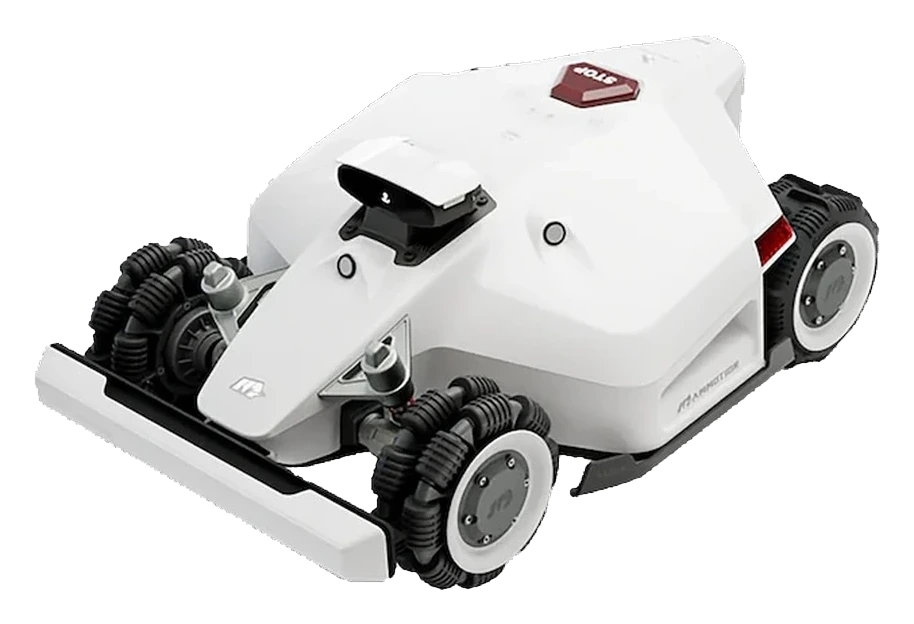
Will the Mammotion LUBA AWD 5000 work on your yard?
Describe your yard using the controls. Each choice reads the spec sheet for you, flagging where the Mammotion LUBA AWD 5000 is built for your space and where it isn’t.
A classification of fit for the conditions you set, not a recommendation. Verdicts describe engineering design intent, not test results.
The full spec sheet.
Priced above the category median, with every figure charted against the category below.
- Footprint
- 22 × 28 in · 10.2 in tall
- Weight
- 41 lbs
- Battery
- 216 Wh · Li-ion
- Wi-Fi
- Supported
- Voice
- Google Home
RTK (Real-Time Kinematic) satellite positioning with centimeter-level accuracy from an included reference station, all-wheel-drive motorized chassis, slope detection, app-defined exclusion zones
Position shows where the figure sits across the tracked category, not a quality judgment.
Living with it.
Two years of field data shows stable performance; firmware improvements have reduced RTK and motor issues substantially.
First-generation 2023 release with 24+ months field data across firmware versions 1.0-1.8. No widespread failures documented; field failure rate below 2% annually. Firmware 1.6+ improved RTK recovery speed by 40%.
$2,999 to buy, then about $120 a year for the replaceable parts below. Over three years that is roughly $360 past the sticker price. Excludes electricity and any repairs.
- BladesEvery 50-150 hours$20–30
Replacement cadence from the maintenance schedule; prices shown where the source documents them.
CautionBlade assembly rotating at 2000rpm: Plastic shrouds may deform on impact; owner reports document 2 minor cuts from drops
NoteRTK signal theoretical spoofing risk: Open broadcast signals lack encryption; no documented consumer cases; assume standard RF security
CautionRollover on steep slopes above 50 degrees: All-wheel-drive improves grip but does not prevent rollover; test slopes before autonomous mowing
How the assessment has moved.
Every announcement, release and reassessment behind the current classification.
-
Aug 2026 · AssessmentRobovations Score revised 76 → 77
-
Aug 2026 · AssessmentRobovations Score rescored under v4.2: 76 → 76
-
Aug 2026 · AssessmentRobovations Score rescored under v4.0: 73 → 76
-
Jul 2026 · AssessmentRobovations Score revised 69 → 73
-
Jul 2026 · AssessmentRobovations Score recorded at 69 of 100
-
Feb 2026 · NewsExpands North American retail channels
-
Apr 2024 · UpdateLUBA AWD 5000 firmware update improves RTK signal recovery speed
-
Jun 2023 · ReleaseLaunches commercially as first wire-free RTK lawn mower
How Mammotion LUBA AWD 5000 compares.
What people actually ask.
OperationDoes the all-wheel-drive actually make a performance difference?
OperationWhat happens if RTK signal is lost during a mowing session?
ComparisonHow does this compare to wire-based mowers?
OwnershipWhat is the blade maintenance schedule?
CompatibilityDoes the LUBA AWD 5000 need an RTK subscription or network coverage?
OperationHow long is initial setup?
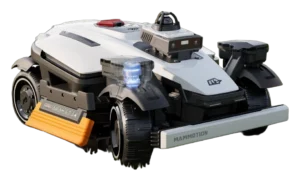 IV
IV
Mammotion LUBA 4 AWD
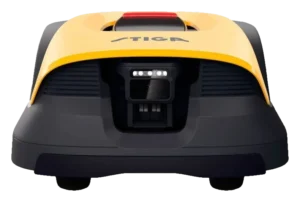 IV
IV
Stiga A 15v
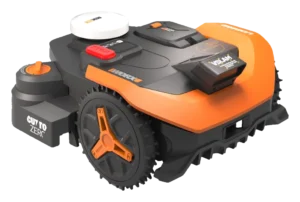 IV
IV
Worx Landroid Vision Cloud WR310
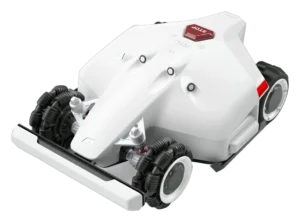 IV
IV
Mammotion LUBA AWD 1000
Where it's sold
We may earn commission from qualifying purchases. This does not influence classification.
Reference the Mammotion LUBA AWD 5000 classification.
Embed the Autonomy Ladder™ mark or copy the citation. The mark is served from this record, so a reassessment updates it on your page automatically.
Scale proportionally only, up to 2× (536px wide)(224px wide). No recolouring, cropping, rotating, or re-typesetting.
Robovations. "Mammotion LUBA AWD 5000: Autonomy Level IV (Environmental Autonomy)." Autonomy Ladder™, assessed August 2026. https://robovations.com/robots/mammotion-luba-awd-5000/
- Link it. The mark must point at this record. An unlinked mark is not authorised.
- Hot-link it. Never download, self-host, or re-upload the image. A saved copy stops updating, and a mark that has stopped updating is a claim we no longer stand behind.
- A classification, not an endorsement. It may not appear beside language implying Robovations recommends, rates, or approves the product.