
Approaches compared
Mammotion LUBA: does RTK positioning improve mowing across generations?
This compares three generations, old against new, not a shopping choice: two are no longer sold new in the US. All three steer by satellite fixes; what changed is where corrections come from and what happens under trees.
This page checks
- Where corrections come fromA station in the yard, or the cell network
- Stated accuracyEach maker figure, in good sky
- When the sky is blockedWhat each manual says it does
- What testers sawHands-on reports under trees
Mammotion
Where to buy
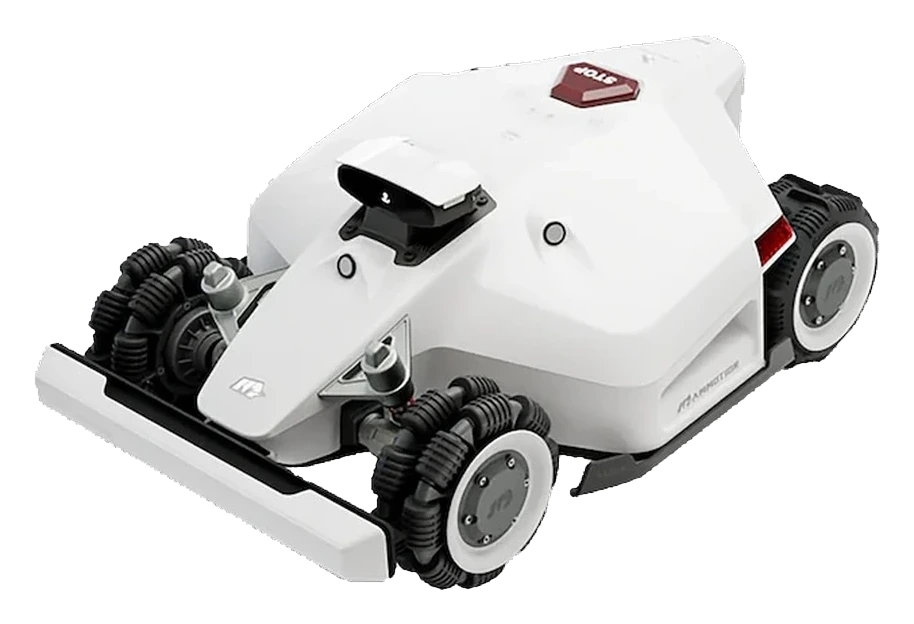
Discontinued; no longer in Mammotion's US store

Mammotion
Where to buy
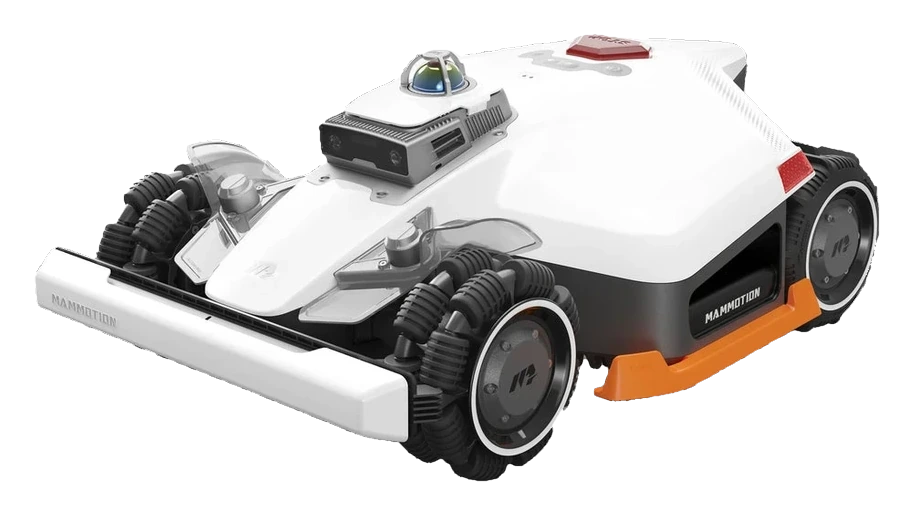
Sold out in Mammotion's US store, every version
Mammotion
Where to buy
Full specifications18 figures on record · 14 differ
Some links earn Robovations a commission. Nothing on this page is ranked by it.
 LUBA AWD 5000
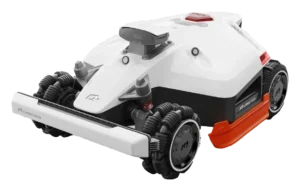 LUBA 2 AWD
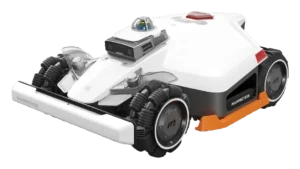 LUBA 3 AWD 5000
Generation by generation
What changed in how each one keeps its place
The satellite core held at about 2 in (5 cm) with a yard station. The change is in blocked sky. The first LUBA leans on motion sensors and its manual says to fence off big trees. The LUBA 2 steers by camera for 164 ft (50 m), then stops. The LUBA 3 adds a laser scanner and 4G corrections.
A station in your yardSent to the mower by radio. The map's edge must stay within 262 ft (80 m) of the station.
A station in your yardSent by radio, or over 4G when you fit your own SIM card, for a longer reach.
Corrections over 4GMammotion's iNavi network service, free for the product's life. A yard station is also in the box.
~2in
About 2 in, per the manual.
LUBA AWD user manual V1.2~2in
About 2 in. The app's Fix status means under 4 in (10 cm), down to about 1 in (2 cm).
LUBA 2 AWD user manual V6.0±0.4in
Claimed for the laser, camera and satellite system together. No independent measurement found.
LUBA 3 product pageMotion sensors and wheel counts bridge partial shelter. The manual says to make big trees and high-walled corners a no-go area.
LUBA AWD user manual V1.2Its cameras carry it 164 ft (50 m) without a fix, then it stops. Camera steering needs daylight.
LUBA 2 AWD user manual V6.0Its 360° laser scanner and two cameras take over. The laser needs neither satellites nor light.
LUBA 3 manual and product pageIn a yard full of trees it often crossed its set boundary, and lost position on the far side of the house from its station.
Hands-on review, Nov 2023No canopy test found
The two reviews read describe the camera as a backup. Neither reports a test under heavy canopy.
Searched 2 hands-on reviewsTested on the 3000, which shares the 5000's sensors: it kept its place at night and under dense canopy.
Hands-on review, May 2026A station on a pole, wall or roof with open sky and power, set back from walls and trees at least their own height.
LUBA AWD user manual V1.2A station with open sky, never under a tree or between two buildings. A SIM card is optional.
LUBA 2 AWD user manual V6.0With iNavi, the dock only. With the station, open sky, power and 10 ft (3 m) from any wall or tree.
LUBA 3 AWD user manual V1.0Same on all three: satellite positioning with real-time corrections, no boundary wire, and a 15.7 in cutting width. You map each one by driving it round the lawn’s edge in the app.
Fit CheckLUBA AWD 5000, LUBA 2 AWD and LUBA 3 AWD 5000 carry the same verdict on every condition their Fit Checks share, so a fit control would give the same answer for each. Each robot’s own page has its full Fit Check.
Everything else
Where they land among 133 robot lawn mowers
Only the measures on which these three differ. The bar is the whole category; the block is the typical middle half; the tick is the median.
Sources
Where every figure comes from
- LUBA AWD 5000 · Mammotion LUBA AWD user manual V1.2 (AWD5000 and 3000); support.mammotion.com model comparison; one hands-on review (Top Ten Reviews, 5 Nov 2023)
- LUBA 2 AWD · LUBA 2 AWD Series user manual V6.0 (Sep 2024); support.mammotion.com specification and RTK-signal articles; us.mammotion.com store page; two hands-on reviews (TechRadar; Easy Lawn Mowing)
- LUBA 3 AWD 5000 · us.mammotion.com product page, iNavi blog post and 4G service terms; LUBA 3 AWD user manual V1.0 (Dec 2025); hands-on reviews of the 3000 (Smart Home Junkie, 21 May 2026; Techaeris, 10 Jul 2026)
Every figure was read from Mammotion's own manuals, support articles and US store on 2 Oct 2026. The accuracy figures are the maker's own. No independent measurement of any of them was found.
Questions
What readers ask
Which generations need a station in the yard?
The first LUBA and the LUBA 2 do, mounted with open sky and power. The LUBA 3 AWD 5000 ships with one but can instead take corrections over 4G from Mammotion’s iNavi service, which Mammotion launched across the US in April 2026.
What happens when the satellite signal drops?
The first LUBA leans on motion sensors, and its manual says to fence off big trees. The LUBA 2 steers by camera for up to 164 ft (50 m), then stops. The LUBA 3 switches to its laser scanner and cameras.
Is the 4G correction service paid?
Mammotion says iNavi corrections are free for the product’s life. The LUBA 3’s 4G data is free for three years, then $49.90 a year or $19.90 for three months. Mammotion’s blog says corrections can also arrive over Wi-Fi.
Common questions