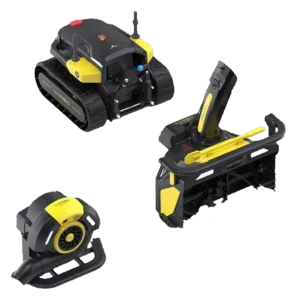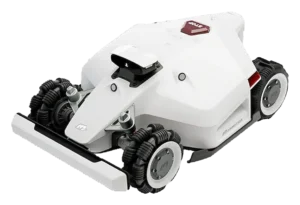
Mammotion LUBA AWD 5000 · Yarbo S1
All robot lawn mowers. Every measure below is plotted against the full class, so a difference can be read against how much the class itself varies.
- Mammotion LUBA AWD 5000
- Yarbo S1
What each one does on its own.
The Autonomy Ladder is the same five rungs for every robot on the site. A rung describes the conditions a robot handles without you, not how good it is.
Where they actually differ.
The Robovations Score is nine inputs across three pillars, each weighted as shown and each scored so that more is better. A robot can lead on one and trail on another, which is the point of showing them apart. Cost of ownership and data handling are reported on each robot's own page and are never averaged into the score.
Capability
- Mammotion LUBA AWD 500075
- Yarbo S168
- Mammotion LUBA AWD 500078
- Yarbo S163
- Mammotion LUBA AWD 500070
- Yarbo S165
- Mammotion LUBA AWD 500078
- Yarbo S158
Dependability
- Mammotion LUBA AWD 500081
- Yarbo S146
- Mammotion LUBA AWD 5000100
- Yarbo S165
- Mammotion LUBA AWD 500073
- Yarbo S163
Ownership burden
- Mammotion LUBA AWD 500040
- Yarbo S138
- Mammotion LUBA AWD 500097
- Yarbo S180
How far apart is a long way?
A number only means something next to the spread it sits in. Each track below is the real range across every classified robot in the class, with the median marked.
- Mammotion LUBA AWD 5000$2,999
- Yarbo S1$4,999
- Mammotion LUBA AWD 5000180 min
- Yarbo S1240 min
- Mammotion LUBA AWD 500060 dB
- Yarbo S182 dB
- Mammotion LUBA AWD 500041 lbs
- Yarbo S1134 lbs
- Mammotion LUBA AWD 500010.2 in
- Yarbo S114.2 in
Not compared, because fewer than two of these robots carry a published figure: Suction, Charge time.
What the numbers leave out.
The trade-off
What each design gives up to be good at what it is good at.
RTK positioning enables wire-free autonomous coverage but shifts the install work to siting the reference station: it needs an unobstructed view of the sky and a power feed before the mower can hold a fix.
Systematic parallel-line cutting produces cleaner lawn aesthetics than random-pattern competitors but requires app-based setup and seasonal boundary adjustments.
Level IV autonomy within each mode, but transitions between modes are entirely manual: the multi-function promise and multi-function execution are owned by different parties.
GPS precision eliminates wire installation on large lots, yet that same GPS dependency becomes liability when tree canopy or signal interference compresses effective coverage below property footprint.
Who each one is wrong for
Stated by the record itself. A robot being wrong for a household is a fact about fit, not a fault.
- Yards under dense tree canopy
- RTK positioning depends on satellite visibility for both the reference station and the mower. Heavy canopy or tall surrounding structures interrupt the fix and pause cutting until it returns.
- Budget-conscious buyers
- At $3300+, the LUBA AWD is substantially more expensive than wire-based Level III mowers offering similar coverage at roughly half the cost.
- Small properties under 1500m²
- Single-charge capability covers target area in 30-45 minutes. Fixed-schedule mowers deliver equivalent coverage at lower cost and reduced complexity.
- Buyers expecting fully automated multi-task switching
- Module changes are made by hand. Yarbo states the change is tool-free and takes under two minutes, but the machine does not select or swap its own modules.
- Owners with heavily wooded or obstructed properties
- RTK-GNSS boundary accuracy depends on clear sky view for both the Core and the Data Center. Dense tree canopy is documented in owner reports as a recurring source of boundary drift.
- Buyers seeking snow clearing in wet heavy conditions
- Yarbo publishes a 12 in intake height and no wet-snow rating. Owner reports describe motor strain and incomplete clearing in heavy wet snow, so properties with frequent wet snowfall may encounter more edge-case failures.
- Tight lots with no safe discharge target
- The S1 is a two-stage blower with an adjustable throw of 6 to 40 feet. Properties where every discharge direction points at a walkway, a vehicle, a window, or a neighboring lot leave little room to aim it.
What stays your job
The upkeep ownership hands back to you, whatever the autonomy level says.
- After each cut: Brush clippings off the underside and wipe the deck and antenna housing. A damp cloth or gentle hose rinse only, never a pressure washer.
- Weekly: Check charging dock alignment and verify battery charge level during active season, no cost.
- Monthly: Inspect the solid rubber tires for tread wear and embedded debris. There is no air pressure to check.
- Every 50-150 hours: Flip the blades to the unused edge, then replace the full set at roughly 100-150 hours. Official sets sell in 8 and 24 piece packs, roughly $20-30.
- Seasonally: End-of-season storage at 80% charge with full mower cover to prevent moisture damage.
- As needed: Re-map zones after landscaping changes, approximately 20 minutes app-based setup.
- After every use: Clear packed snow and debris from the auger housing and chute, or from the mower deck, with the machine powered down; inspect module drive components.
- Weekly (mowing season): Clean mower deck underside; check blade condition for nicks.
- Monthly: Inspect RTK-GNSS antenna housings for moisture; clean charging contacts on the docking station.
- Every 3-6 months: Sharpen or replace mower blades ($15-$30); inspect the auger and impeller for wear through the snow season.
- Annually: Battery capacity check; full module inspection before seasonal transition; firmware update review.
How much each of these is standing on.
Classifications rest on different depths of evidence. A pre-release assessment and a verified one are not the same kind of claim.
| Robot | Evidence status | Sources reviewed | Last assessed |
|---|---|---|---|
| Mammotion LUBA AWD 5000 | Verified | 11 | Aug 2026 |
| Yarbo S1 | Verified | 7 | Aug 2026 |
Add a robot
Comparing across classes is allowed — the page will switch to per-class positioning and tell you it has.