
Worx Landroid L 20V WR155
A smartphone-connected wire-guided mower that bridges early autonomous designs and modern app expectations. The appeal depends entirely on whether the buyer already has boundary-wire infrastructure or is willing to install it.
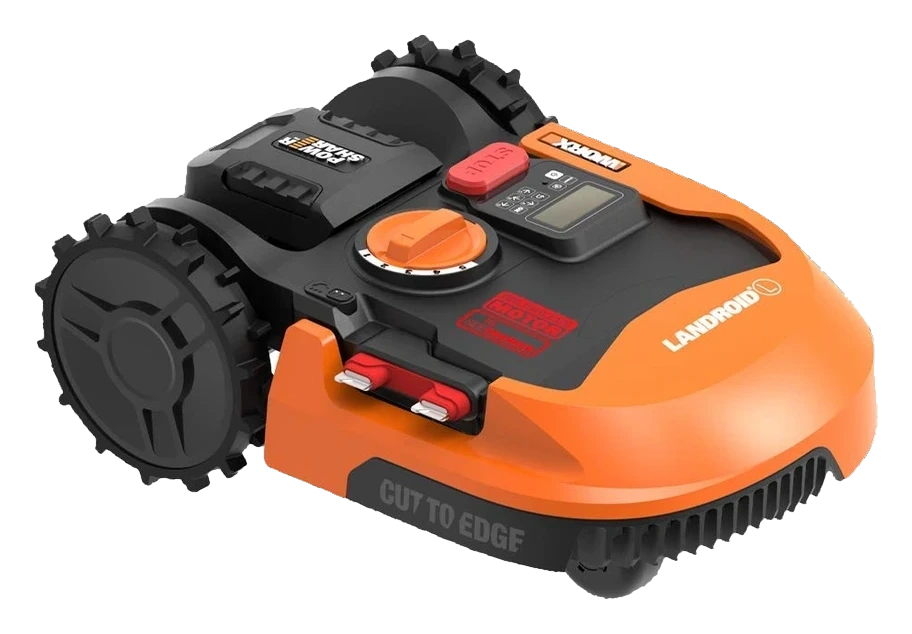
Will the Worx Landroid L 20V WR155 work on your yard?
Describe your yard using the controls. Each choice reads the spec sheet for you, flagging where the Worx Landroid L 20V WR155 is built for your space and where it isn’t.
A classification of fit for the conditions you set, not a recommendation. Verdicts describe engineering design intent, not test results.
Living with it.
App connectivity is stable on modern networks; wire-guidance system is straightforward; consumable-heavy due to frequent blade replacement and seasonal wire repairs.
→ Stableowner-reported arc
No major recalls since 2019 launch. Owner-report forums document predictable wear patterns: blade dullness within 4-6 weeks, intermittent docking contact within 12 months, occasional Wi-Fi disconnection requiring app restart. Wire breaks are seasonal, not unit defects.
Inspect for visible breaks; clear grass debris from deck and motor area.
Replace (typically $15-$30 per pair) as cutting quality declines with dullness.
Clean dock charging with fine grit to prevent corrosion; verify successful dock connection after each mowing cycle.
Test -wire continuity with multimeter after rain or heavy use; repair or re-bury wire if resistance spikes.
Check Wi-Fi range and signal strength; relocate dock if app connectivity is intermittent.
$999 to buy, then about $140 a year for the replaceable parts below. Over three years that is roughly $420 past the sticker price. Excludes electricity and any repairs.
- Every 4-6 weeks$15–30
Replacement cadence from the maintenance schedule; prices shown where the source documents them. Part links may earn a commission and do not influence the classification. All parts at Worx
-
CautionSpinning blade during autonomous operationMowing occurs without human present. Blade contact risk for pet paws or small objects approaching the robot.
-
Cloud dependency for app featuresScheduled and remote operation depends on Worx cloud service availability; internet outage disables app features but not dock operation.
The full spec sheet.
Priced below the category median, with every figure charted against the category below.
- FootprintThe width, depth and height of the robot itself, without its dock.
- 18.1 × 24.7 in · 10.4 in tall•
- WeightThe robot alone, without its dock, as the maker states it.
- 25.8 lbs•
- BatteryStored energy in watt-hours; a larger pack runs longer, not harder.
- 100 Wh · Li-ion
- Wi-FiThe bands the robot can join; many models need a 2.4 GHz network to set up.
- Supported✓
- Cutting width
- 8 in•
- Cutting height range
- 1.5-3.5 in•
- Max area
- 21,800 sq ft✓
- Max slope
- 30%•
- Blade system
- 3 blades•
- Boundary method
- Boundary wire✓
Boundary wire perimeter guidance with AIA path planning for systematic patterns and narrow passages, contact-based obstacle detection, and app-based scheduling
Position shows where the figure sits across the tracked category, not a quality judgment.
How the assessment has moved.
Every announcement, release and reassessment behind the current classification.
-
Aug 2026 · AssessmentRecord status: Verified → Provisional
-
Aug 2026 · AssessmentRobovations Score rescored under v4.2: 62 → 66
-
Jul 2026 · AssessmentRobovations Score recorded at 62 of 100
What people actually ask.
OperationDoes the Worx Landroid L WR155 require burying a boundary wire, or does it support virtual boundaries?
OwnershipWhat does the AIA technology do, and does it replace the need for boundary maintenance?
CompatibilityCan the WR155 be controlled entirely from a smartphone app, or does it need manual start buttons?
OperationWhat is the runtime, and how many charge cycles does a half-acre property require?
OperationIf the WR155 crosses the boundary wire or gets stuck, what happens?
 II
II
Greenworks Optimow 15
 II
II
Stihl iMow 7
 II
II
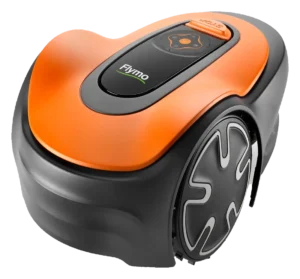
Flymo EasiLife Go 200
 II
II
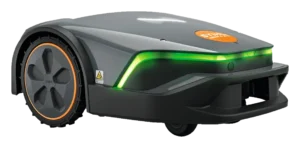
Stihl iMow 6 EVO
Where it's sold
We may earn commission from qualifying purchases. This does not influence classification.
Reference the Worx Landroid L 20V WR155 classification.
Embed the Autonomy Ladder™ mark or copy the citation. The mark is served from this record, so a reassessment updates it on your page automatically.
Get the embed code and citation
Scale proportionally only, up to 2× (536px wide)(224px wide). No recolouring, cropping, rotating, or re-typesetting.
Robovations. "Worx Landroid L 20V WR155: Autonomy Level II (Assisted Autonomy)." Autonomy Ladder™, assessed August 2026. https://robovations.com/robots/worx-landroid-l-20v-wr155/
- Link it. The mark must point at this record. An unlinked mark is not authorised.
- Hot-link it. Never download, self-host, or re-upload the image. A saved copy stops updating, and a mark that has stopped updating is a claim we no longer stand behind.
- A classification, not an endorsement. It may not appear beside language implying Robovations recommends, rates, or approves the product.