Skip to content
Saved
Comparison · 2 robots

Mammotion YUKA mini 2 1000H · Worx Landroid Vision Cloud WR320

All robot lawn mowers. Every measure below is plotted against the full class, so a difference can be read against how much the class itself varies.
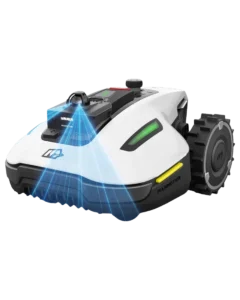
  1. Mammotion YUKA mini 2 1000H
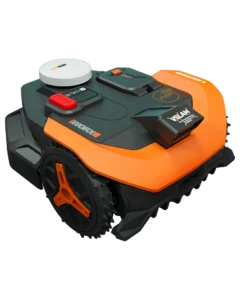
  2. Worx Landroid Vision Cloud WR320
Mammotion

Mammotion YUKA mini 2 1000H

Autonomy
IV Environmental Autonomy
Score
71/100 Strong
Readiness
Promising Progress
Price
$1,399confirmed

Up to three

01 Classification

What each one does on its own.

The Autonomy Ladder is the same five rungs for every robot on the site. A rung describes the conditions a robot handles without you, not how good it is.

V
Generalized
Any task, any setting
IV
Environmental
Handles new obstacles without help
Mammotion YUKA mini 2 1000HWorx Landroid Vision Cloud WR320
III
Conditional
Finishes familiar jobs on its own
II
Assisted
Runs preset routines, needs rescue
I
Manual
One action, on command
02 Assessment

Where they actually differ.

The Robovations Score is nine inputs across three pillars, each weighted as shown and each scored so that more is better. A robot can lead on one and trail on another, which is the point of showing them apart. Cost of ownership and data handling are reported on each robot's own page and are never averaged into the score.

Capability

Task completion16% of score
Does it finish the job it is sold to do, unattended
  • Mammotion YUKA mini 2 1000H75
  • Worx Landroid Vision Cloud WR32064
18median 72 across 354 scored robots100
Coverage and navigation10% of score
Does it work the whole area, and hold that between runs
  • Mammotion YUKA mini 2 1000H82
  • Worx Landroid Vision Cloud WR32070
15median 70 across 344 scored robots100
Edge-case recovery10% of score
Does it recover from the failures its category presents
  • Mammotion YUKA mini 2 1000H50
  • Worx Landroid Vision Cloud WR32050
18median 50 across 261 scored robots100
Operating envelope4% of score
How far conditions can vary before performance drops
  • Mammotion YUKA mini 2 1000H84
  • Worx Landroid Vision Cloud WR32050
25median 70 across 320 scored robots100

Dependability

Field failure rate16% of score
Documented hardware failures per owner-year
  • Mammotion YUKA mini 2 1000H34
  • Worx Landroid Vision Cloud WR32048
6median 70 across 344 scored robots100
Software stability14% of score
Whether updates fix more than they break
  • Mammotion YUKA mini 2 1000H82
  • Worx Landroid Vision Cloud WR32065
15median 65 across 275 scored robots100
Support longevity10% of score
Committed parts, service and updates, with dates
  • Mammotion YUKA mini 2 1000H63
  • Worx Landroid Vision Cloud WR32073
0median 63 across 354 scored robots100

Ownership burden

Routine maintenance12% of score
Hands-on time it asks for in normal operation
  • Mammotion YUKA mini 2 1000H94
  • Worx Landroid Vision Cloud WR32064
22median 68 across 355 scored robots100
Consumables8% of score
Parts that must be bought to keep it working
  • Mammotion YUKA mini 2 1000H100
  • Worx Landroid Vision Cloud WR32080
30median 69 across 354 scored robots100
03 Measured against the class

How far apart is a long way?

A number only means something next to the spread it sits in. Each track below is the real range across every classified robot in the class, with the median marked.

Price71 with a published figure
  • Mammotion YUKA mini 2 1000H$1,399
  • Worx Landroid Vision Cloud WR320$1,022.54
$24.99median $1,999$5,999
Runtime74 with a published figure
  • Mammotion YUKA mini 2 1000H150 min
  • Worx Landroid Vision Cloud WR32075 min
30 minmedian 110 min240 min

Not compared, because fewer than two of these robots carry a published figure: Suction, Charge time, Noise, Weight, Height.

04 Ownership

What the numbers leave out.

The trade-off

What each design gives up to be good at what it is good at.

Mammotion YUKA mini 2 1000H

LiDAR and vision replace the perimeter wire and the RTK base station together, but the boundary lives in a point cloud rather than on a survey grid: a yard that changes substantially, new structures or removed trees, needs re-mapping rather than a coordinate correction.

Nothing on the property needs a view of the sky: with no satellite correction in the loop, tree cover and narrow lots that constrain RTK mowers do not constrain this one, and there is no base station to mount or maintain.

Worx Landroid Vision Cloud WR320

Satellite-dependent autonomy: RTK precision eliminates wire-burial labor but introduces cloud and GPS failure modes not present in wire-guided systems.

AI-camera privacy cost: obstacle detection uses on-board imaging streamed to Worx cloud for model training; no local-only or opt-out mode.

Who each one is wrong for

Stated by the record itself. A robot being wrong for a household is a fact about fit, not a fault.

Mammotion YUKA mini 2 1000H
Terrain above the rated 45 percent gradient
Mammotion rates the YUKA mini 2 1000H to 45 percent grade (24 degrees) on rear-wheel drive. Ground steeper than that sits outside the rating, and no behavior beyond it is published.
Thick or tall fescue lawns above 4 inches
Blade design and cutting deck geometry optimized for standard residential turf. Thick or tall-growing varieties cause bogging and reduce autonomous runtime; manual pre-mowing required.
Lawns above the rated 0.25 acre
The 1000H designation is 1,000 square meters, which Mammotion states as 0.25 acre, about 10,900 sq ft. Per-charge coverage is 2,690 sq ft, so a full lawn runs across several charge cycles. Larger properties sit outside what this model is rated to cover.
Yards with heavy mixed debris load
Obstacle avoidance handles sticks and fallen branches effectively; extreme debris (fallen limbs, dense leaf mat) causes navigation interruptions and may require pre-mow yard cleanup.
Worx Landroid Vision Cloud WR320
Yards over 1/2 acre
The WR320.1 is rated to half an acre. That is a lawn-size ceiling rather than a per-charge figure, so extra docking cycles do not extend it; Worx sells a one-acre Landroid Vision Cloud for larger lots.
Owners rejecting AI-camera surveillance
The WR320's obstacle avoidance relies on an on-board camera that processes imagery to the Worx cloud for AI training. Privacy policy permits image retention for model improvement. No local-only operation mode.
Terrain steeper than a 30 percent grade
Worx rates this model to 30 percent, about 17 degrees. Ground steeper than that sits outside the rating, and wet clay or loose soil can cost traction on grades below it as well.
Owners preferring predictable boundary control
Virtual boundaries rely on satellite corrections. When those drop, the mower falls back on camera V-SLAM fused with inertial data and odometry, which holds position less precisely than a corrected fix. A perimeter wire is a physical line the owner places and can see.

What stays your job

The upkeep ownership hands back to you, whatever the autonomy level says.

Mammotion YUKA mini 2 1000H
  • Seasonally: Blade service. The 19 cm (7.5 in) deck carries five blades, each with a second mounting hole, so a set is flipped once before it is replaced. Blades are replaced, never sharpened: a blade this thin loses strength when ground, and it runs unattended.
  • Seasonally: Wipe the LiDAR turret and both camera lenses. The mower localizes against what they see, so a soiled lens is a navigation problem.
  • Seasonally: Charging station contact cleaning and firmware update check via app; store the mower with its lithium pack charged rather than run down.
  • Monthly: Visual inspection of wheels, sensors, and cutting deck for debris or damage.
  • As needed: Re-map if the yard changes substantially, since the boundary is referenced to the point cloud the mower built.
  • As needed: Dock power-cycle and Wi-Fi re-pairing after network router changes.
Worx Landroid Vision Cloud WR320
  • Weekly: Inspect blade for grass clumping or damage; clean dock charging contacts if wet storage is used.
  • Monthly: Check wheel treads for debris; clean sensors (camera lens, RTK antenna) for dust or pollen buildup.
  • Every 3-6 months: Review and update yard boundary mapping in app if landscaping changes; test RTK signal strength across the yard.
  • Annually: Replace blade assembly (~$40-60 per set of two blades) after 50 mowing sessions or winter storage; inspect charging dock for corrosion and clean contacts.
  • Seasonally: Before winter storage, drain water from motor housing, clean blades, and store mower indoors in a dry location. Before spring use, recharge dock and recalibrate RTK positioning.
05 Evidence

How much each of these is standing on.

Classifications rest on different depths of evidence. A pre-release assessment and a verified one are not the same kind of claim.

Evidence behind each classification
Robot Evidence status Sources reviewed Last assessed
Mammotion YUKA mini 2 1000H Provisional 4 Aug 2026
Worx Landroid Vision Cloud WR320 Provisional 4 Aug 2026

Robovations classifies robots; it does not rank them. Nothing on this page is a recommendation, and no manufacturer influences a classification or its placement here.