
Mammotion YUKA mini 2 1000H
Wire-free compact mower classified Level III, Conditional Autonomy, with positioning drawn from LiDAR and vision rather than RTK, so there is no base station to site and no correction service to depend on. Replaces perimeter-wire complexity; the trade-off is that the boundary lives in a point cloud, so a substantially changed yard needs re-mapping rather than a coordinate fix.
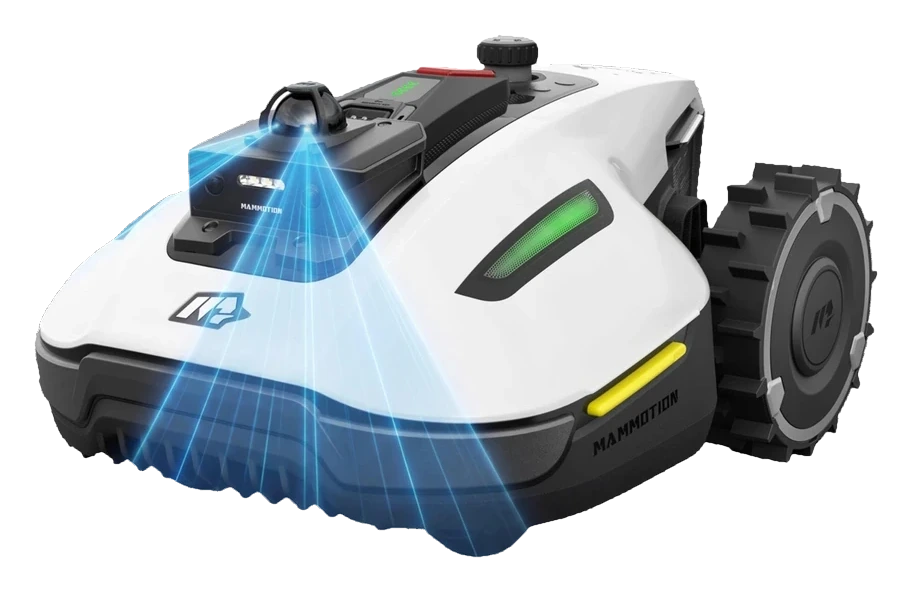
Will the Mammotion YUKA mini 2 1000H work on your yard?
Describe your yard using the controls. Each choice reads the spec sheet for you, flagging where the Mammotion YUKA mini 2 1000H is built for your space and where it isn’t.
A classification of fit for the conditions you set, not a recommendation. Verdicts describe engineering design intent, not test results.
The full spec sheet.
Priced below the category median, with every figure charted against the category below.
- Footprint
- 16.3 × 20.8 in · 11.1 in tall•
- Weight
- 24.03 lbs•
- Wi-Fi
- Supported
- Max area
- 10,900 sq ft✓
- Max slope
- 45%•
- Drive layout
- Rear-wheel drive✓
- Cutting height range
- 2-3.5 in•
- Cutting width
- 7.5 in•
360 degree LiDAR + dual-camera AI vision, 3D point-cloud mapping (no RTK)
Position shows where the figure sits across the tracked category, not a quality judgment.
Living with it.
New model with promising RTK architecture; limited longitudinal data beyond manufacturer demos.
Gen-2 Mammotion platform with refined LiDAR and AI. Predecessor (YUKA Mini) shipped 2024 with stable firmware trajectory. YUKA mini 2 launched March 2026; under 4 months in market limits independent failure-rate documentation.
The independent record is still forming. Failure modes are listed once an outside source reports them.
$1,399 to buy, then about $60 a year for the replaceable parts below. Over three years that is roughly $180 past the sticker price. Excludes electricity and any repairs.
- BladesSeasonally
Replacement cadence from the maintenance schedule; prices shown where the source documents them.
NoteRTK base station placement: Optimal placement on roof or open post. Poor placement increases boundary drift.
CautionBlade contact during maintenance: Sharp rotating blades. Power down dock and mower before blade inspection or replacement.
How the assessment has moved.
Every announcement, release and reassessment behind the current classification.
-
Sep 2026 · AssessmentAutonomy Ladder reclassified IV → III
-
Sep 2026 · AssessmentRobovations Score withheld: too little independent evidence
-
Sep 2026 · AssessmentRecord status: Provisional → Pending
-
Aug 2026 · AssessmentReadiness reassessed: New to Market → Ready Now
-
Aug 2026 · AssessmentReadiness reassessed: Promising Progress → New to Market
-
Aug 2026 · AssessmentRobovations Score rescored under v4.2: 69 → 71
-
Aug 2026 · AssessmentRobovations Score rescored under v4.0: 66 → 69
-
Jul 2026 · AssessmentRobovations Score revised 69 → 66
-
Jul 2026 · AssessmentRobovations Score recorded at 69 of 100
-
Mar 2026 · ReleaseLaunches commercially at $1,399 MSRP
-
Nov 2025 · AnnouncementMammotion announces YUKA mini 2 series with wire-free RTK mowing for compact yards
How Mammotion YUKA mini 2 1000H compares.

What people actually ask.
OperationDo I need to bury a perimeter wire for the YUKA mini 2 1000H?
OperationHow often do I replace the cutting blades?
OperationWhat happens where satellite reception is poor?
OperationIs the YUKA mini 2 suitable for multi-zone yards with obstacles?
 III
III
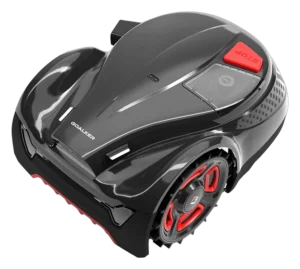
Goalker H3 Pro
 III
III
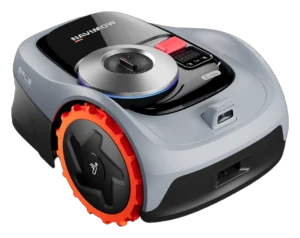
Segway Navimow i105N
 III
III
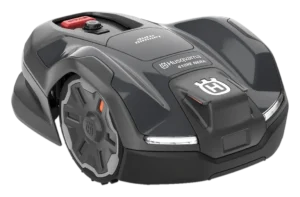
Husqvarna Automower 410XE NERA
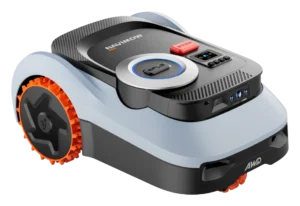 III
III
Segway Navimow i2 LiDAR Pro
Where it's sold
We may earn commission from qualifying purchases. This does not influence classification.
Reference the Mammotion YUKA mini 2 1000H classification.
Embed the Autonomy Ladder™ mark or copy the citation. The mark is served from this record, so a reassessment updates it on your page automatically.
Get the embed code and citation
Scale proportionally only, up to 2× (536px wide)(224px wide). No recolouring, cropping, rotating, or re-typesetting.
Robovations. "Mammotion YUKA mini 2 1000H: Autonomy Level III (Conditional Autonomy)." Autonomy Ladder™, assessed September 2026. https://robovations.com/robots/mammotion-yuka-mini-2-1000h/
- Link it. The mark must point at this record. An unlinked mark is not authorised.
- Hot-link it. Never download, self-host, or re-upload the image. A saved copy stops updating, and a mark that has stopped updating is a claim we no longer stand behind.
- A classification, not an endorsement. It may not appear beside language implying Robovations recommends, rates, or approves the product.