
- Changes
- 2
- Tracking since
- Nov 2025
- Latest
- Mar 15, 2026
- Net movement
- Classification stable
- 2026
-
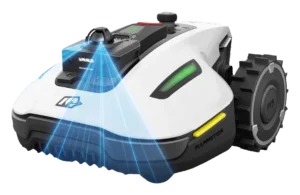
Mammotion YUKA mini 2 1000H launches commercially at $1,399 MSRP
Mammotion opened retail orders for the YUKA mini 2 1000H at $1,399 MSRP in March 2026, making wire-free robotic mowing accessible without perimeter-wire installation via 360-degree LiDAR and AI Vision navigation.
Full assessment5 claims · 4 technical notes · 2 sources
Where it standsAutonomy LadderIIIIIIIVVLevel IIIConditional AutonomyHuman ReadinessReady NowNew to MarketWaitKnown IssuesNot ratedRobovations Score040557085Not scoredWhat happenedThe commercial launch moves the product from announced to actively deployable, with owner setup reports indicating 2-4 hours for initial boundary mapping. Navigation accuracy in areas with heavy canopy or complex terrain remains the primary performance variable to monitor.
Bottom lineWire-free LiDAR-based delivery is functional at retail; the operational constraint is LiDAR-based signal quality, which varies by location and weather conditions.
ImpactOn autonomy
- RTK satellite + LiDAR + AI obstacle avoidance confirmed in commercial hardware
- Wire-free boundary mapping removes physical installation step from deployment
- Level IV positioning confirmed through manufacturer specs at retail launch
- Real-time obstacle detection verified through app-based mowing zone configuration
On readiness
- Product moved from pre-order to in-hand availability at stated $1,399 MSRP
- Owner setup reports confirm 2-4 hour initial deployment cadence via smartphone app
- Blade replacement consumables (~$40 per pair annually) confirmed at retail
- RTK correction dependency identified as primary operational constraint by early owners
Claim check5 maker claims checked against the record. Open one to read the finding.
Wire-free setup replaces perimeter wire entirely
Documented findingManufacturer documentation confirms LiDAR-based virtual boundaries; no buried wire required. Owner reports note initial mapping takes 2-4 hours via app.LiDAR and AI detect obstacles in real time
Documented findingProduct specifications list LiDAR sensor suite and AI processing; owner reports confirm avoidance of typical yard hazards (branches, hardscape). Performance on moving obstacles not systematically documented.Suitable for yards up to 1,000 square meters (roughly a quarter acre)
Documented findingModel designation (1000H) aligns with manufacturer coverage claims. Owner reports on sub-quarter-acre lots are consistent; edge cases at the coverage limit are not yet documented in volume.LiDAR-based positioning delivers centimeter-level boundary accuracy
Documented findingManufacturer specs claim centimeter-level LiDAR-based accuracy under clear signal conditions. Owner reports describe boundary drift during heavy precipitation and in areas with weak NTRIP correction service.Minimal maintenance compared to wire-based systems
Documented findingBlade replacement remains annual per manufacturer schedule; LiDAR-based base station requires seasonal inspection. Wire maintenance is eliminated. Net maintenance reduction is real but not zero-effort.Evidence2 sources · all linked
121 Mar 202615 Mar 2026filed 15 Mar 2026- 1Mammotion Press Release1 Mar 2026
- 2The Verge10 Mar 2026
Technical notes4 sectionsCommercial Launch Configuration
The YUKA mini 2 1000H entered retail at $1,399 MSRP in March 2026. The model designation (1000H) corresponds to a coverage area of up to 1,000 square meters per charge cycle under manufacturer documentation.
Navigation Architecture
The unit uses 360-degree LiDAR combined with AI Vision for navigation and obstacle avoidance. No RTK satellite positioning module is included in the 1000H model. Boundary definitions are stored in the companion smartphone app via a virtual map created from the LiDAR point cloud during initial setup.
Setup and Deployment
Initial deployment requires pairing the mower with the app, positioning the RTK base station, and mapping yard boundaries virtually. Owner reports at launch describe a 2-4 hour first-use setup window, comparable to wire-based alternatives during installation but without the physical trenching step.
Consumables and Maintenance
Manufacturer documentation specifies annual blade replacement or after 40-50 mowing cycles, with replacement blade sets priced at roughly $40 per pair. No RTK base station is part of the 1000H configuration; no dock auto-empty or liquid consumables are part of the maintenance cycle.
- 2025
-
Mammotion announces YUKA mini 2 series with wire-free RTK mowing for compact yards
Mammotion announced the YUKA mini 2 series in late 2025, introducing LiDAR as the primary navigation layer in place of the RTK positioning used in the original YUKA Mini.
Full assessment4 claims · 4 technical notes · 2 sources
Where it standsAutonomy LadderIIIIIIIVVLevel IIIConditional AutonomyHuman ReadinessReady NowNew to MarketWaitKnown IssuesNot ratedRobovations Score040557085Not scoredWhat happenedThe YUKA mini 2 1000H uses 360-degree LiDAR and AI vision exclusively, dropping the RTK base station requirement of the gen-1 platform. Retail availability and real-yard LiDAR navigation performance were the primary unknowns flagged by early coverage to verify at launch.
Bottom lineThe LiDAR addition is a real architecture change from gen-1; RTK signal dependency as a core constraint was not resolved by the gen-2 design.
ImpactOn autonomy
- LiDAR sensor added to gen-2 hardware, supplementing RTK-only gen-1 architecture
- AI obstacle avoidance announced as new real-time capability not present in original YUKA Mini
- RTK centimeter-level boundary accuracy carried forward from gen-1 per manufacturer disclosure
- Wire-free perimeter approach retained as core architecture across YUKA mini 2 lineup
On readiness
- Pre-announcement confirms no retail availability at reveal; pre-orders opened separately
- Gen-2 hardware represents progression from original YUKA Mini feature set
- LiDAR addition reduces risk of obstacle-related stoppages documented on gen-1 platform
- Pricing alignment with gen-1 at announcement reduces uncertainty for prospective buyers
Claim check4 maker claims checked against the record. Open one to read the finding.
LiDAR delivers real-time obstacle avoidance superior to camera-only systems
Documented findingManufacturer announcement describes LiDAR integration; third-party benchmarks comparing LiDAR-equipped vs. camera-only mower obstacle avoidance were not published at announcement stage.Wire-free setup works for any residential lawn
Documented findingThe YUKA mini 2 1000H does not require an RTK correction signal; LiDAR-based navigation removes cellular NTRIP dependency. Coverage is defined by the LiDAR detection envelope; dense obstacle environments and heavily shadowed yards are the primary documented constraints.Gen-2 improves on all limitations of the original YUKA Mini
Documented findingLiDAR navigation and AI obstacle avoidance are documented hardware advances over the gen-1 camera-assisted RTK design. RTK signal dependency, a noted gen-1 constraint, is resolved in the gen-2 architecture, which replaces RTK with LiDAR-primary positioning.1000H designation means it handles 1,000 square meters per session
Documented findingManufacturer documentation ties the model designation to coverage area under standard conditions. Actual per-session coverage varies with terrain, obstacles, and battery state; 1,000 sqm is a nominal figure.Evidence2 sources · 1 linked
1215 Nov 202520 Nov 2025filed 20 Nov 2025- 1Mammotion Product Announcement15 Nov 2025
- 2Lawn and Garden Technology News20 Nov 2025named, not linked
Technical notes4 sections
Generation-2 Hardware Architecture
The YUKA mini 2 1000H is built on a LiDAR-primary architecture that replaces the RTK positioning used in the original YUKA Mini. The 1000H uses 360-degree LiDAR combined with AI vision for boundary definition, navigation, and obstacle detection, eliminating the RTK base station requirement of the gen-1 platform.
RTK Positioning Continuity
RTK satellite positioning for virtual boundary definition was carried forward from the gen-1 YUKA Mini. The 1000H model designation corresponds to a coverage area of approximately 1,000 square meters under standard residential conditions per manufacturer documentation. The RTK base station pairing requirement remained part of the setup architecture in the announced design.
AI Processing Layer
Mammotion’s announcement described an AI processing system working in conjunction with LiDAR data to classify yard obstacles and determine avoidance paths in real time. Specific processing hardware specifications and the AI framework were not detailed in announcement materials reviewed at the time of filing.
Target Deployment Profile
Manufacturer positioning at announcement targeted compact residential yards under half an acre (roughly 5,000 square feet) with standard cool-season turf and gentle to moderate slope gradients. Steep-slope and thick-fescue use cases were not listed as supported in the announced product profile.