
Mammotion Yuka Mini
Compact autonomous mower rated for 600 m2, about 6,460 sq ft, in the 600 and 800 m2, about 8,610 sq ft, in the 800, where a smaller platform reduces storage footprint and setup effort. Positioning comes from free NetRTK correction plus vision, so there is no perimeter wire, no antenna and no base station to install.
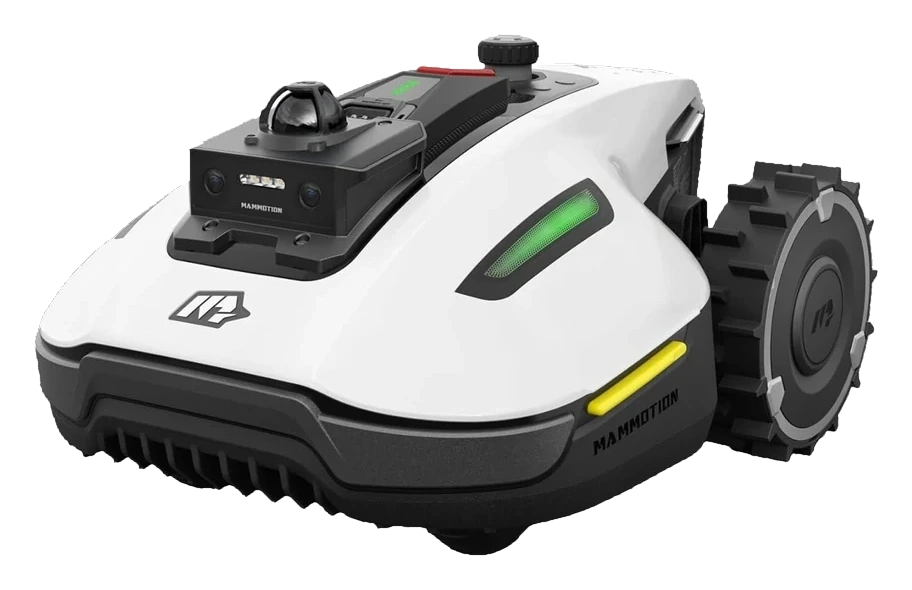
Will the Mammotion Yuka Mini work on your yard?
Describe your yard using the controls. Each choice reads the spec sheet for you, flagging where the Mammotion Yuka Mini is built for your space and where it isn’t.
A classification of fit for the conditions you set, not a recommendation. Verdicts describe engineering design intent, not test results.
The full spec sheet.
Priced below the category median, with every figure charted against the category below.
- Footprint
- 16.5 × 20 in · 9.8 in tall
- Weight
- 23 lbs•
- Battery
- 128 Wh · Li-ion
- Wi-Fi
- Supported✓
- Cutting width
- 7.5 in✓
- Blade system
- 5 pivoting razor blades✓
- Drive layout
- Rear-wheel drive
- Max area
- 6,460 sq ft•
- Max slope
- 50%•
- Cutting height range
- 2-3.5 in•
NetRTK satellite positioning with vision (iNavi); no base station or antenna
Position shows where the figure sits across the tracked category, not a quality judgment.
Living with it.
Vision navigation reliable in daylight; compact platform shows promise but limited long-term field data.
Early owner reports (3-6 months in market) document solid navigation in clear conditions and reliable blade engagement. No major firmware issues identified. Long-term reliability trend unproven due to limited deployment window.
The independent record is still forming. Failure modes are listed once an outside source reports them.
$1,299 to buy, then about $120 a year for the replaceable parts below. Over three years that is roughly $360 past the sticker price. Excludes electricity and any repairs.
- BladesBlade changes
Replacement cadence from the maintenance schedule; prices shown where the source documents them.
CautionExposed spinning blades: Blades rotate continuously during operation. Never place hands or feet beneath chassis or near blade opening during mowing.
NoteCompact size increases foot entanglement risk: Smaller footprint may be less visible in tall grass. Keep clear of mowing zone during operation.
How the assessment has moved.
Every announcement, release and reassessment behind the current classification.
-
Sep 2026 · AssessmentAutonomy Ladder reclassified III → IV
-
Sep 2026 · AssessmentRecord status: Provisional → Pending
-
Aug 2026 · AssessmentRecord status: Verified → Provisional
-
Aug 2026 · AssessmentRobovations Score revised 67 → 70
-
Aug 2026 · AssessmentRobovations Score revised 69 → 67
-
Aug 2026 · AssessmentRobovations Score rescored under v4.2: 66 → 69
-
Aug 2026 · AssessmentRobovations Score rescored under v4.0: 65 → 66
-
Jul 2026 · AssessmentRobovations Score revised 67 → 65
-
Jul 2026 · AssessmentRecord status: Provisional → Verified
-
Jul 2026 · AssessmentRobovations Score recorded at 67 of 100
-
Mar 2025 · ReleaseCommercially released in North America at $1,799
-
Jan 2025 · AnnouncementUnveiled at CES 2025 as compact vision mower
How Mammotion Yuka Mini compares.
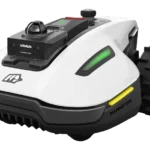
What people actually ask.
OperationCan the Yuka Mini cover a full acre in one mowing session?
OperationDoes the Yuka Mini need a perimeter wire like boundary-based mowers?
OperationDoes overcast weather or evening light affect the Yuka Mini's navigation?
OwnershipWhat does routine maintenance look like for the Yuka Mini?
OperationDoes the Yuka Mini need an RTK base station?
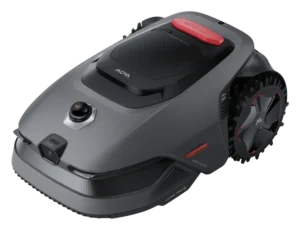
 IV
IV
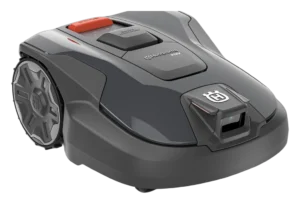
Husqvarna Automower 312V
 IV
IV
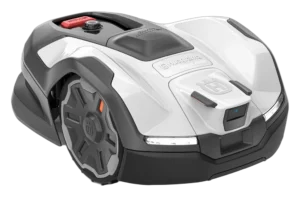
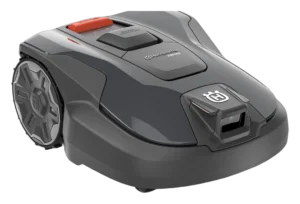
Husqvarna Automower 405VE NERA
 IV
IV
Husqvarna Automower Aspire R6V
Reference the Mammotion Yuka Mini classification.
Embed the Autonomy Ladder™ mark or copy the citation. The mark is served from this record, so a reassessment updates it on your page automatically.
Get the embed code and citation
Scale proportionally only, up to 2× (536px wide)(224px wide). No recolouring, cropping, rotating, or re-typesetting.
Robovations. "Mammotion Yuka Mini: Autonomy Level IV (Environmental Autonomy)." Autonomy Ladder™, assessed September 2026. https://robovations.com/robots/mammotion-yuka-mini/
- Link it. The mark must point at this record. An unlinked mark is not authorised.
- Hot-link it. Never download, self-host, or re-upload the image. A saved copy stops updating, and a mark that has stopped updating is a claim we no longer stand behind.
- A classification, not an endorsement. It may not appear beside language implying Robovations recommends, rates, or approves the product.