
Technology shift/Robot Lawn Mowers/4 robots compared/Reviewed Jun 2026
Budget wire-free robot mowers under $1,500: what do you give up?
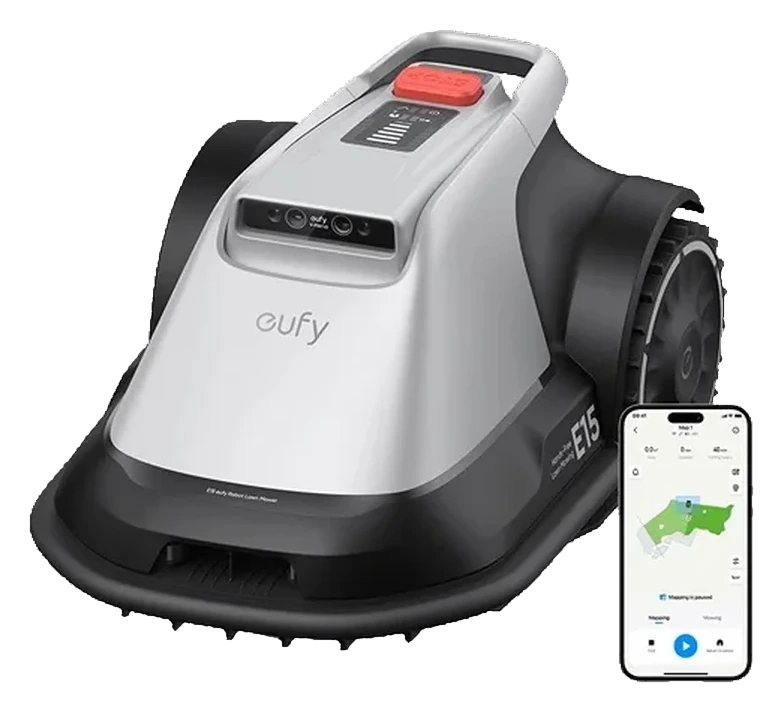
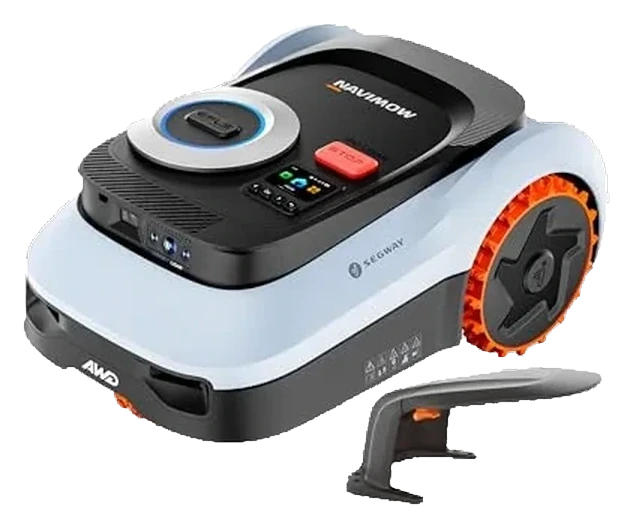

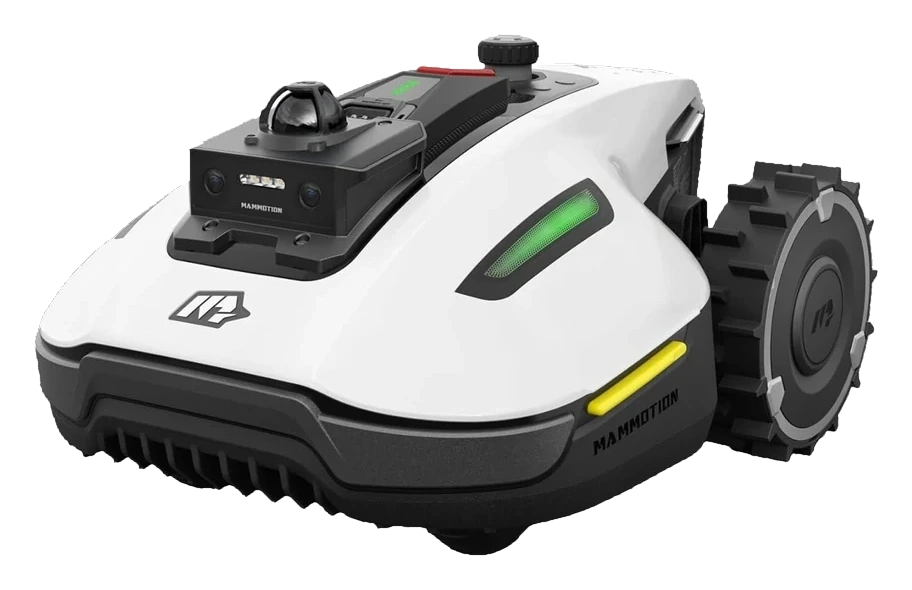
Full specifications19 measurements · 70 of 76 documented
The technological divide
Two architectures, two failure modes
The category has split into two architectural approaches. Each works well in some conditions and breaks down in others.
RTK (real-time kinematic GPS)
A ground base station corrects the robot’s satellite position to within a few centimeters — but on a single frequency, so a blocked signal can drop the lock.
A ground-level base station or multi-constellation satellite stream delivers centimeter-level corrections to the mower's GPS receiver, producing systematic grid paths inside virtual boundaries. No buried wire; accuracy depends on clear sky visibility and, in some implementations, cloud connectivity.
- Centimeter-level grid accuracy in open sky
- Works after dark or in low light
- Signal degrades under dense tree canopy
- Requires RTK antenna and dock recalibration after relocation
Machine vision (camera + vSLAM)
The robot finds its way by recognizing landmarks through an onboard camera, the way a person navigates by sight.
One or more cameras map the lawn from ground level, building a visual model of boundary features and obstacles. Virtual boundaries derive from that camera model rather than satellite corrections. Accuracy depends on consistent lighting, stable lawn edges, and clear camera lenses.
- No sky-view dependency; works in enclosed yards
- Degrades in shade, overcast, and low-light sessions
- Pass-to-pass drift 8-12 cm in owner reports
- Cannot achieve decorative stripe precision without RTK upgrade
Where each robot sits
Does the architecture pay off?
Horizontal: where each robot sits between the two architectures. Vertical: its documented result on the headline test.
 Mammotion Yuka MiniPartial
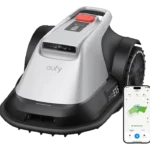 eufy Robot Lawn Mower E15Degrades
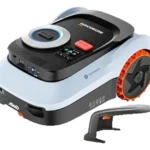 Segway Navimow i2 AWDDegrades
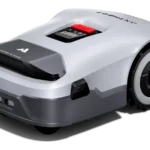 ANTHBOT Genie 600Degrades
Vertical axis: documented result on Navigation accuracy under tree canopy
What each architecture can and can’t do
Capability tests
Each capability is documented from owner reports, manufacturer specifications, or third-party reviews. No in-person testing.
eufy Robot Lawn Mower E15Segway Navimow i2 AWDANTHBOT Genie 600Mammotion Yuka MiniWhat the architecture difference means
Different homes, different sensor stacks
Where each architecture fits, by condition.
Open suburban yards, full sun
RTK positioning at $999-$1,299 delivers the same satellite-accuracy architecture found in $3,000+ flagships. In yards with fewer than two large trees and consistent sky exposure, the Navimow i2 AWD and ANTHBOT Genie 600 operate on grid schedules without human-assisted boundary correction.
Compact yards with shade or dense landscaping
Camera-only navigation on the Mammotion Yuka Mini avoids sky-view dependency but requires adequate lighting. Owner reports document retracing errors when sessions run past 5 p.m. or on heavily overcast days. Properties under 5,000 sqft with defined hard boundaries perform reliably in the morning-to-midday window.
Properties where brand longevity matters
ANTHBOT has no shipping history prior to 2026, meaning firmware roadmaps, replacement-part availability, and warranty service are untested at scale. Segway's Navimow line launched in 2021 with documented firmware iterations. The eufy E15 and Mammotion Yuka Mini both entered the market in 2025, placing all four in an early-evidence window: buyers accepting delivery risk today gain wire-free convenience that cost two to three times more in prior generations.
Common questions