
Goal-based/Robot Lawn Mowers/2 robots compared/Reviewed Aug 27, 2026
Stiga A 15v vs Mammotion YUKA mini 2: which fits?
Full specifications11 measurements · 22 of 22 documented
How does each robot map its yard boundary?
Both robots replace buried wire, but they use different sensor combinations and different reliance on satellite signal to hold a perimeter.
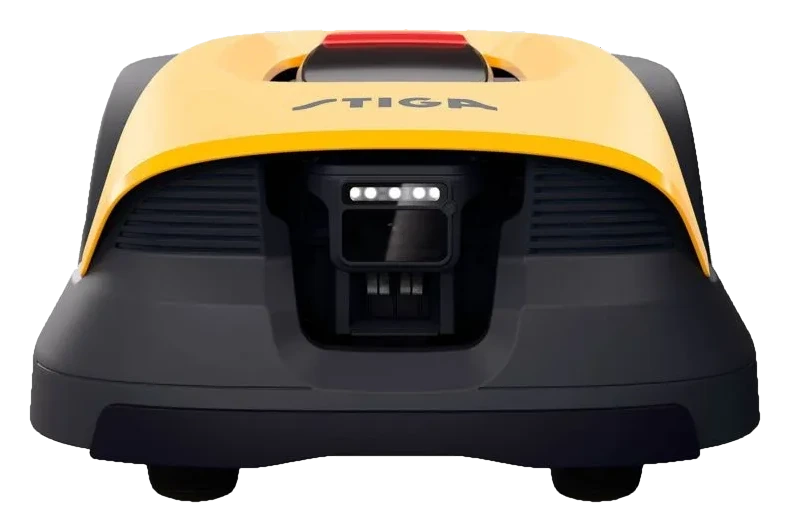
 Stiga A 15v
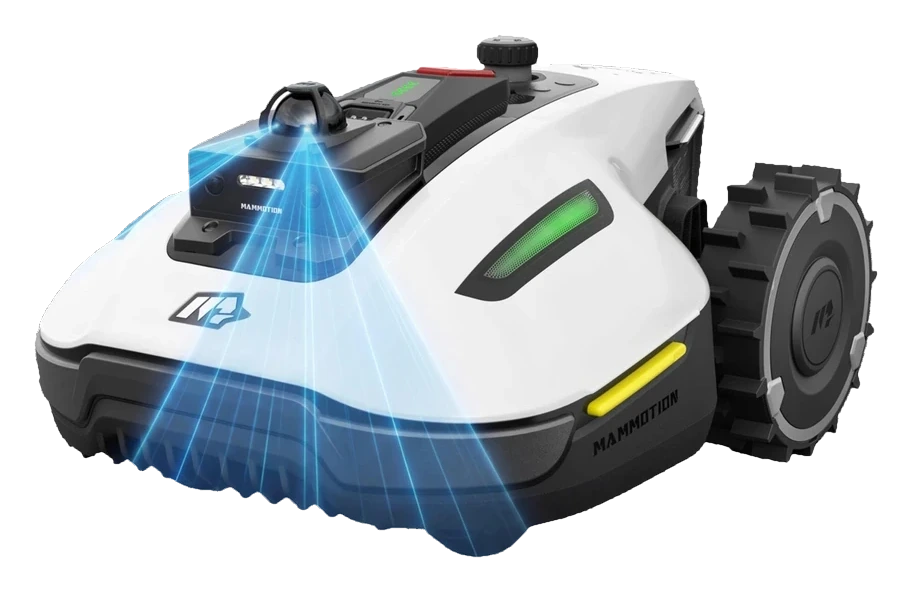
 YUKA mini 2 1000H
STIGA's own materials describe quad-band GPS-RTK paired with an AI camera, with the perimeter drawn entirely in the STIGA.GO app rather than walked or buried.
Mammotion documentation states the YUKA mini 2 1000H uses 360-degree LiDAR and dual-camera AI vision with no RTK correction and no base station anywhere in the design.
How much yard can each one cover?
Rated coverage differs between the two, and only one publishes a per-charge square-footage figure alongside its seasonal ceiling.
Stiga A 15vYUKA mini 2 1000HMammotion's own product documentation states the 1000H is rated for 1,000 square meters, about 0.25 acre, with 2,690 square feet covered per charge cycle.
STIGA rates the A 15v at 1,500 square meters, but Haus & Garten Test's direct review recommends it specifically for smaller gardens despite that published ceiling.
What terrain and slope conditions does each handle?
Both machines publish a maximum slope rating, but they reach it on different drivetrains and with different documented turf assumptions.
Stiga A 15vYUKA mini 2 1000HSTIGA publishes a 45 percent slope rating for the A 15v, high for a camera-navigated mower in this size class, though no independent hillside test has been published yet.
Mammotion rates the YUKA mini 2 1000H to 45 percent grade, or 24 degrees, on a rear-wheel-drive chassis tuned for standard cool-season turfgrass.
What happens if the yard layout changes?
A changed yard means different work for each system: one edits app-drawn zones, the other rebuilds a stored point-cloud map.
Stiga A 15vYUKA mini 2 1000HMammotion documentation states the boundary lives in a point cloud, so a yard that changes substantially, new structures or removed trees, needs re-mapping rather than a coordinate correction.
STIGA's app lets owners redraw zones and no-go areas directly, with no separate published statement on what triggers a full remap of the underlying data.
How much operating history backs each machine?
Both robots reached market in March 2026, leaving roughly five months of field time and limited independent data for either.
Stiga A 15vYUKA mini 2 1000HBoth the A 15v and the YUKA mini 2 1000H trace to March 2026 launches, leaving under six months of ownership behind either model as of this comparison.
Robovations classification notes list no independent reliability pattern for either model yet, citing insufficient field time rather than any reported fault.
In closing
What the evidence shows
Patterns that emerged across the questions above.
Boundary methods diverge on satellite dependency
One system relies on RTK correction from satellite signal for boundary accuracy, while the other builds and holds its map entirely from LiDAR and camera data.
Rated coverage areas are not identical
The A 15v is rated for a larger area at 1,500 square meters, while the YUKA mini 2 1000H publishes a smaller 1,000-square-meter rating alongside a per-charge coverage figure.
Neither has an established failure record
Both models launched in March 2026, so independent reliability and edge-case recovery data has not had time to accumulate for either machine yet.
Common questions