
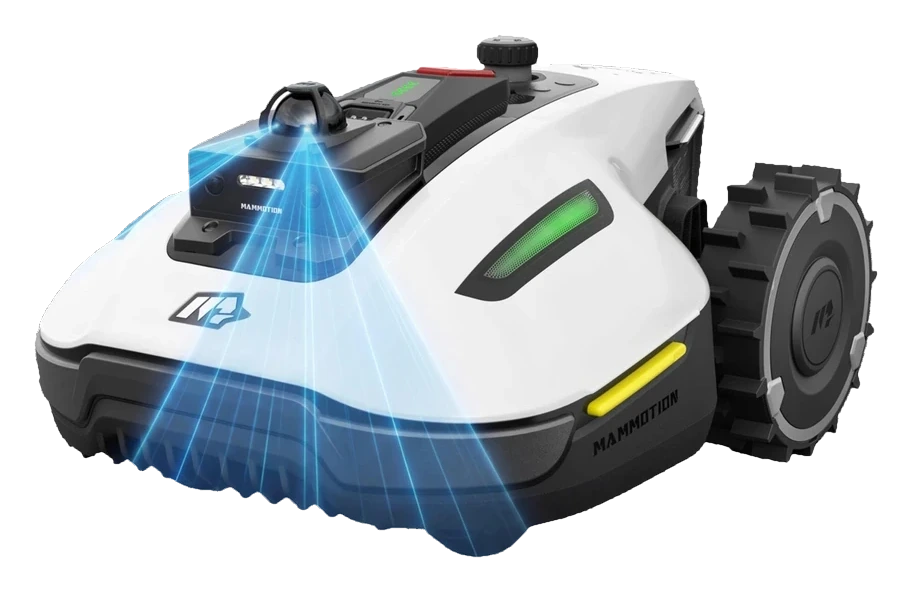
Mammotion
Mammotion YUKA mini 2 1000H
- Autonomy
- IIIConditional
- Score
- Not scored
- Readiness
- Not assessed
- Price
- $1,399list
Mammotion
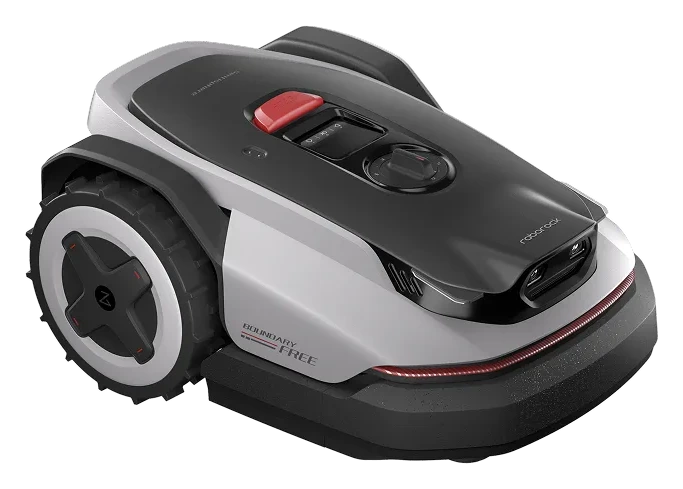
Roborock
Up to three
All robot lawn mowers. Every figure below is placed against the whole class, so a gap can be read against how much the class itself varies.
The conditions each robot was assessed against, side by side. Rows marked in gold are where these machines genuinely differ.
| Condition | YUKA mini 2 1000H | Roborock RockNeo Q110H |
|---|---|---|
| Yard size | ||
| Under ¼ acre | GoodCompact mower optimized for small residential lots under 2,500 sqft; full coverage in single charge cycle. | GoodRoborock rates it for up to 1/4 acre per day; Gizmodo's 1/20-acre yard used 60-70% battery. |
| ¼ – ½ acrethey differ | GoodStandard operating range; 90-120 minute runtime covers 2,500-5,000 sqft at typical mowing height with one dock return. | DependsRated for up to 1/4 acre per day, so lots nearer half an acre exceed its stated capacity. |
| Over ½ acrethey differ | DependsSingle-charge runtime insufficient for yards over 5,000 sqft; requires multi-day mowing cycles or pre-divided zones. | PoorAt 1/4 acre per day, Roborock's rating falls well short of lawns over half an acre. |
| Terrain | ||
| Mostly flat | GoodOptimal operating condition; RTK positioning and traction unrestricted on level ground. | GoodGizmodo found it at its best on simple, uncluttered lawns once zones were set up. |
| Gentle slopes | DependsRated to 25% slope; reports show traction loss above 20% on wet grass. Performance acceptable on dry moderate slopes. | DependsRated to 45% slopes, but Gizmodo saw it dig ruts on uneven pavers and need rescue from sand. |
| Steep / hilly | PoorExceeds 25% slope rating; safety shutoff triggers on steep terrain. Traction loss and slope-sensing cutoff documented in owner reports. | PoorTwo-wheel drive rated to 45%; Gizmodo saw it skitter and churn turf on a steeper slope. |
| Grass type | ||
| Typical lawn grass | GoodOptimized for Kentucky bluegrass and perennial ryegrass at 2-4 inch cutting height; standard residential turf. | GoodGizmodo found it kept a small lawn cut when run every couple of days. |
| Mixed / tall growth | DependsCutting deck geometry suits standard heights; tall fescue above 4 inches causes bogging and reduced autonomy. Pre-mow required. | DependsPublished maximum cutting heights conflict, 60 mm versus 3.1 inches, and no tall-grass test was found. |
| Thick (Bermuda / Zoysia)they differ | PoorThick or dense turf varieties bog the mower and trigger runtime depletion mid-yard. Blade design not optimized for matted growth. | DependsNo independent test in thick or dense turf was found; the cutting width is 8.7 inches. |
| Boundary setup | ||
| Wireless required | GoodRTK-based virtual boundaries eliminate wire; this mower is purpose-built for wireless operation. | GoodWire-free: it bounds the lawn with full-band RTK or network RTK plus camera-based VSLAM. |
| Wire requiredthey differ | DependsCan operate with optional temporary wire fallback, but RTK setup is the primary design. Wire adds complexity to an otherwise wire-free system. | PoorIt has no perimeter-wire mode; boundaries are set by driving it around the lawn edge in the app. |
| No preference | GoodWire-free RTK operation is standard; no preference needed. | GoodWith no boundary preference, its wire-free RTK setup covers the lawn without burying any wire. |
A robot being poor for a condition is a fact about fit, not a fault. “Depends” means the record names a limit worth reading, not that the answer is unknown.
A number only means something next to the spread it sits in. Each track is the real range across every classified robot in the class, with the median marked.
Not compared, because fewer than two of these robots carry a published figure: Runtime, Charge time, Noise.
Written on each record, and the only thing here every robot on the site carries.
What each design gives up to be good at what it is good at.
LiDAR and vision replace the perimeter wire and the RTK base station together, but the boundary lives in a point cloud rather than on a survey grid: a yard that changes substantially, new structures or removed trees, needs re-mapping rather than a coordinate correction.
Nothing on the property needs a view of the sky: with no satellite correction in the loop, tree cover and narrow lots that constrain RTK mowers do not constrain this one, and there is no base station to mount or maintain.
$1,299 buys wire-free RTK and stereo-camera obstacle avoidance; two-wheel drive is what gives way on sand, pavers and steep grass.
Navigation got better across Gizmodo’s week of testing, so the first mows are the roughest ones.
Stated by the record itself. A robot being wrong for a household is a fact about fit, not a fault.
The upkeep ownership hands back to you, whatever the autonomy level says.
Classifications rest on different depths of evidence. A pre-release assessment and a verified one are not the same kind of claim.
| Robot | Evidence status | Sources reviewed | Last assessed |
|---|---|---|---|
| Mammotion YUKA mini 2 1000H | Pending | 4 | Sep 2026 |
| Roborock RockNeo Q110H | Verified | 7 | Sep 2026 |
Evidence status counts the sources behind a classification, not their kind. A high count can be maker documentation and price coverage, so read it as how much was reviewed rather than as independent testing. How we weigh evidence.
 The full recordMammotion YUKA mini 2 1000HSpecifications, evidence, the Fit Check in full, and every tracked change.
 The full recordRoborock RockNeo Q110HSpecifications, evidence, the Fit Check in full, and every tracked change.
Robovations classifies robots; it does not rank them. Nothing on this page is a recommendation, and no manufacturer influences a classification or its placement here.
Comparing across classes is allowed — the page will switch to per-class positioning and tell you it has.