Skip to content
Saved
ROBOVATIONS/CLASSIFICATION RECORD/ROBOT LAWN MOWERSRELEASED 2023.06REASSESSED 2026.03.26
Worx

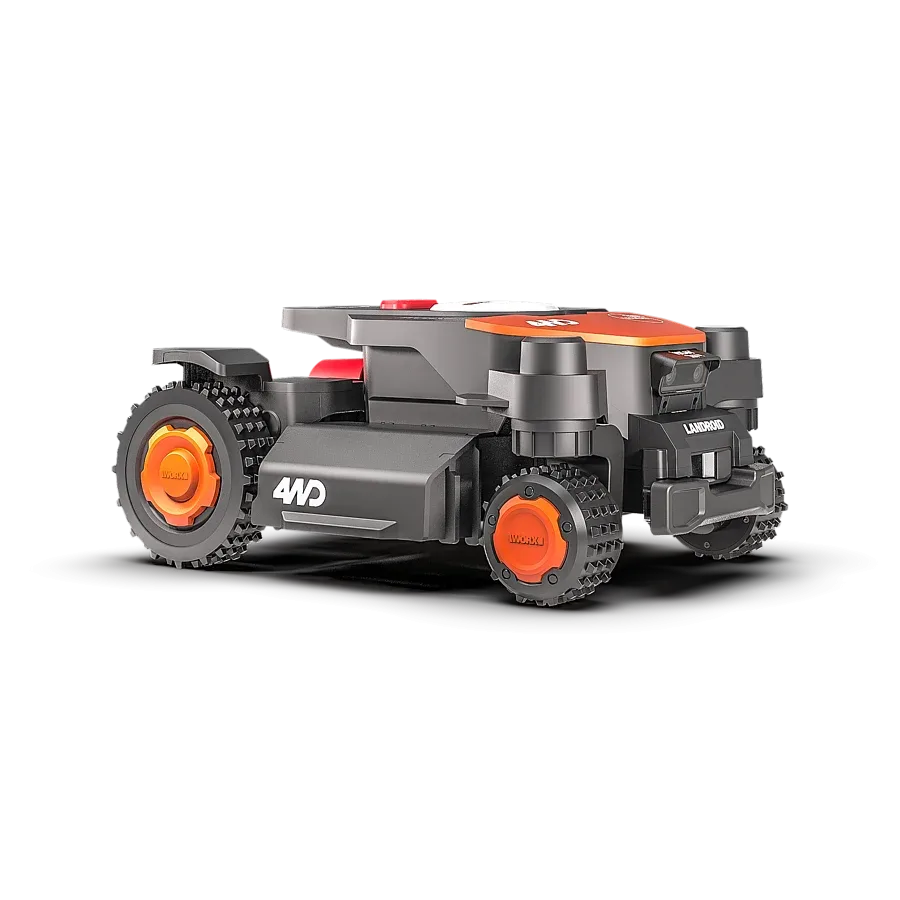
Worx Landroid Vision L1600

Wire-free installation removes days of ground work. The trade-off is camera-dependent performance: overcast days and low light affect reliability in ways a wire or RTK signal does not.
Superseded byWorx Landroid Vision Cloud WR344newer generation now available

Worx Landroid Vision L1600
FIT CHECK

Will the Worx Landroid Vision L1600 work on your yard?

Describe your yard using the controls. Each choice reads the spec sheet for you, flagging where the Worx Landroid Vision L1600 is built for your space and where it isn’t.

Yard size

Terrain

Grass type

Boundary setup

A classification of fit for the conditions you set — not a recommendation. Verdicts describe engineering design intent, not test results.

SPECIFICATION

The full spec sheet.

Priced near the category median, with every figure charted against the category below.

23.6 in17.7 inTOP9.8 in17.7 inSIDEDimensional drawing
Key specificationsManufacturer-published
Footprint
23.6 × 17.7 in · 9.8 in tall
Weight
33.1 lbs
Battery
80 Wh · Li-ion
Wi-Fi
Supported
Mapping & navigation

Camera-based AI vision boundary detection with systematic row-pattern navigation; no perimeter wire or RTK

Where it lands · ranked across 84 robot lawn mowersThis robotMedianTypical range
Runtime90min
50 min240 min
Near median
Price$1,999
$451$32,829
Bottom of range
Noise57dB
50 dB82 dB
Below median
Charge time180min
40 min300 min
Above median
Weight33.1lbs
11.9 lbs160 lbs
Near median

Position shows where the figure sits across the tracked category — not a quality judgment.

Official referencesManufacturer site
OWNERSHIP

Living with it.

Strong first-generation vision-based design with documented session abandonment issues in low light conditions.

Owner forums report camera-based abandonment in overcast northern European conditions. Boundary deviation occurs on complex layouts before corrections applied. Docking miss documented on uneven ground near station.

Owner effort~1.6 hrshands-on per month
Consumables$50replaceable parts / yr
Reliability trend Stableowner-reported arc
What goes wrong · 4 documented · 0 self-recover
Occasional
Session abandonment in low lightMower returns to base when camera contrast falls below threshold
Owner fixResume manually in better lighting
Occasional
Boundary deviation on complex layoutsNarrow corridors and irregular shapes cause out-of-bound excursions
Owner fixApply app-based zone corrections
Occasional
Wheel slip on wet inclinesSlopes with wet grass trigger safety stop from lost traction
Owner fixWait for grass to dry before session
Rare
Docking station missFailed docking attempts on uneven ground near station
Owner fixManually reposition unit at dock
Upkeep routine
Monthly12×/yr
Clean camera lens with dry microfiber cloth to prevent vision obstruction from grass clippings, dust, and moisture. · Clear debris from chassis underside and cutting deck around blade housing.
Seasonal4×/yr
Inspect and clean charging station contacts; remove grass buildup from docking ramp. · Full unit inspection before first use of growing season; check wheel traction surfaces for wear.
Yearly1×/yr
Battery capacity check; Worx recommends replacement after 3-5 seasons depending on charge cycles.
As neededno fixed schedule
Replace cutting blades; Worx recommends more frequent changes on larger or denser lawns. Blade kits cost approximately 10-15 USD. · Re-run boundary mapping walk after significant garden layout changes such as new raised beds, furniture, or structural additions.
Cost over time · past the sticker
PurchaseRunning cost
Year 1
$2,049
Year 3
$2,149
Year 5
$2,249

$1,999 to buy, then about $50 a year for the replaceable parts below. Over three years that is roughly $150 past the sticker price. Excludes electricity and any repairs.

What you replace
  • BladesEvery 1-3 months
  • BatteryAnnually

Replacement cadence from the maintenance schedule; prices shown where the source documents them.

Safety notes

NoteBlade stop on lift response: Cutting blades stop within milliseconds when unit lifted per manufacturer documentation.

CautionVision-dependent obstacle detection: Dynamic obstacle detection effective only in adequate lighting. Small animals or flat objects may not trigger stop.

CautionCamera obstruction risk: Dirty or obscured lens can cause unit to navigate outside intended area.

RECORD

How the assessment has moved.

Every announcement, release and reassessment behind the current classification.

Coming soon
Just launched
Active updates
Settled
Discontinued
  1. Jul 2026 · AssessmentRobovations Score recorded at 65 of 100
  2. Jul 2026 · AssessmentRobovations Score revised 65 → 68
Editorial comparisons

How Worx Landroid Vision L1600 compares.
All comparisons →
Common questions

What people actually ask.

7 answered
OperationDo I need to install any perimeter wire with the Landroid Vision L1600?
No perimeter wire is required. The L1600 uses onboard cameras to learn the lawn boundary during an initial setup walk with the app. This is the defining difference from standard Landroid models, which require wire installation.
OperationHow does the L1600 handle pets and children on the lawn?
The vision system detects dynamic obstacles and stops the mower when a person or pet enters the mowing path. Manufacturer documentation describes this as an active safety feature. Owner reports confirm it functions reliably in good lighting conditions.
OperationWhat happens on cloudy or overcast days?
Camera-based navigation relies on adequate contrast to read boundary cues. Owner reports from 2023 and 2024 note that heavily overcast conditions occasionally cause the mower to pause or return to base rather than complete a session. Rain sensing also pauses operation during precipitation.
OperationHow often do blades need replacing on the L1600?
Worx recommends replacing cutting blades every 1 to 3 months depending on lawn size, grass type, and usage frequency. Blade kits are available through Worx direct and major retailers. The blade replacement process is tool-free.
OperationCan the L1600 handle slopes?
Manufacturer specifications list a maximum slope capability of 20 degrees. Owner reports confirm reliable operation on moderate inclines within this range. Steeper slopes or wet grass conditions are outside the operating design domain.
OperationDoes the L1600 require a subscription for full functionality?
Core scheduling and zone management operate through the free Worx Landroid app without a subscription. Some advanced connectivity and diagnostic features are available through expanded service tiers, but autonomous mowing does not require a paid subscription at time of classification.
ComparisonHow does the L1600 compare to RTK-based wire-free mowers?
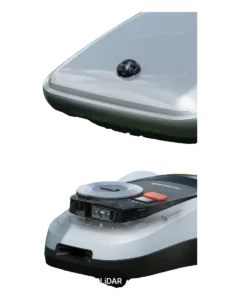
RTK systems use satellite positioning for centimeter-level accuracy and are not affected by ambient light. The L1600 uses camera vision, which eliminates RTK module costs or ongoing satellite signal management but introduces light-dependency. RTK mowers typically offer higher boundary precision; the L1600 offers a simpler initial setup process.

Availability

Where it's sold

We may earn commission from qualifying purchases. This does not influence classification.

Cite / Embed

Reference the Worx Landroid Vision L1600 classification.

Embed the Autonomy Ladder™ mark or copy the citation. The mark links back to this assessment and updates if the classification changes.

Citation
Where to next

Three ways to keep going.

For browsers

See every Level III.

Every robot we’ve classified at conditional autonomy. Sorted by readiness, score, and price. Filter by category, manufacturer, or release date.

Browse the database

Updated weekly with new entries and reclassifications.