
- Changes
- 3
- Tracking since
- Jul 2023
- Latest
- May 1, 2024
- Net movement
- Classification stable
- 2024
-
Worx issues firmware updates for Vision series navigation stability
Worx distributed firmware updates to Landroid Vision series units through the Worx Landroid app during the lead-up to the 2024 growing season, targeting boundary deviation on complex layouts and charging station docking reliability.
ReliabilityFull assessment4 claims · 4 technical notes · 2 sources
Where it standsAutonomy LadderIIIIIIIVVLevel IIIConditional AutonomyHuman ReadinessReady NowNew to MarketWaitKnown IssuesRobovations Score↑ moved by this entry04055708568CapableWhat happenedThe updates addressed the most-reported operational complaints from the 2023 season without altering the camera-only navigation architecture.
WatchingWhether the light-dependency pattern in overcast climates is addressed in subsequent update cycles.
Bottom lineThe update cycle delivers documented incremental improvement on the most-reported 2023 issues; the structural light-dependency limitation remains unaddressed.
ImpactOn autonomy
- Boundary deviation on complex layouts reduced following navigation update (manufacturer firmware notes)
- Charging station docking reliability improved; failed docking reports decreased in 2024 owner threads
- Light-dependency cap on autonomous operation unchanged; architecture unmodified
- Level III classification unchanged; update improves reliability within existing operating design domain
On readiness
- Reduced boundary deviation lowers risk of out-of-bound excursions on irregular lawns
- Improved docking reliability reduces manual intervention events for affected owners
- Update delivered over-the-air via Worx Landroid app without requiring service visit
- Owner-reported confidence in unattended scheduling improved modestly following 2024 updates
Claim check4 maker claims checked against the record. Open one to read the finding.
Over-the-air updates improve performance over time
Documented findingConfirmed; firmware updates delivered via app and manufacturer notes document navigation and docking as targeted areas in the 2024 cycleUpdates resolve weather performance limitations
Documented findingNot documented; manufacturer firmware notes do not reference contrast-handling or low-light navigation improvements in the 2024 update cycleBoundary accuracy continues to improve with updates
Documented findingOwner reports from 2024 season indicate reduced boundary deviation compared to 2023; the improvement is incremental and layout-dependent, not universalVision series benefits from ongoing AI improvement
Documented findingSpecific AI model changes are not documented in public firmware notes; capability claims tied to "AI improvement" are not independently verifiableEvidence2 sources · 0 linked
12Apr 2024May 2024filed 1 May 2024
- 1Worx Firmware Changelog – Landroid Vision Series1 Apr 2024named, not linked
- 2Worx Landroid Community Forum – 2024 season owner reports15 May 2024named, not linked
Technical notes4 sections
Update Context
Worx distributes Landroid Vision firmware updates over-the-air through the Worx Landroid app. The manufacturer firmware changelog confirms two update entries for the Vision series. Public-facing release notes do not disclose version numbers or precise change logs; the documented areas are navigation stability and charging station docking behaviour.
Boundary Deviation Improvement
First-season owner reports identified out-of-bound excursions on narrow corridors and irregular lawn shapes as a consistent issue. Post-update owner threads from the 2024 season describe reduced frequency of these excursions, with several users noting that zones requiring manual splitting after the 2023 season operated correctly following the firmware update. The improvement is reported as incremental rather than eliminating the narrow-passage limitation entirely.
Docking Reliability
A subset of 2023 owner reports described failed charging station docking attempts, particularly on uneven ground near the station, requiring manual repositioning. Post-update reports from early 2024 note this as less frequent; the underlying mechanical constraint of uneven docking approaches is unchanged.
What Was Not Changed
The camera-only navigation architecture is unchanged. Light-dependency causing mid-session abandonment in overcast conditions is not addressed in the 2024 update cycle per available owner reports. Rain-sensing behavior and maximum slope operating limits are unmodified per manufacturer documentation.
- 2023
-
Owner reports document camera light-dependency as recurring operational limitation
Owner forum reports accumulating through the 2023 growing season documented a recurring pattern: the L1600 returns to base mid-session when ambient light falls below the camera's detection threshold, affecting users in northern European climates disproportionately during overcast periods.
Full assessment4 claims · 4 technical notes · 2 sources
Where it standsAutonomy LadderIIIIIIIVVLevel IIIConditional AutonomyHuman ReadinessReady NowNew to MarketWaitKnown IssuesRobovations Score↓ moved by this entry04055708568CapableWhat happenedThe limitation confirms camera-only navigation introduces a weather dependency absent from wire-guided or RTK mowers.
WatchingWhether Worx addresses contrast-handling in software updates across the 2024 season.
Bottom lineWire-free setup is genuine; all-weather autonomous reliability requires significant qualification for climates where overcast conditions are common during the growing season.
ImpactOn autonomy
- Camera contrast loss causes mid-session abandonment, reducing effective autonomous coverage
- Overcast and low-angle light conditions trigger return-to-base without completing mowing pattern
- Light-dependency caps reliable autonomy to daytime sessions in adequate ambient conditions
- Level III classification held; light-sensitivity is cited as a boundary on the operating design domain
On readiness
- Session abandonment in overcast conditions reduces owner confidence in unattended scheduling
- Northern European users report scheduling gaps during extended cloudy periods in autumn
- Requires owner monitoring and manual re-scheduling in climates with variable light
- Reliability offset does not remove commercial readiness but narrows the suitable owner profile
Claim check4 maker claims checked against the record. Open one to read the finding.
Autonomous operation without perimeter wire
Documented findingConfirmed; wire-free boundary detection operates as described by manufacturerWorks reliably through the growing season
Documented findingOwner reports from the 2023 season document mid-session abandonment on overcast days; reliability is light-condition-dependent, not season-independentHandles typical European garden conditions
Documented findingNorthern European overcast frequency creates a documented reliability gap; the claim is accurate for southern climates but requires qualification for consistently cloudy regionsVision system navigates obstacles dynamically
Documented findingObstacle detection for people and pets confirmed effective in good light; performance in low-light conditions not independently documented at equivalent accuracyEvidence2 sources · 1 linked
12Oct 2023Nov 2023filed 1 Nov 2023- 1Reddit r/worxlandroid – Landroid Vision owner experience thread9 Oct 2023
- 2Worx Landroid Community Forum – Vision series owner reports1 Nov 2023named, not linked
Technical notes4 sectionsDocumented Failure Pattern
Owner reports from an owner forum and European gardening forums describe a consistent sequence: the L1600 initiates a mowing session normally, then returns to the charging station before completing the lawn area when ambient light drops below the camera’s minimum contrast threshold. This is distinct from rain-sensing, which is a documented and intended pause trigger. The light-based returns occur even in dry conditions when cloud cover reduces contrast.
Geographic Distribution
Reports cluster among users in northern Europe, particularly those operating during autumn months when solar angle is low and overcast days are frequent. Users in southern Europe and during peak summer months report fewer interruptions, consistent with higher average ambient light levels.
Structural Cause
The L1600’s boundary detection relies exclusively on camera vision with no complementary positioning system. Where wire-guided mowers use a continuous electrical signal and RTK mowers use satellite positioning, the L1600 has no fallback when visual cues are degraded. This is not a defect but a documented architectural trade-off confirmed by manufacturer specifications and owner reports through the 2023-2024 growing seasons.
Owner Workarounds
Forum reports document two common adaptations: restricting scheduled sessions to midday hours to maximise ambient light, and manually re-triggering mowing cycles after cloud-interrupted sessions. Neither eliminates the limitation; both increase owner management overhead.
-
Worx Landroid Vision L1600 launches commercially in Europe
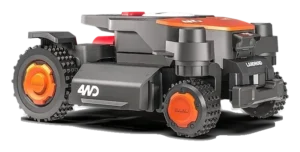
Worx released the Landroid Vision L1600 to European retail in mid-2023, the first Landroid model to use camera-based boundary mapping instead of buried perimeter wire.
Full assessment4 claims · 4 technical notes · 2 sources
Where it standsAutonomy LadderIIIIIIIVVLevel IIIConditional AutonomyHuman ReadinessReady NowNew to MarketWaitKnown IssuesRobovations Score04055708568CapableWhat happenedThe launch removed the main installation barrier of wire-guided mowing at the 1,600 sq meter class.
WatchingWhether retail availability expands beyond Europe and whether the initial camera navigation hold-rate in owner reports stabilises across a full growing season.
Bottom lineThe wire-free installation claim is genuine; the all-weather and speed-of-setup claims require qualification against owner-reported conditions.
ImpactOn autonomy
- Camera maps operating boundary at first deployment without perimeter wire
- Systematic row-pattern mowing completes sessions unattended within mapped zone
- Dynamic obstacle detection via onboard vision stops mower for people and pets
- Level III classification confirmed: full session completion without operator intervention
On readiness
- Wire-free setup reduces installation from multi-day wire laying to a single boundary walk
- Retail availability through Worx direct and major European retailers at launch
- App-based zone management and scheduling operable without paid subscription
- Setup complexity reduced for first-time robotic mower owners lacking wire installation experience
Claim check4 maker claims checked against the record. Open one to read the finding.
No wire required: set up in minutes
Documented findingBoundary mapping walk is required at first deployment; owner reports indicate the initial setup takes 30-60 minutes for a typical residential lawn, not minutesAI vision navigates like a human gardener
Documented findingCamera boundary detection is systematic and row-based; the system follows a defined pattern within mapped zones rather than adapting dynamically to changing garden conditionsWorks in all weather
Documented findingManufacturer documentation and owner reports at launch confirmed rain-delay sensing pauses operation; camera contrast limitations in overcast conditions were noted in early owner feedbackCovers up to 1,600 square meters autonomously
Documented findingManufacturer-specified coverage area; owner reports confirm this as a hard operational boundary, not a best-case figureEvidence2 sources · 1 linked
12Jun 2023Jul 2023filed 15 Jul 2023- 1Worx EU Product Page – Landroid Vision L16001 Jun 2023
- 2Tom's Guide – Worx Landroid Vision wire-free navigation coverage1 Jul 2023named, not linked
Technical notes4 sections
Product Identity
Model WR216E launched for European markets. The Vision series uses onboard cameras as the sole boundary-detection mechanism, replacing the perimeter wire architecture of all prior Landroid models. No RTK module or satellite positioning supplement is included.
Navigation Architecture
Camera array processes visual boundary cues during an initial setup walk performed with the Worx Landroid app. The mapped boundary is stored on-device and used for all subsequent autonomous sessions. Mowing follows a systematic row-pattern within the defined zone. The vision system also handles dynamic obstacle detection, stopping blade operation when people or pets enter the active mowing path.
Coverage and Specifications
Manufacturer-rated coverage area of 1,611 square meters. Battery runtime of 91 minutes per charge; charge time approximately 181 minutes. Maximum operating slope 21 degrees. Noise output 57 dB. Cutting blades replaceable via tool-free process; replacement interval 1-3 months depending on lawn conditions.
App Connectivity
Wi-Fi and Bluetooth connectivity to the Worx Landroid app. Multi-zone scheduling and rain-delay configuration are available without a paid subscription tier at launch.