
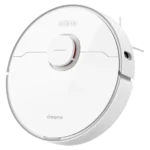
Dreame L10 Pro
Dual-laser obstacle avoidance is the generation bump. The D9's drag-mop weakness persists; mopping remains a secondary layer, not a genuine cleaning function.
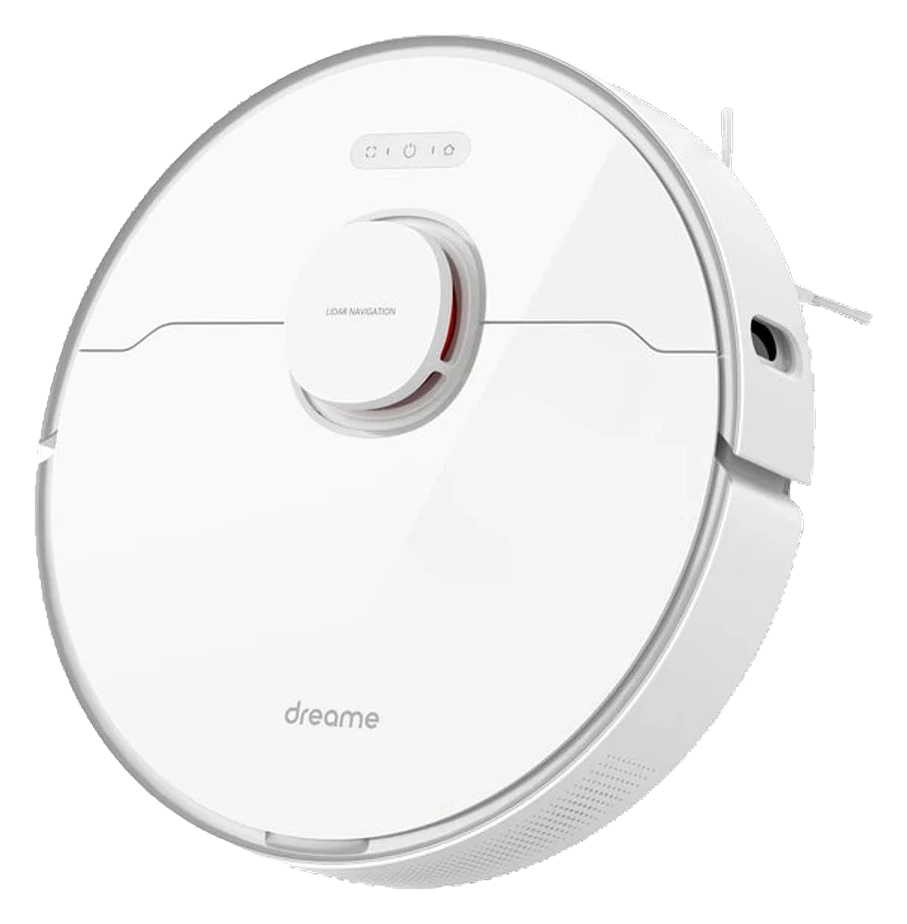
Will the Dreame L10 Pro work in your home?
Describe your home using the controls. Each choice reads the spec sheet for you, flagging where the Dreame L10 Pro is built for your space and where it isn’t.
A classification of fit for the conditions you set, not a recommendation. Verdicts describe engineering design intent, not test results.
The full spec sheet.
Priced below the category median, with every figure charted against the category below.
- Footprint
- 13.8 in dia · 3.8 in tall•
- Weight
- 8.2 lbs•
- Battery
- 56 Wh · Li-ion
- Wi-Fi
- 2.4 GHz only✓
- Voice
- Alexa, Google Home✓
- Onboard dustbin
- 570 mL•
- Water tank capacity
- 270 mL•
- Dock type
- Charge-only dock, no self-emptying
- Threshold climb
- 0.8 in✓
LiDAR SLAM (LDS turret) with 3D structured light obstacle avoidance.
Position shows where the figure sits across the tracked category, not a quality judgment. Suction in Pascals has no standard test method, and the published figure is a peak-mode claim, so it is comparable only within a brand and generation.
Living with it.
Five-year firmware maturity and dual-laser stability offset by dock component failures rising after year two.
Navigation reliability is strong post-v1.8; laser calibration holds across 18+ months of operation. Dock auto-empty jam rates match D9 at 12-18% by year two. No major firmware regressions documented since v2.0.
$450 to buy, then about $25 a year for the replaceable parts below. Over three years that is roughly $75 past the sticker price. Excludes electricity and any repairs.
- Dust bag
- Mop pad
Replacement cadence from the maintenance schedule; prices shown where the source documents them.
CautionPinch hazard at dust bag compartment: Sharp edge on drawer closure; keep away from children under 8 years.
NoteLaser source safety during maintenance: Do not look into dual-laser ports during cleaning; eye-safe classification is 3A but precaution advised.
How the assessment has moved.
Every announcement, release and reassessment behind the current classification.
-
Aug 2026 · AssessmentRobovations Score rescored under v4.2: 53 → 55
-
Aug 2026 · AssessmentRobovations Score rescored under v4.0: 64 → 53
-
Jul 2026 · AssessmentRobovations Score revised 61 → 64
-
Jul 2026 · AssessmentRobovations Score recorded at 61 of 100
-
Apr 2021 · ReleaseLaunches commercially with dual-line laser obstacle avoidance
How Dreame L10 Pro compares.
What people actually ask.
OperationHow does obstacle avoidance differ from the D9?
OperationCan the L10 Pro handle an apartment with hardwood and kitchen tile?
ComparisonIs the L10 Pro better for mopping than the D9?
OperationWhat is the battery improvement from D9 to L10 Pro?
OperationDo I need to update the L10 Pro's firmware manually or does it auto-update?
 III
III
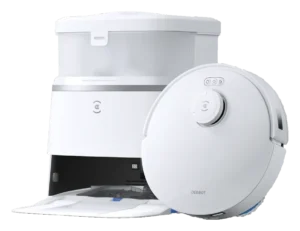
Ecovacs Deebot T30 Pro Omni
 III
III
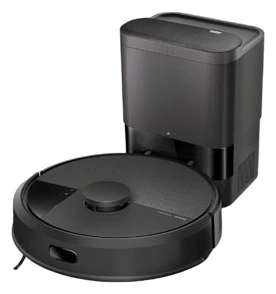
Roborock S8 MaxV Ultra
 III
III
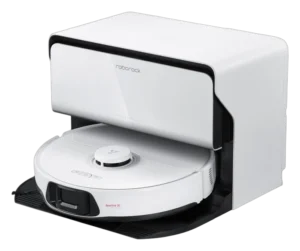
Roborock S8 Max Ultra with Refill & Drainage System
Where it's sold
We may earn commission from qualifying purchases. This does not influence classification.
Reference the Dreame L10 Pro classification.
Embed the Autonomy Ladder™ mark or copy the citation. The mark is served from this record, so a reassessment updates it on your page automatically.
Get the embed code and citation
Scale proportionally only, up to 2× (536px wide)(224px wide). No recolouring, cropping, rotating, or re-typesetting.
Robovations. "Dreame L10 Pro: Autonomy Level III (Conditional Autonomy)." Autonomy Ladder™, assessed August 2026. https://robovations.com/robots/dreame-l10-pro/
- Link it. The mark must point at this record. An unlinked mark is not authorised.
- Hot-link it. Never download, self-host, or re-upload the image. A saved copy stops updating, and a mark that has stopped updating is a claim we no longer stand behind.
- A classification, not an endorsement. It may not appear beside language implying Robovations recommends, rates, or approves the product.