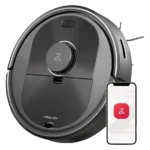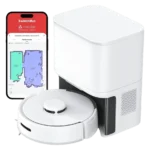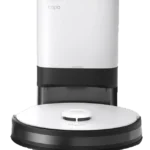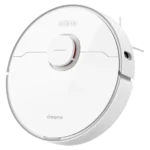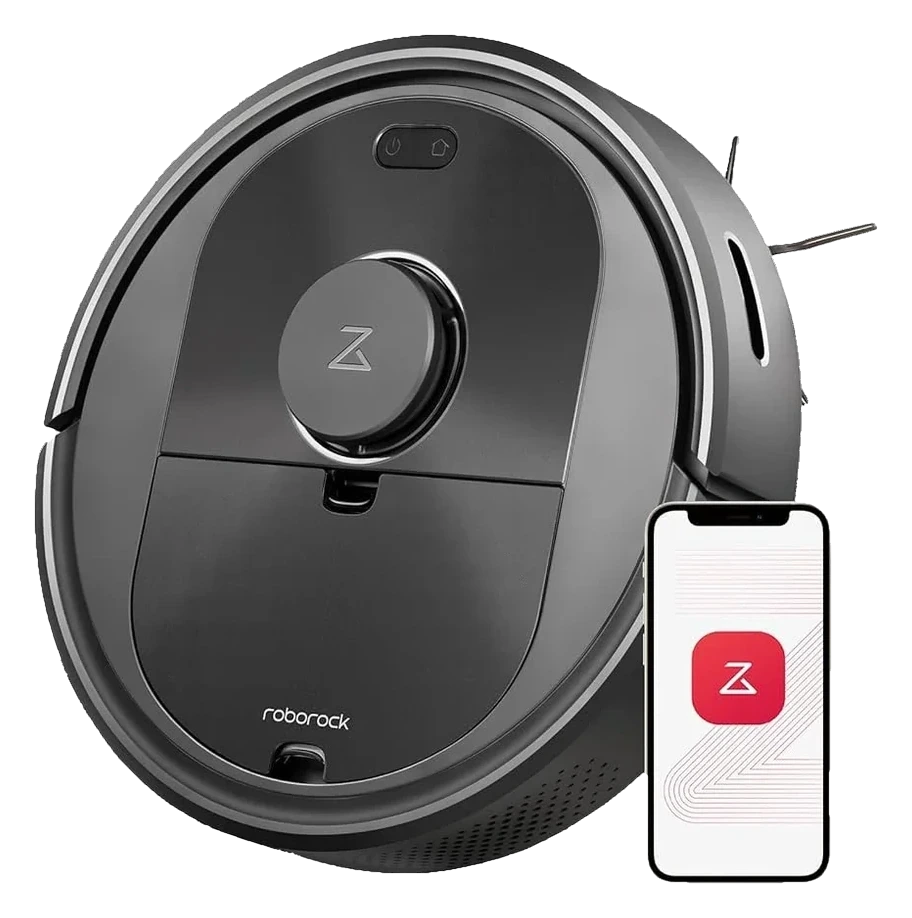
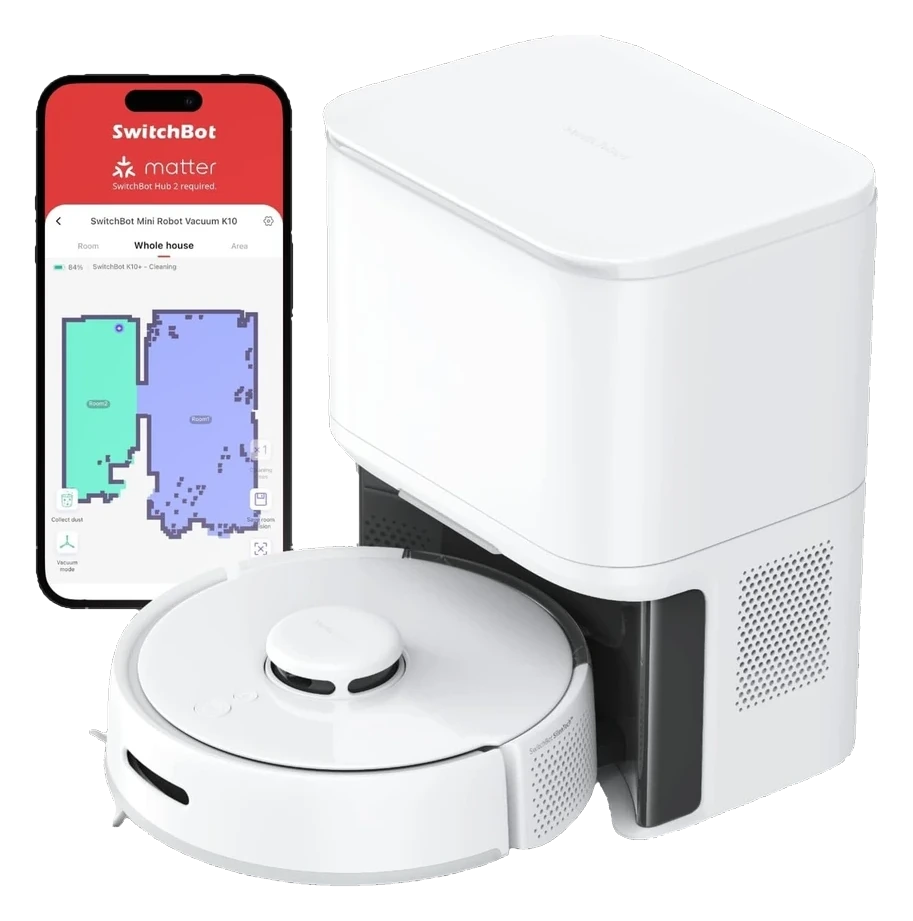
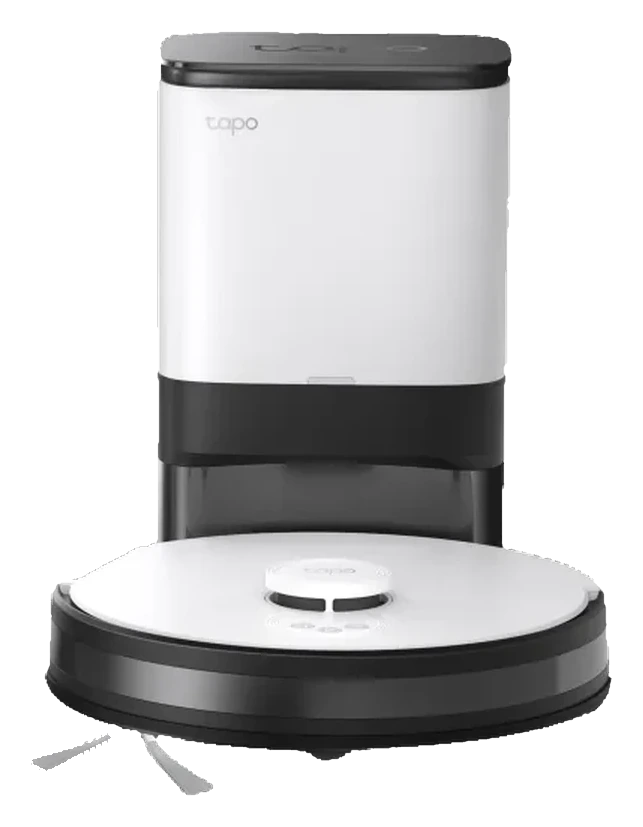
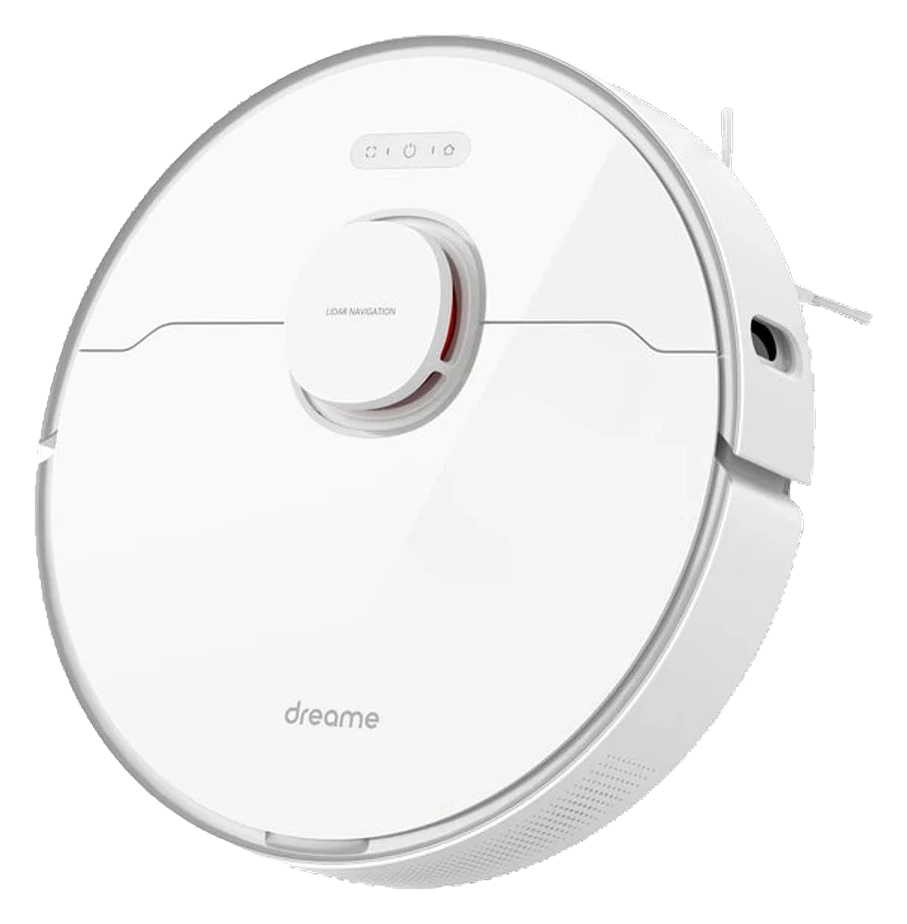
Budget LiDAR vacuums market themselves as set-and-forget appliances, but owner reports across all four platforms document recurring manual steps that the marketing does not disclose.
Classification, not a ranking. Every mark below is documented evidence, not a purchase recommendation.
We may earn commission from qualifying purchases. This does not influence the comparison.
Claims under test
5 marketing claims, measured against documented evidence
Each claim below pairs the marketing language with what owner reports, demos, and engineering documentation actually show. The meter summarizes how far each claim sits from the evidence.
Scheduled cleaning runs autonomously so you never have to think about it
Composite from Roborock Q5, SwitchBot K10+, TP-Link RV30 Max Plus, Dreame L10 Pro product pages and app store listings
What the evidence shows
Scheduling functions as documented, but owner reports across all four platforms describe recurring intervention requirements: physical obstacle removal before runs, map re-confirmation after furniture moves, and dock-return failures that require manual repositioning.
Scheduled start reliability
Documented; functions
Pre-run obstacle clearing
Owner-reported recurring
Post-furniture-move map stability
Partial; varies by unit
Dock-return failure occurrence
Occasional per owner reports
Hands-off across weeks
Not documented
Claim 02 / 05
Obstacle handling without repositioning
~Partial
Large static obstacles handled; cables and low-clearance items require manual pre-clearance
What marketing promises
Advanced obstacle avoidance navigates around everyday objects without getting stuck
Composite from Roborock Q5 navigation specs, Dreame L10 Pro dual-laser marketing, TP-Link RV30 Max Plus AI obstacle avoidance copy
What the evidence shows
LiDAR and dual-laser systems detect and route around large static obstacles reliably. Owner reports document repeated entanglement in thin cables, small clothing, and low-clearance rugs across all four models; the Q5 manufacturer specification notes no camera-based fine obstacle avoidance.
Q5 obstacle avoidance type
LiDAR only; no camera
K10+ obstacle avoidance type
LiDAR + camera documented
RV30 Max Plus avoidance type
LiDAR + AI per manufacturer
L10 Pro avoidance type
Dual-line 3D laser
Cable entanglement reports
Owner-reported on all four
Claim 03 / 05
Self-maintaining dock removes manual steps
~Partial
Dock capacity claims hold in low-debris use; pet-heavy homes and the dockless Q5 diverge significantly
What marketing promises
Self-emptying dock means you can go weeks without touching the vacuum
SwitchBot K10+ dock marketing (60+ day capacity); TP-Link RV30 Max Plus self-empty dock copy; Dreame L10 Pro dock documentation
What the evidence shows
Dock capacity claims are manufacturer-stated. Owner reports document that dust-bag fill rates vary by debris load: pet-hair households fill bags faster than the headline figure. The Roborock Q5 base unit ships without a self-empty dock; auto-empty requires purchasing a separate accessory per Roborock product documentation.
Q5 included dock type
Standard; no auto-empty
K10+ dock capacity claim
60+ days (manufacturer)
RV30 Max Plus bag capacity
2.5 liters (manufacturer)
Pet-hair fill rate
Owner-reported: much faster
Q5 auto-empty
Separate purchase required
Claim 04 / 05
Mapping eliminates boundary setup
~Partial
Physical tape eliminated; digital zone maintenance after layout changes remains a recurring user task
What marketing promises
LiDAR mapping means no tape, magnets, or physical barriers needed
Composite from Roborock Q5, TP-Link RV30 Max Plus, Dreame L10 Pro LiDAR mapping feature descriptions; SwitchBot K10+ app control copy
What the evidence shows
Physical boundary markers are not required on three of the four models. Owner reports confirm that no-go zones must be redrawn in-app after furniture changes; the SwitchBot K10+ lacks documented map-based zoning entirely, requiring physical barriers as the only zoning method per manufacturer documentation.
Q5 no-go zones
App-drawn; map-based
K10+ zone method
Physical barriers only
RV30 Max Plus no-go zones
App-drawn; Tapo app
L10 Pro no-go zones
App-drawn; LiDAR map
Map update after furniture move
Manual re-confirmation needed
Claim 05 / 05
App control delivers hands-off operation
~Partial
App control works but carries hidden hardware dependencies and cloud reliance not stated at point of sale
What marketing promises
Control everything from the app; the robot handles the rest
Composite from Roborock, SwitchBot, TP-Link Tapo, and Dreame app store listings and product page feature lists
What the evidence shows
App-based scheduling and remote start function as documented. Owner reports identify recurring setup dependencies: the SwitchBot K10+ requires a separate Hub purchase for any app connectivity; the TP-Link RV30 Max Plus depends on Tapo cloud for scheduling; granular features on Matter-connected systems require the Tapo app specifically rather than the Matter interface.
K10+ app connectivity
Requires separate Hub purchase
RV30 Max Plus cloud dependency
Scheduling requires Tapo cloud
Matter granular control
On/off only; app required for zones
Q5 5 GHz WiFi support
Not supported; 2.4 GHz only
L10 Pro firmware rollback
Not supported per manufacturer
Per-product rollup
How each platform’s claims hold up
Every claim, resolved per product against documented evidence.
ClaimRoborock Q5SwitchBot K10+TP-Link Tapo RV30 Max PlusDreame L10 Pro
Obstacle handling without repositioning~No camera layer~Cable entanglement~Cable entanglement~Cables still snag
Self-maintaining dock removes manual steps✕No dock included~Dock included~Daily empty needed~Dock included
Mapping eliminates boundary setup~App zones work✕No map zones~App zones work~App zones work
App control delivers hands-off operation~2.4 GHz only✕Hub required~Cloud dependent~No rollback
Common questions
What readers ask about this comparison.
Q.
Which vacuum requires the least manual setup before each run?
None eliminates pre-run preparation entirely. All four require routine cable and clutter clearing per owner reports. The Q5, RV30 Max Plus, and L10 Pro support digital no-go zones via app; the K10+ relies on physical barriers only, adding a step the others avoid.
Q.
Does the Roborock Q5 include a self-emptying dock?
No. The Q5 ships with a standard charging dock. A self-emptying dock is sold separately per Roborock documentation. Hands-off dust collection requires that additional purchase.
Q.
Can the SwitchBot K10+ work without the SwitchBot Hub?
App control and scheduling require the SwitchBot Hub, sold separately. Direct Wi-Fi operation without the Hub is not documented by the manufacturer. This is a hidden hardware cost.
Q.
Is LiDAR obstacle avoidance enough to prevent getting stuck?
LiDAR handles large static objects reliably on all four. Owner reports consistently document entanglement with cables, cords, and loose clothing across all platforms. The Dreame L10 Pro’s dual-laser adds obstacle-type classification per specs, but owner reports still note cable-related stoppages. LiDAR detects presence, not cord versus chair leg.
Q.
What is realistic intervention frequency on a weekly cleaning schedule?
Owner reports do not provide standardized frequency data. Documented interventions include pre-run clearing, map updates after furniture moves, dock maintenance, and filter servicing. Sustained hands-off operation across weeks is not corroborated by owner documentation on any platform.
Next up
Do robot vacuums with cameras avoid obstacles better than bump sensors?
We use privacy-friendly first-party analytics to see which pages get read, plus one optional Google Analytics cookie. No ads, no cross-site tracking. Privacy policy