
Aiper Scuba S1
Cordless, wall-climbing on treads. Aiper rates it for pools up to 1,600 sq ft and 50 ft in length on a charge, and independent bench testing measured 60 to 70 minutes of real runtime. Simplicity trades against endurance and against any form of scheduling: no app, no wifi, no Bluetooth.
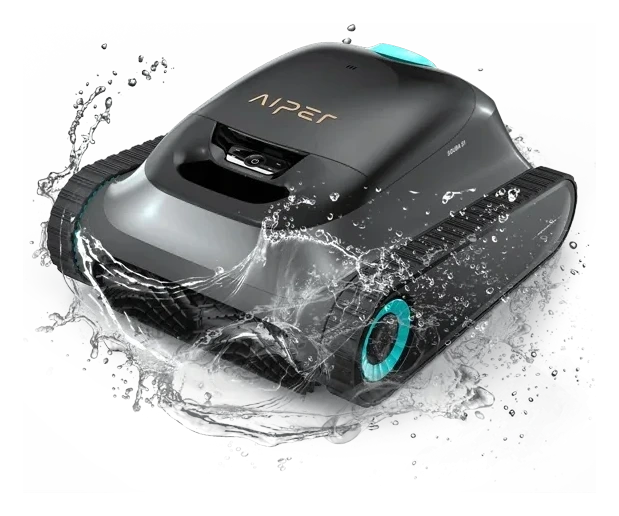
Will the Aiper Scuba S1 work in your pool?
Describe your pool using the controls. Each choice reads the spec sheet for you, flagging where the Aiper Scuba S1 is built for your space and where it isn’t.
A classification of fit for the conditions you set, not a recommendation. Verdicts describe engineering design intent, not test results.
The full spec sheet.
Priced below the category median, with every figure charted against the category below.
- Footprint
- 10.5 × 13 in · 8 in tall
- Battery
- 108 Wh · Li-ion
- Max pool area
- 1,600 sq ft•
- Max pool length
- 50 ft•
- Power type
- Cordless battery✓
- Filter capacity
- 3.5 L•
- Surfaces cleaned
- Floor and walls
WavePath Navigation 2.0 using inertial, acceleration, and infrared sensors for systematic floor coverage with wall-climbing capability to waterline
Position shows where the figure sits across the tracked category, not a quality judgment.
Living with it.
New entrant; cordless drive reliable, wheel durability under saltwater exposure still unproven.
Launched Q1 2024; no major recalls reported as of Jun 2026. Motor stall protection functional per owner reports. Wheel corrosion in saltwater systems noted by early adopters; firmware updates have not addressed this. Longitudinal data sparse given age.
The independent record is still forming. Failure modes are listed once an outside source reports them.
$799 to buy, then about $80 a year in replaceable parts. Over three years that is roughly $240 past the sticker price. Excludes electricity and any repairs.
NoteCordless operation requires dock access.: Overnight recharging cycle assumed; portable chargers complicate field storage.
CautionWall-climb descent risk.: Suction loss mid-wall can cause robot to fall; monitor first cycles if wall is very smooth or slippery.
How the assessment has moved.
Every announcement, release and reassessment behind the current classification.
-
Sep 2026 · AssessmentRobovations Score revised 44 → 43
-
Sep 2026 · AssessmentRecord status: Provisional → Pending
-
Aug 2026 · AssessmentRecord status: Verified → Provisional
-
Aug 2026 · AssessmentRobovations Score rescored under v4.2: 67 → 44
-
Jul 2026 · AssessmentRobovations Score revised 63 → 67
-
Jul 2026 · AssessmentRecord status: Provisional → Verified
-
Jul 2026 · AssessmentRobovations Score recorded at 63 of 100
-
Apr 2026 · UpdateGains OTA update with adaptive path planning and cleaning schedule
-
Jan 2024 · ReleaseLaunches as cordless wall-climbing pool cleaner at $699
How Aiper Scuba S1 compares.
Entry-level pool robots under $600: floor-clean job versus budget ceiling
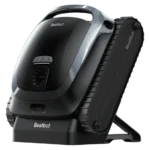
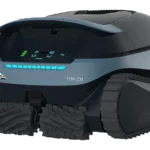
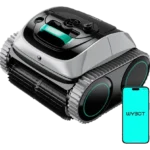
Cordless pool robots over five years: battery degradation as the hidden cost
What people actually ask.
OperationHow long does the Scuba S1 battery actually last on a full charge?
OperationIs the S1 cordless, or does it use a tether?
OperationWhat is the difference between the S1 and the S1 Pro?
OperationCan the S1 handle a saltwater chlorine system?
OperationDoes it climb walls automatically or need help positioning?
 II
II
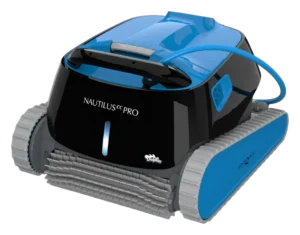
Maytronics Dolphin Nautilus CC Pro
 II
II
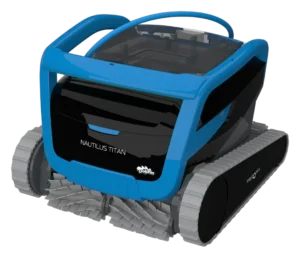
Maytronics Dolphin Nautilus Titan
 II
II
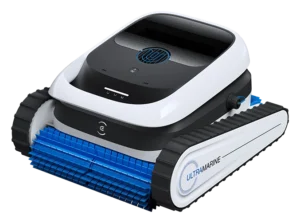
Ecovacs Ultramarine P1
Where it's sold
We may earn commission from qualifying purchases. This does not influence classification.
Reference the Aiper Scuba S1 classification.
Embed the Autonomy Ladder™ mark or copy the citation. The mark is served from this record, so a reassessment updates it on your page automatically.
Get the embed code and citation
Scale proportionally only, up to 2× (536px wide)(224px wide). No recolouring, cropping, rotating, or re-typesetting.
Robovations. "Aiper Scuba S1: Autonomy Level II (Assisted Autonomy)." Autonomy Ladder™, assessed August 2026. https://robovations.com/robots/aiper-scuba-s1/
- Link it. The mark must point at this record. An unlinked mark is not authorised.
- Hot-link it. Never download, self-host, or re-upload the image. A saved copy stops updating, and a mark that has stopped updating is a claim we no longer stand behind.
- A classification, not an endorsement. It may not appear beside language implying Robovations recommends, rates, or approves the product.