Do robot pool cleaners clean walls and the waterline, or just the floor?
Pool robot spec sheets tick floor, walls and waterline as yes-or-no boxes. The line along your own tile asks harder things of the brush.
On this page3 sections
Picture the edge of your pool, where the water meets the tile. Floating oil and debris collect there in a line, the one you see from the deck. Robot pool cleaners are sold by surface, and that line is the last one.
Maytronics gives each Dolphin on its US store a Cleaning Coverage row, with one of three answers. For the Dolphin Escape, the row reads “Floor.” For the Dolphin Nautilus CC, it reads “Floor and Walls.” The cordless Dolphin Liberty 400reads “Floor, Walls and Waterline,” and so does the Dolphin Premier.
So what does a yes in that last column get you? A robot that climbs as far as the line along your tile, with no promise about how high its brush reaches or what it can shift once there.
The tiers don’t follow price. The Escape costs $150 more than the Nautilus CC, yet it stays on the floor. The two-brush Nautilus CC Plusadds free-shape and kidney pools to its sibling’s rectangular and round ones, and still covers floor and walls.
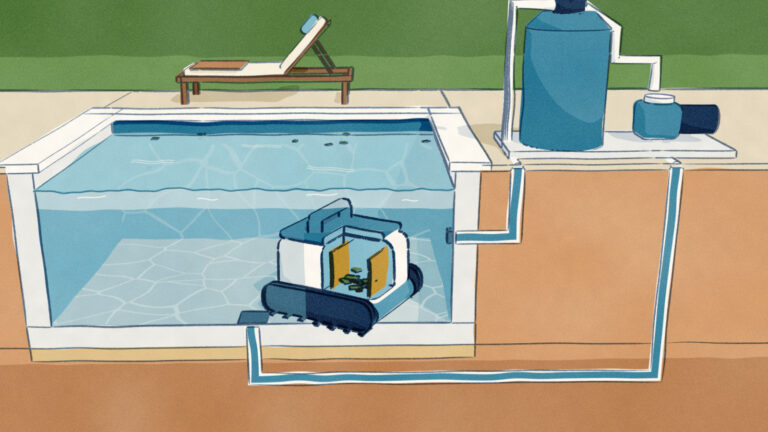
Each surface asks something different of the machine. On the floor, gravity holds the robot’s tracks or wheels down while its pump pulls water through the filter. On a wall, that same flow has to press the robot to the surface hard enough for the drive to grip and climb.
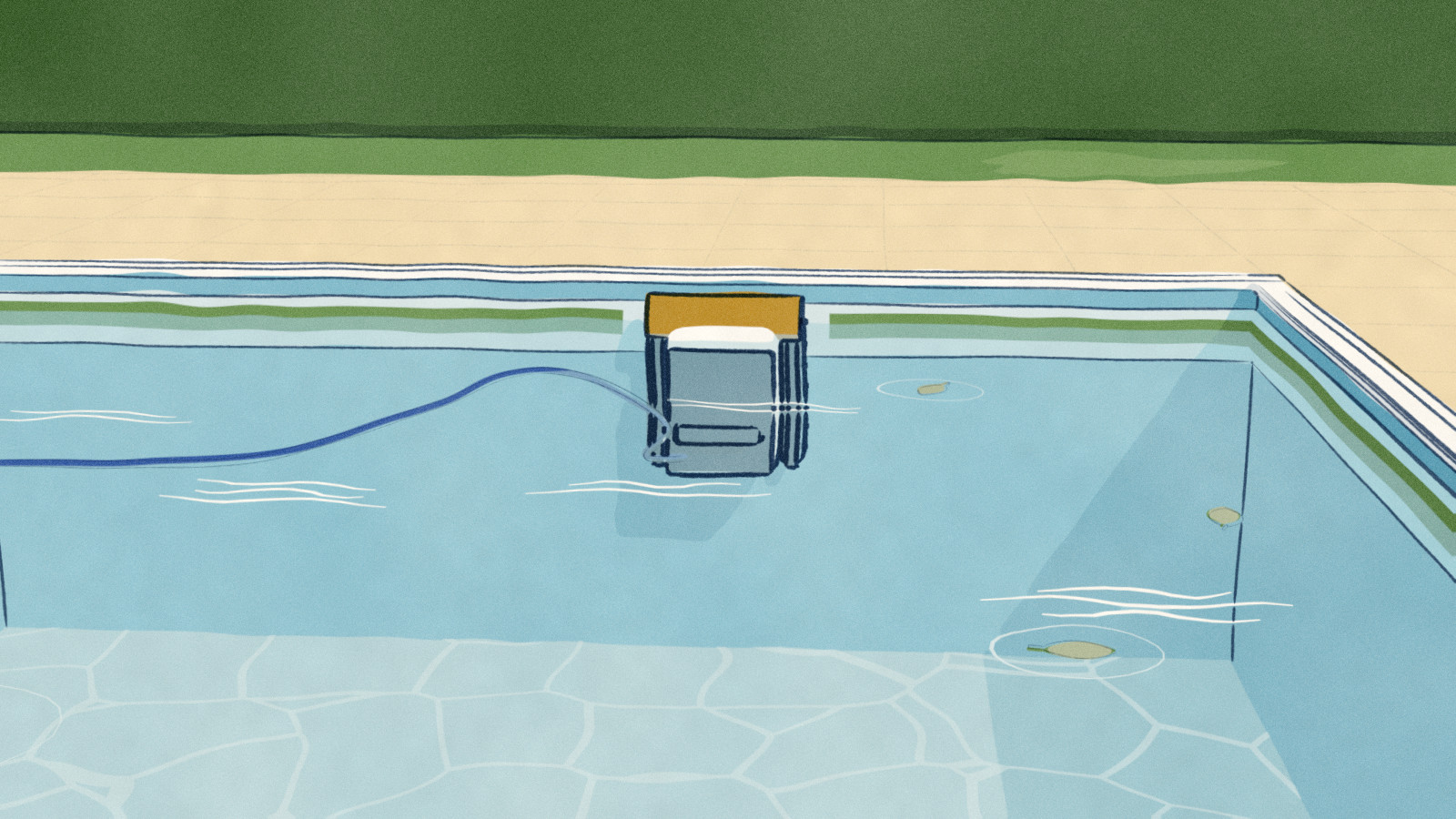
The waterline is the top edge of that climb. A robot that drives past it breaks the surface, and its pump starts drawing air.
Figure
Three surfaces, priced as one
- FloorEvery machine covers the floor. It is table stakes, and it is the surface most listings describe.
- WallsCovering the walls needs climbing, and not every model climbs. This is a real capability difference between machines.
- WaterlineThe band that shows, and the one most often skipped. A machine can do exactly what it claims and still leave a visible ring.
How far up the wall a waterline claim reaches
One product review site ran eleven robots through the same pool for its pool vacuum review, published in May 2025. For the wall test, the reviewer “smeared a mixture of food coloring and almond flour on the wall and measured how effectively each robot cleaned and how far up the wall they were able to reach.”
The results spread across a factor of four. The Seauto SAT20 reached about half an inch above the waterline, and the Fanttik Aero X and Airrobo PC10 about two inches. The rest, among them the Wybot S2, Aiper Scuba S1, Beatbot AquaSense 2, Degrii Zima Lite and Dreame Z1 Pro, landed between an inch and an inch and three quarters.
On a spec sheet, waterline is a yes-or-no entry, and in one pool it ran from half an inch to two. Aiper’s page for the Scuba S1 ticks that box, naming “Shallow Areas, Waterline, Walls, Floors” among its zones and giving it a “90°±15° Wall Climbing Ability.”
In the test pool it covered 95 percent of the floor and 90 percent of the walls. But it “was not able to propel itself high enough to get onto the ledge in the deep end.” A ledge is a second, shallower floor partway up the wall, and reaching it takes a climb that levels off at the lip.
Wall coverage and waterline reach came apart
Independent pool test, May 2025
Floor, wall and waterline results for ten robots in one pool
| Robot | Floor covered | Walls covered | Cleaned above waterline |
|---|---|---|---|
| Aiper Scuba S1 | 95% | 90% | about 1 in |
| Airrobo PC10 | 60% | 20% | about 2 in |
| Beatbot AquaSense 2 | 85% | 85% | about 1.25 in |
| Degrii Zima Lite | 100% | 90% | about 1.25 in |
| Dolphin Niya Sonar 30 | 100% | 75% | about 1.75 in |
| Dreame Z1 Pro | 95% | 50% | about 1.75 in |
| Fanttik Aero X | 90% | 45% | about 2 in |
| Poolmate Hydro 3S | 90% | 50% | about 1 in |
| Seauto SAT20 | 95% | 40% | about 0.5 in |
| Wybot S2 | 95% | 70% | about 1 in |
The Airrobo PC10 reached as high above the waterline as any robot in the test and covered a fifth of the walls below it. The Fanttik Aero X matched its two inches at the top and covered 45 percent of the walls.
The Degrii Zima Lite and Aiper Scuba S1 covered 90 percent of the walls with about an inch of reach above the water. A robot can press its brush high against the tile on the passes it makes and still leave most of the wall between those passes untouched.
So what separated the robots that covered the walls from the ones that didn’t? Price and a mapped route are the obvious guesses, and the reviewer checked both.
just like last year there was almost no correlation between price and pool coverage and the two robots with the best overall coverage, the Degrii Zima Lite and Aiper Scuba S1 used a more random approach to cleaning rather than a mapped approach
At the top of the market, makers sell mapping anyway. Beatbot says its AquaSense X “uses 29 sensors to map the pool and optimize cleaning paths” and lists it at $3,999. It wasn’t one of the eleven in the test.
Scale at the tile line needs more than a brush
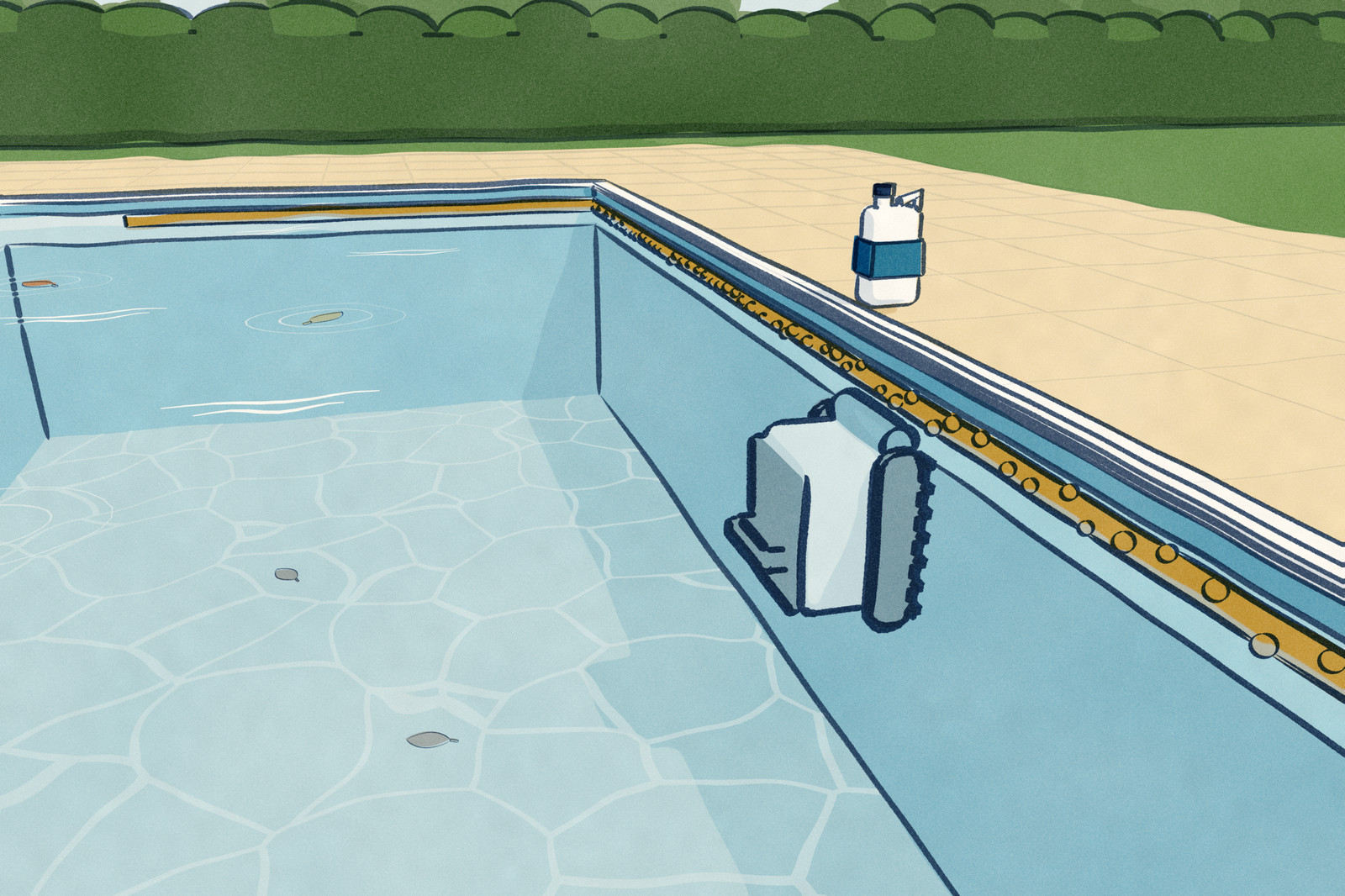
The wall test’s stain was flour and food coloring, a soft soil that shows how high a brush reaches. Mineral scale at the waterline is a harder job.
Leslie’s, the pool supply retailer, says in its guide to pool scale and staining that “High Calcium Hardness, along with high pH and warm water temperatures, will cause this type of pool scale,” and it separates two kinds.
Calcium carbonate “will scrape off easily.” Calcium silicate is “calcium mixed with a form of sand” and leaves “grayish-white, hard deposits on pool surfaces, which can sometimes abrade skin.”
For scale that has set, the fixes are tools a robot doesn’t carry: a pumice stone, a descaling chemical sprayed on once “the big stuff” is scraped off, or bead-blasting the tile line. Severe cases mean draining the pool and acid washing the surface.
Brushing is the routine half of Leslie’s advice: “Regularly brush all pool surfaces, paying close attention to the waterline.” A robot’s waterline pass is that brushing, done on a schedule.
Some pool robots stay on the floor, and a coverage row like the Dolphins’ tells you which. The climbers in one test pool brushed between half an inch and two inches of tile above the water, and a high reach said little about how much wall a robot covered below it.
What that brush takes off is soil that hasn’t set yet. The grayish-white crust already hardened along your tile stays until someone goes at it with a pumice stone.