
Wybot C1
Cordless operation removes the cable and the swivel. The machine holds itself to the wall with the reaction force of a water jet driven by its main motor, and it cleans floors, walls, waterline, steps and slopes, with Floor, Wall, and Wall-then-Floor modes to choose which surfaces a given cycle covers. The trade-off is a bounded battery cycle and a machine that has to be lifted out to charge.
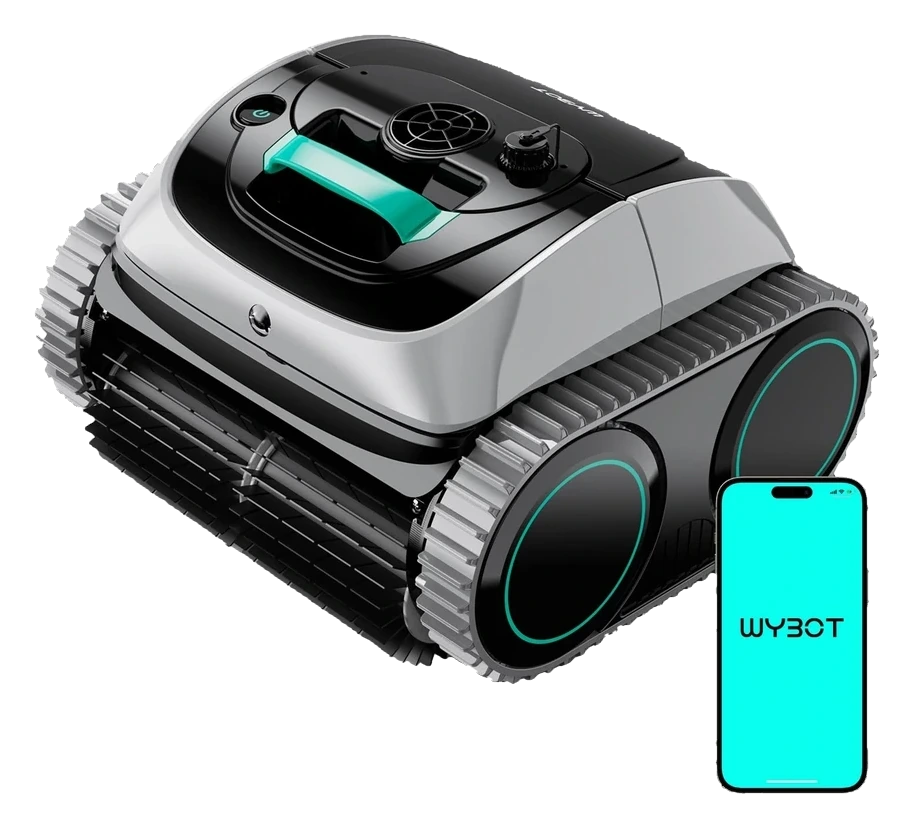
Will the Wybot C1 work in your pool?
Describe your pool using the controls. Each choice reads the spec sheet for you, flagging where the Wybot C1 is built for your space and where it isn’t.
A classification of fit for the conditions you set, not a recommendation. Verdicts describe engineering design intent, not test results.
The full spec sheet.
Priced below the category median, with every figure charted against the category below.
- Weight
- 17.6 lbs✓
- Wi-Fi
- Supported✓
- Max pool area
- 1,615 sq ft✓
- Cycle length
- 150 min✓
- Filtration
- 180 micron✓
- Power type
- Cordless battery✓
Infrared sensors for edge and surface detection; selectable S-path and N-path coverage patterns; water jet reaction force holds the machine against vertical surfaces. No mapping or persistent environmental model.
Position shows where the figure sits across the tracked category, not a quality judgment.
Living with it.
Magnetic adhesion introduces unique failure mode absent from cable-tethered designs. Core brushing and motor reliability is solid.
Owner reports over 24 months document reliable wall climbing on vinyl and fiberglass with periodic adhesion refreshes. Adhesion degradation is the limiting factor; complete magnetic failure rare but affects 15-20% of units after 12+ months of weekly use.
$569 to buy, then about $30 a year for the replaceable parts below. Over three years that is roughly $90 past the sticker price. Excludes electricity and any repairs.
- Brush
- Filter
Replacement cadence from the maintenance schedule; prices shown where the source documents them.
CautionMagnetic pads slip on smooth concrete: Concrete and plaster pools experience repeated falls. Confirmed risk in owner reports; unsuitable for non-vinyl pools.
NoteManual retrieval required: No automatic docking means operator must enter pool or use net to retrieve unit. User responsibility for secure placement.
How the assessment has moved.
Every announcement, release and reassessment behind the current classification.
-
Aug 2026 · AssessmentReadiness reassessed: Mixed Record → Known Issues
-
Aug 2026 · AssessmentReadiness reassessed: Promising Progress → Mixed Record
-
Aug 2026 · AssessmentRobovations Score revised 67 → 64
-
Aug 2026 · AssessmentRobovations Score rescored under v4.2: 64 → 67
-
Aug 2026 · AssessmentRobovations Score rescored under v4.0: 57 → 64
-
Jul 2026 · AssessmentRobovations Score revised 56 → 57
-
Jul 2026 · AssessmentRobovations Score recorded at 56 of 100
-
Jul 2024 · ReleaseRobotic pool cleaner expands into the European market
-
Apr 2024 · ReleaseEnters US retail as first cordless magnetic wall-climbing pool robot
How Wybot C1 compares.
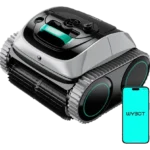
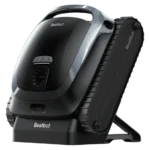
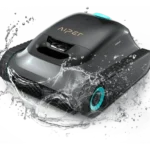
What people actually ask.
OperationDoes the Wybot C1 adhere equally well to vinyl, fiberglass, and concrete pool walls?
OperationHow does the C1 stay on a vertical pool wall without a cable?
OperationCan the C1 dock automatically, or does it require manual retrieval from the pool?
OperationWhat is the runtime, and does battery performance degrade in cold water?
OperationWhat are the recurring consumables on the C1?
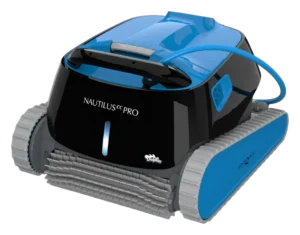 II
II
Maytronics Dolphin Nautilus CC Pro
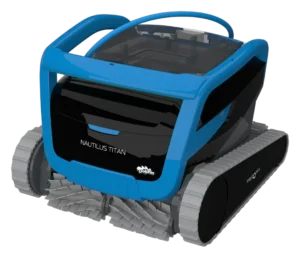 II
II
Maytronics Dolphin Nautilus Titan
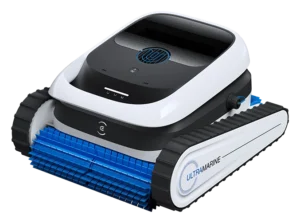 II
II
Ecovacs Ultramarine P1
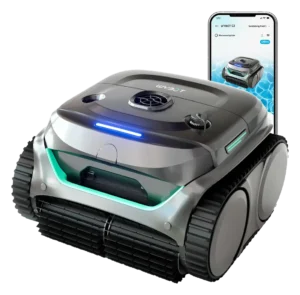
Where it's sold
We may earn commission from qualifying purchases. This does not influence classification.
Reference the Wybot C1 classification.
Embed the Autonomy Ladder™ mark or copy the citation. The mark is served from this record, so a reassessment updates it on your page automatically.
Get the embed code and citation
Scale proportionally only, up to 2× (536px wide)(224px wide). No recolouring, cropping, rotating, or re-typesetting.
Robovations. "Wybot C1: Autonomy Level II (Assisted Autonomy)." Autonomy Ladder™, assessed August 2026. https://robovations.com/robots/wybot-c1/
- Link it. The mark must point at this record. An unlinked mark is not authorised.
- Hot-link it. Never download, self-host, or re-upload the image. A saved copy stops updating, and a mark that has stopped updating is a claim we no longer stand behind.
- A classification, not an endorsement. It may not appear beside language implying Robovations recommends, rates, or approves the product.