
Goal-based/Robot Pool Cleaners/4 robots compared/Reviewed Jun 2026
Cordless pool robots for large pools: does the battery last the whole job?
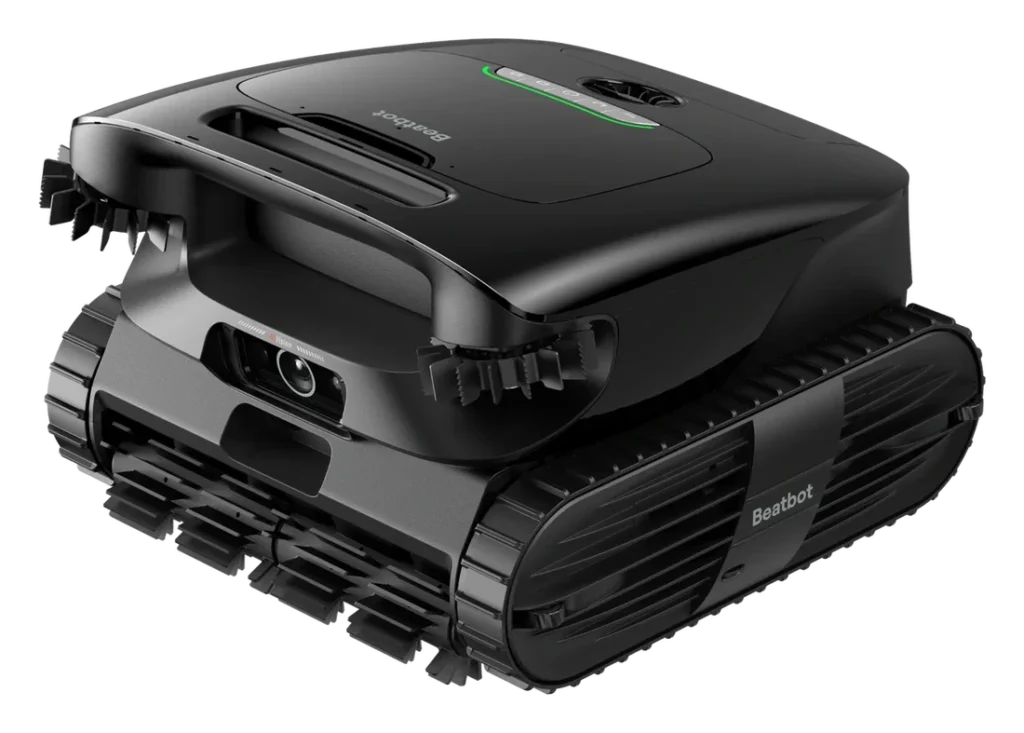
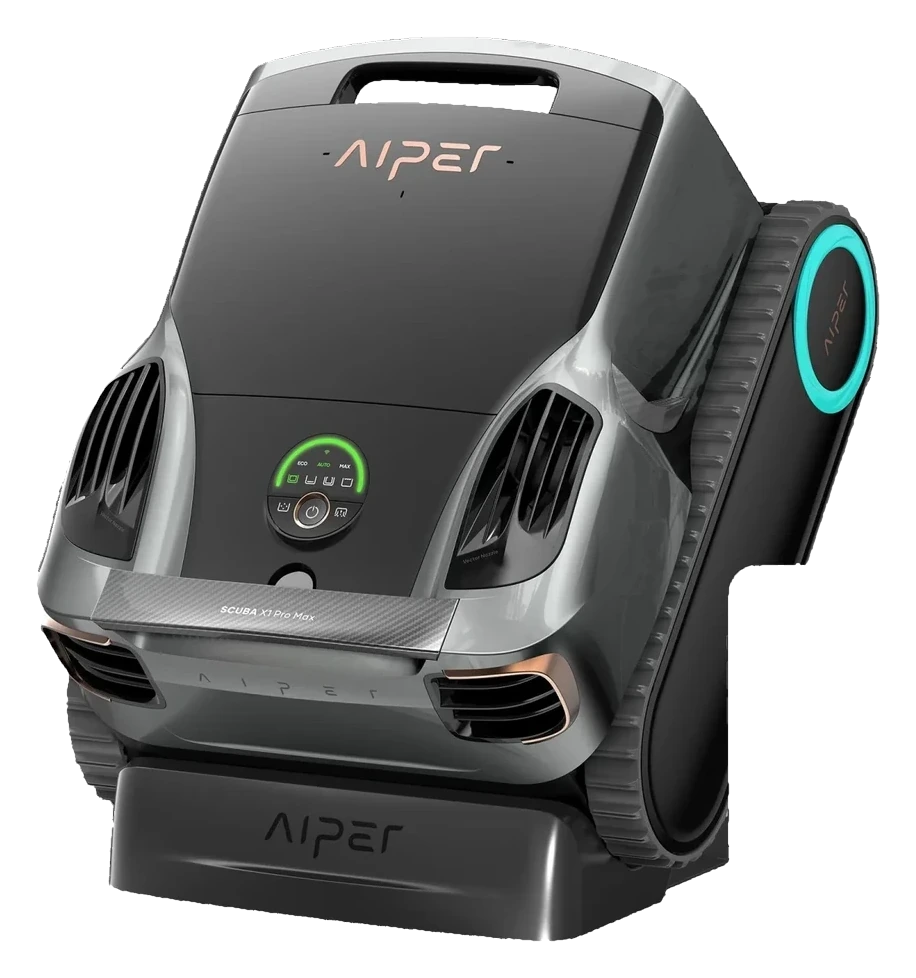

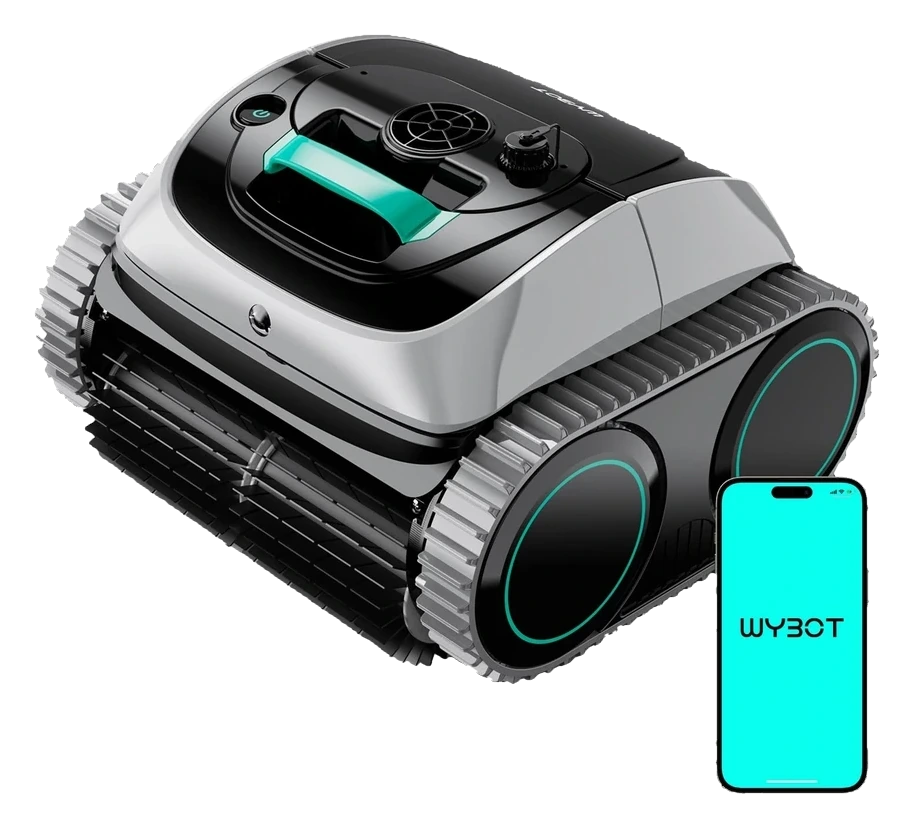
Full specifications19 measurements · 55 of 76 documented
The investigation
5 questions this comparison examines
What is the manufacturer-stated runtime for each robot?
Runtime figures are the first number buyers consult, but manufacturer-stated values differ in rigor. This section surfaces what is documented versus what is estimated.
 Beatbot AquaSense X
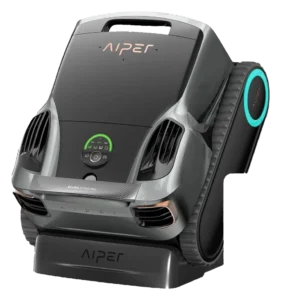 Aiper Scuba X1 Pro Max
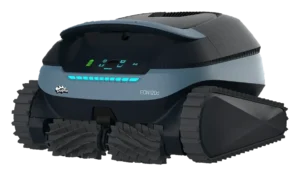 Maytronics Dolphin EON 120d
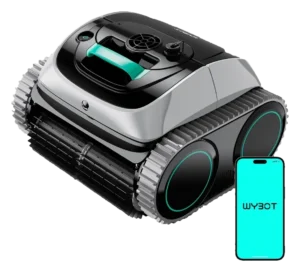 Wybot C1
Beatbot product page documents 360 Wh capacity and up to 600-minute runtime. AquaSense X is the only robot among these four with a published Wh figure, making it the only one where energy-per-area calculations are possible.
Aiper Scuba X1 Pro Max runtime of 600 minutes appears on the manufacturer page and was independently confirmed via spec provenance field on 2026-06-23. Battery capacity (Wh) is not disclosed in retail-facing documentation.
Dolphin EON 120d runtime of 120 minutes is a manufacturer-verified spec per Robovations spec verification dated June 23, 2026. The product page notes available in evidence cite CES 2026 launch materials.
How does each robot's coverage area align with large-pool demand?
Runtime alone does not determine coverage; navigation efficiency, cleaning width, and pool geometry all affect how much area a single charge clears. This section compares what is documented about area capacity.
Beatbot AquaSense XAiper Scuba X1 Pro MaxMaytronics Dolphin EON 120dWybot C1AquaSense X fit_for documentation explicitly names 20,000-35,000 gallon pools with reference to CES demo routes covering full-pool coverage in a single session. This is the upper coverage claim in the group.
Dolphin EON 120d is the only robot here documented to cover tanning ledges, per CES 2026 launch materials. This addresses a shallow-area blind spot the other floor-focused robots do not explicitly document.
Wybot C1 is classified Level II and covers walls and waterline only. Floor debris requires a separate unit or manual vacuuming. Its fit_for pool size (15,000-20,000 gal) reflects wall-surface area, not total cleaning coverage.
What happens when a single charge does not finish the pool?
Large-pool owners face a structural problem: the robot stops before the route ends. Each robot's approach to multi-cycle or multi-day completion differs significantly.
Beatbot AquaSense XAiper Scuba X1 Pro MaxMaytronics Dolphin EON 120dWybot C1AquaSense X AstroRinse dock is the only dock among the four with documented autonomous self-cleaning between cycles. This removes the need to manually clear debris before sending the robot on the next cycle.
Aiper Scuba X1 Pro Max session-to-session position memory is exclusive to the HydroComm Pro dock bundle ($2,299). The $1,799 robot-only configuration loses this capability and reverts to single-session operation per manufacturer documentation.
Wybot C1 requires manual retrieval after every session. Owner reports confirm no auto-dock exists; the operator lifts the robot and places it in the charging cradle. This makes multi-day multi-cycle strategies operator-dependent, not automated.
How confident is each runtime figure, and where are the gaps?
Manufacturer runtime numbers describe ideal conditions. This section examines the documentation quality behind each figure and flags gaps that affect large-pool planning.
Beatbot AquaSense XAiper Scuba X1 Pro MaxMaytronics Dolphin EON 120dWybot C1Wybot C1 is the only robot here with documented cold-water runtime impact. Owner reports spanning 18-24 months describe a 15-20% runtime reduction below 60 degrees Fahrenheit. No equivalent field data exists for the three newer robots.
All three 2025-2026 robots (AquaSense X, X1 Pro Max, EON 120d) lack multi-season field data. Algae-season, freeze-cycle, and sustained-use runtime degradation patterns are not yet represented in available owner reports as of June 2026.
Aiper Scuba X1 Pro Max runtime (600 min) was independently verified via spec provenance on 2026-06-23 against the manufacturer product page. Battery capacity in Wh is still not disclosed, preventing energy-per-area estimates.
What is the cost structure relative to large-pool runtime needs?
Price per minute of runtime tells part of the story, but dock dependency and robot-only vs. bundle pricing affect what buyers actually pay to reach adequate large-pool coverage.
Beatbot AquaSense XAiper Scuba X1 Pro MaxMaytronics Dolphin EON 120dWybot C1Dolphin EON 120d at $1,199 is the lowest documented MSRP with dock functionality included. It is also the robot with the shortest manufacturer-stated runtime (120 minutes), so coverage per dollar requires calculating multi-cycle frequency.
Aiper Scuba X1 Pro Max robot-only at $1,799 loses HydroComm dock session memory, reducing effective autonomy. The $500 price difference between bundle and robot-only represents the cost of maintaining Level III coverage persistence across cycles.
Wybot C1 has no dock and no MSRP on file (superseded by C2 as of product record note). Current pricing should be confirmed with retailers; no verified price range is on file. The C2 is the current Wybot generation.
In closing
What the evidence shows
Patterns that emerged across the questions above.
Runtime gap widens at the coverage extremes
AquaSense X and Scuba X1 Pro Max both claim up to 600 minutes, but the EON 120d's 120-minute figure and C1's ~105-minute figure leave the largest pools needing multiple same-day cycles regardless of robot.
Multi-cycle strategy depends on dock architecture
Robots with autonomous return and session memory (AquaSense X, Scuba X1 Pro Max bundle, EON 120d) can execute multi-cycle plans without operator staging. The C1 requires manual retrieval after every session.
Field evidence is thin across all three 2025-2026 launches
AquaSense X, Scuba X1 Pro Max, and EON 120d share a common gap: no multi-season owner data exists as of mid-2026, making sustained large-pool runtime patterns unverifiable from independent sources.
Common questions