
Stiga A 1500
A wire-free mower using satellite navigation to eliminate perimeter-installation friction. The appeal depends on whether regional RTK correction services are available and whether the buyer has smartphone integration comfort.

Will the Stiga A 1500 work on your yard?
Describe your yard using the controls. Each choice reads the spec sheet for you, flagging where the Stiga A 1500 is built for your space and where it isn’t.
A classification of fit for the conditions you set, not a recommendation. Verdicts describe engineering design intent, not test results.
Living with it.
Satellite navigation is novel for consumer mowers; GNSS signal loss and regional service gaps are documented friction points. RTK accuracy depends on infrastructure, not product design.
Unprovenowner-reported arc
Launched in 2022; ownership and reliability data remain thin. EU early-adopter forums report successful deployments where GNSS correction is robust; signal loss in areas with tree cover or building shadow causes navigation drift. No major recalls or design defects documented yet.
Clear grass clippings from deck and motor area; verify app boundary map alignment with physical yard layout.
Replace as cutting quality declines rather than sharpening them; Stiga-approved replacement blades available.
Wipe dock charging with a dry cloth to prevent corrosion; confirm the RTK reference station is still powered and securely mounted.
Recalibrate the app boundary map if the yard layout changes or if position drift is observed; walk the perimeter to update the virtual boundary in the app.
Inspect the reference station mount, cabling and power supply before the season starts; check drive wheels and the for wear.
-
CautionSpinning blade during scheduled autonomous operationMowing occurs on programmed schedule without human presence. Blade contact risk for pets or objects in the yard.
-
RTK signal loss disables position verificationUnlike wire-guided systems with a hard boundary, RTK signal loss allows the robot to drift; boundary violation is possible during service interruptions.
The full spec sheet.
Manufacturer-published figures, measured against every robot lawn mower we track.
- FootprintThe width, depth and height of the robot itself, without its dock.
- 15.9 × 21.5 in · 9.6 in tall•
- WeightThe robot alone, without its dock, as the maker states it.
- 17.1 lbs•
- BatteryStored energy in watt-hours; a larger pack runs longer, not harder.
- 126 Wh · Li-ion
- NetworkA radio the robot carries besides Wi-Fi, so it reaches the maker without your router.
- Cellular
- Max area
- 26910 sq ft•
- Max slope
- 45%•
- Cutting width
- 7.1 in•
- Cutting height range
- 0.8-2.4 in•
- Blade system
- 4 pivoting blades•
RTK satellite positioning with app-defined virtual boundaries and autonomous systematic cutting pattern
Position shows where the figure sits across the tracked category, not a quality judgment.
How the assessment has moved.
Every announcement, release and reassessment behind the current classification.
-
Sep 2026 · AssessmentRecord status: Verified → Provisional
-
Aug 2026 · AssessmentRecord status: Provisional → Verified
-
Aug 2026 · AssessmentRobovations Score rescored under v4.2: 71 → 66
-
Jul 2026 · AssessmentRobovations Score recorded at 71 of 100
-
Apr 2024 · UpdateGains zone priorities and obstacle alerts in April 2024 app update
What people actually ask.
OperationDoes the Stiga A 1500 require a perimeter wire, or does it use GPS for boundaries?
OperationDoes the A 1500 need a GNSS correction service subscription?
OperationHow accurate is the RTK positioning, and can it get lost like a wire-guided mower?
OperationWhat is the maximum yard size the Stiga A 1500 covers, and how many charge cycles does a full lot require?
OwnershipIs the Stiga A 1500 available in North America, and what is the warranty coverage?
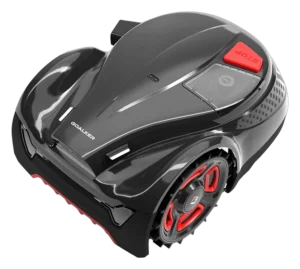 III
III
Goalker H3 Pro
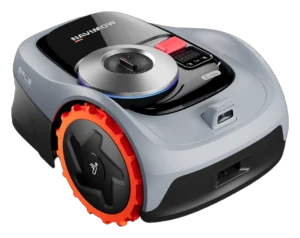 III
III
Segway Navimow i105N
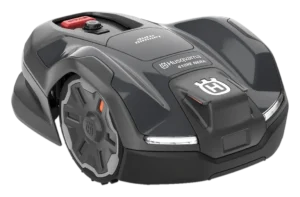 III
III
Husqvarna Automower 410XE NERA
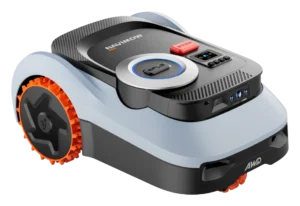 III
III
Segway Navimow i2 LiDAR Pro
Reference the Stiga A 1500 classification.
Embed the Autonomy Ladder™ mark or copy the citation. The mark is served from this record, so a reassessment updates it on your page automatically.
Get the embed code and citation
Scale proportionally only, up to 2× (536px wide)(224px wide). No recolouring, cropping, rotating, or re-typesetting.
Robovations. "Stiga A 1500: Autonomy Level III (Conditional Autonomy)." Autonomy Ladder™, assessed August 2026. https://robovations.com/robots/stiga-a-1500/
- Link it. The mark must point at this record. An unlinked mark is not authorised.
- Hot-link it. Never download, self-host, or re-upload the image. A saved copy stops updating, and a mark that has stopped updating is a claim we no longer stand behind.
- A classification, not an endorsement. It may not appear beside language implying Robovations recommends, rates, or approves the product.