

Stiga
Stiga A 1500
- Autonomy
- IIIConditional
- Score
- 66/100Capable
- Readiness
- Ready Now
- Price
- Not tracked
Stiga
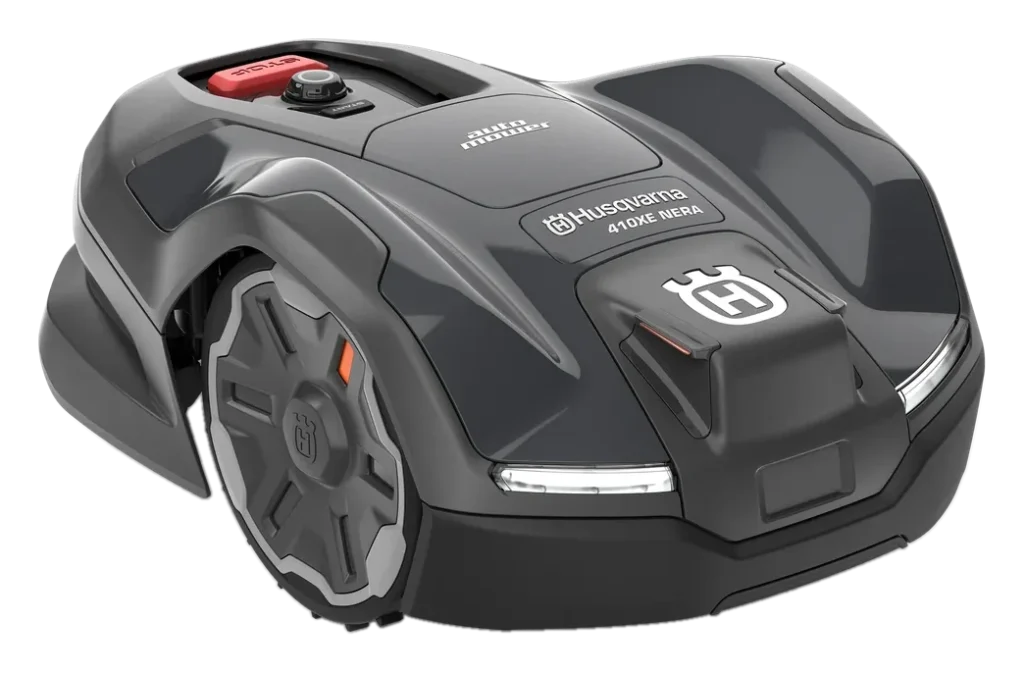
Husqvarna
Up to three
All robot lawn mowers. Every figure below is placed against the whole class, so a gap can be read against how much the class itself varies.
The conditions each robot was assessed against, side by side. Rows marked in gold are where these machines genuinely differ.
| Condition | Stiga A 1500 | Automower 410XE NERA |
|---|---|---|
| Yard size | ||
| Under ¼ acre | GoodCovers sub-quarter-acre reliably in one charge without repositioning. | Good410XE is rated for ¼, ½ acre; sub-¼ acre yards may see uneven coverage because mower cannot optimize short cycles efficiently. |
| ¼ – ½ acre | GoodHalf-acre properties fit within one to two charge cycles; systematic routing optimizes coverage. | GoodSweet spot for 410XE capacity. EPOS virtual boundaries efficiently map quarter- to half-acre properties with standard rectangular layouts. |
| Over ½ acrethey differ | DependsOver-half-acre requires three or more cycles; multiple charge sessions reduce autonomous appeal. | PoorSpecifications recommend larger NERA models for properties above ½ acre. Coverage gaps and extended cycle times likely above this threshold. |
| Terrain | ||
| Mostly flat | GoodFlat terrain with clear sky view allows RTK positioning to work reliably; systematic coverage is efficient. | GoodGPS positioning performs reliably on flat ground. Standard turfgrass cutting quality is consistent. |
| Gentle slopesthey differ | DependsSlopes up to 12 degrees are manageable; RTK positioning accuracy remains stable but motor strain increases. | GoodRTK-grade GPS supports slopes up to 30%. Owner reports confirm reliable operation on moderate slopes with standard turfgrass. |
| Steep / hilly | PoorSlopes above 15 degrees cause traction loss and RTK positioning stress; not recommended. | PoorSlopes above 30% exceed manufacturer specification. Owner reports document traction loss and GPS position drift on wet slopes above 28%. |
| Grass type | ||
| Typical lawn grass | GoodStandard grass species cut reliably with scheduled blade maintenance and systematic patterns. | GoodStandard turfgrass (Kentucky bluegrass, perennial rye) cuts efficiently with systematic EPOS coverage planning. |
| Mixed / tall growth | DependsTall grass clogs blades and strains motor; more frequent blade changes needed. | DependsTall or thick turfgrass (over 3 inches) slows blade engagement. Pre-season manual cutting recommended before mower operation. |
| Thick (Bermuda / Zoysia) | DependsThick turf increases motor load; weekly cleaning and frequent blade maintenance required. | DependsThick Bermuda or fescue turfgrass requires pre-season manual cutting and more frequent blade sharpening (twice yearly) to maintain cut quality. |
| Boundary setup | ||
| Wireless required | GoodRTK virtual boundaries are defined via app without physical wire; ideal for wireless-preference users. | GoodEPOS virtual-boundary system is wireless by design. App-based mapping takes 30–45 minutes; no physical wire installation needed. |
| Wire requiredthey differ | PoorThe Stiga A 1500 is wire-free; physical perimeter-wire owners may need different product. | DependsPerimeter-wire installation is optional but recommended as GPS fallback. Wire-only operation forces downgrade to Level II autonomous behavior if GPS signal is lost. |
| No preference | GoodVirtual boundary app setup works for any yard without wire infrastructure. | GoodEPOS operates wirelessly. Perimeter-wire fallback is optional and improves robustness in GPS-challenged environments. |
A robot being poor for a condition is a fact about fit, not a fault. “Depends” means the record names a limit worth reading, not that the answer is unknown.
Nine inputs across three pillars, each weighted as shown and each scored so more is better. A robot can lead on one and trail on another, which is the point of showing them apart.
A number only means something next to the spread it sits in. Each track is the real range across every classified robot in the class, with the median marked.
Not compared, because fewer than two of these robots carry a published figure: Price.
Written on each record, and the only thing here every robot on the site carries.
What each design gives up to be good at what it is good at.
Satellite positioning removes the perimeter wire but moves the constraint to sky view: the included reference station needs an open mounting position, and heavy canopy or a narrow side yard can leave the mower without a usable fix where a buried wire would not have cared.
Cloud dependency for boundary storage and scheduling means service outages disable operation; the robot cannot mow without app connectivity to retrieve saved boundaries.
GPS positioning is more complex than wire-guided operation, satellite visibility matters. Urban canyon or heavy tree coverage may degrade coverage quality or require boundary re-verification.
Stated by the record itself. A robot being wrong for a household is a fact about fit, not a fault.
The upkeep ownership hands back to you, whatever the autonomy level says.
Classifications rest on different depths of evidence. A pre-release assessment and a verified one are not the same kind of claim.
| Robot | Evidence status | Sources reviewed | Last assessed |
|---|---|---|---|
| Stiga A 1500 | Provisional | 5 | Aug 2026 |
| Husqvarna Automower 410XE NERA | Provisional | 5 | Aug 2026 |
Evidence status counts the sources behind a classification, not their kind. A high count can be maker documentation and price coverage, so read it as how much was reviewed rather than as independent testing. How we weigh evidence.
 The full recordStiga A 1500Specifications, evidence, the Fit Check in full, and every tracked change.
 The full recordHusqvarna Automower 410XE NERASpecifications, evidence, the Fit Check in full, and every tracked change.
Robovations classifies robots; it does not rank them. Nothing on this page is a recommendation, and no manufacturer influences a classification or its placement here.
Comparing across classes is allowed — the page will switch to per-class positioning and tell you it has.