
Robomow RK4000
Wire-guided autonomy inside a perimeter the owner installs, trading systematic mapping for boundary infrastructure. Perimeter-first edging with randomized interior fill, rated for lawns up to 4,000 sq m and slopes to 45 percent, with a rain sensor the owner sets to either pause or keep cutting.
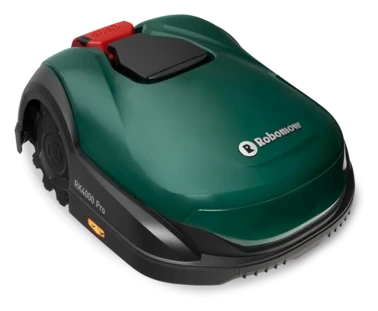
Will the Robomow RK4000 work on your yard?
Describe your yard using the controls. Each choice reads the spec sheet for you, flagging where the Robomow RK4000 is built for your space and where it isn’t.
A classification of fit for the conditions you set, not a recommendation. Verdicts describe engineering design intent, not test results.
Living with it.
Stable two-year cycles; boundary wire degradation and dock corrosion are climatic; blade dulling expected with use.
→ Stableowner-reported arc
Firmware updates improved boundary-wire stability and dock-return accuracy. Primary failures are climatic (frost heave, corrosion) and consumable wear (blades). No systematic mechanical failures in active user base.
The independent record is still forming. Failure modes are listed once an outside source reports them.
Clear the cutting deck of compacted grass; inspect for wrapped grass or debris.
Check base station charging contacts for debris or corrosion; verify the station remains level and obstruction-free.
Inspect for visible damage, gaps, or loose pegs.
Recheck base station position, clear accumulated leaves from the charging area, and confirm cutting height as the lawn enters dormancy.
Perform a full -wire inspection and continuity check.
Check condition and replace when edges are rounded, chipped, or bent. Robomow publishes no fixed interval or price for RK4000 blades.Typical for robot mowers: seasonally
$1,999 to buy, then about $140 a year for the replaceable parts below. Over three years that is roughly $420 past the sticker price. Excludes electricity and any repairs.
- Typical for robot mowers: seasonally
Replacement cadence from the maintenance schedule; prices shown where the source documents them. Part links may earn a commission and do not influence the classification. All parts at Robomow
-
CautionRotating blade hazard during chargingBlades enclosed within deck but accessible at dock; keep children and pets away
-
Low-voltage signal is safe; bury 2-3 inches or use surface edge guides
-
CautionWet operation slip and electrocution riskUnit should not operate in rain; moisture sensors disable in firmware 2024+
The full spec sheet.
Priced above the category median, with every figure charted against the category below.
- FootprintThe width, depth and height of the robot itself, without its dock.
- 22.4 × 18.9 in · 8.7 in tall
- WeightThe robot alone, without its dock, as the maker states it.
- 27.3 lbs
- BatteryStored energy in watt-hours; a larger pack runs longer, not harder.
- 178 Wh · Li-ion
- NetworkA radio the robot carries besides Wi-Fi, so it reaches the maker without your router.
- Cellular
- Cutting width
- 16.5 in•
- Boundary method
- Buried boundary wire
- Max slope
- 45%•
- Cutting height range
- 0.6-3.9 in•
- Max area
- 43056 sq ft•
Boundary-wire perimeter with random coverage pattern and bump-sensor obstacle detection.
Position shows where the figure sits across the tracked category, not a quality judgment.
How the assessment has moved.
Every announcement, release and reassessment behind the current classification.
-
Sep 2026 · AssessmentRecord status: Verified → Pending
-
Aug 2026 · AssessmentRobovations Score rescored under v4.2: 57 → 69
-
Jul 2026 · AssessmentRobovations Score revised 62 → 57
-
Apr 2026 · AssessmentRobovations Score recorded at 62 of 100
-
Mar 2024 · ReleaseEnters retail distribution at $1,999 MSRP
How Robomow RK4000 compares.
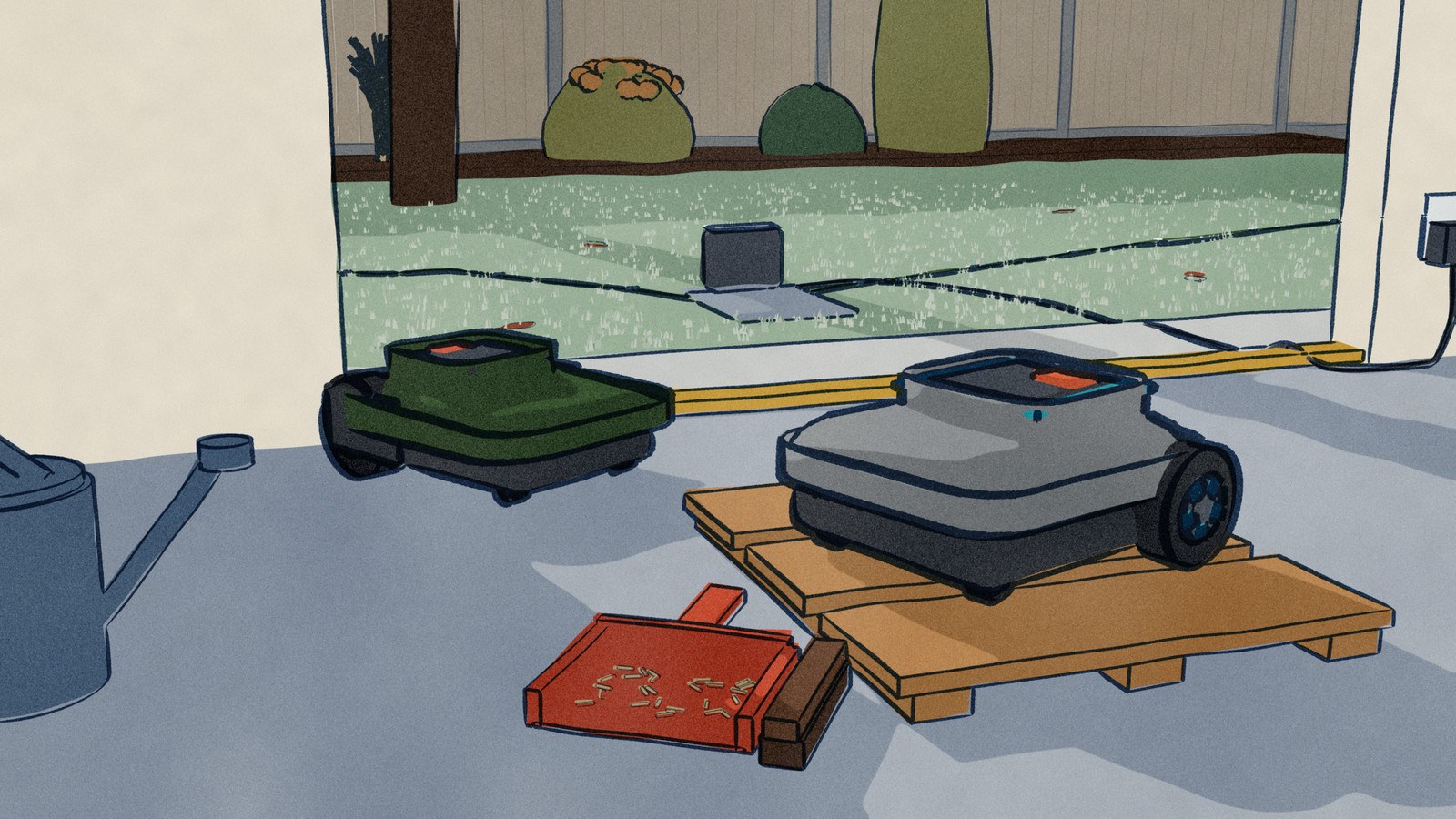
Robot mowers and the off-season: winterizing, storage, and the maintenance owners forget
Four robot mowers, four different off-season rituals. From Husqvarna’s app-drawn boundary to Gardena’s wire inspection, the teardown burden varies as much as the purchase price across a three-year window of…

Which robot mower handles small yards under 5000 sq ft with tight corners
Small yards demand agile navigation and efficient charging. Comparing four robots: Husqvarna Automower 320 NERA, Worx Landroid M 20V, Robomow RK4000, and Segway Navimow i Series.
What people actually ask.
OperationDoes the RK4000 require line-of-sight operation like remote-controlled mowers?
OwnershipHow often does the boundary wire need replacement or repair?
OwnershipWhat is the difference between random coverage and systematic mapping mowers?
OperationCan the RK4000 operate in wet conditions?
OwnershipWhat blade maintenance is required?
 II
II
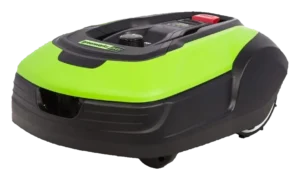
Greenworks Optimow 15
 II
II
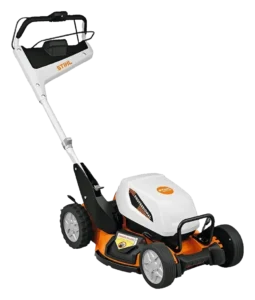
Stihl iMow 7
 II
II
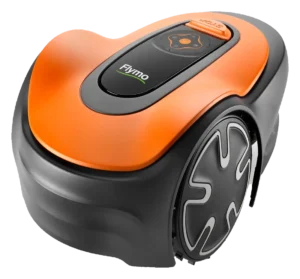
Flymo EasiLife Go 200
 II
II
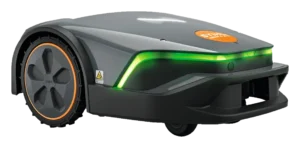
Stihl iMow 6 EVO
Where it's sold
We may earn commission from qualifying purchases. This does not influence classification.
We are no longer finding a current new-stock listing for this robot. Remaining offers may be used, refurbished, or third-party — confirm the condition and price on the retailer’s page before buying.
Reference the Robomow RK4000 classification.
Embed the Autonomy Ladder™ mark or copy the citation. The mark is served from this record, so a reassessment updates it on your page automatically.
Get the embed code and citation
Scale proportionally only, up to 2× (536px wide)(224px wide). No recolouring, cropping, rotating, or re-typesetting.
Robovations. "Robomow RK4000: Autonomy Level II (Assisted Autonomy)." Autonomy Ladder™, assessed September 2026. https://robovations.com/robots/robomow-rk4000/
- Link it. The mark must point at this record. An unlinked mark is not authorised.
- Hot-link it. Never download, self-host, or re-upload the image. A saved copy stops updating, and a mark that has stopped updating is a claim we no longer stand behind.
- A classification, not an endorsement. It may not appear beside language implying Robovations recommends, rates, or approves the product.