Explainer
Do Robot Vacuums With Cameras Avoid Obstacles Better Than Ones With LiDAR?
A LiDAR turret can range a dark sock to the millimeter and still not know it is a sock; a camera can name the sock and still lose it the moment a hallway light goes off. The industry now brands both as one "AI obstacle avoidance" feature, but the documented failure mode of each sensor is different, and neither substitutes for the other.
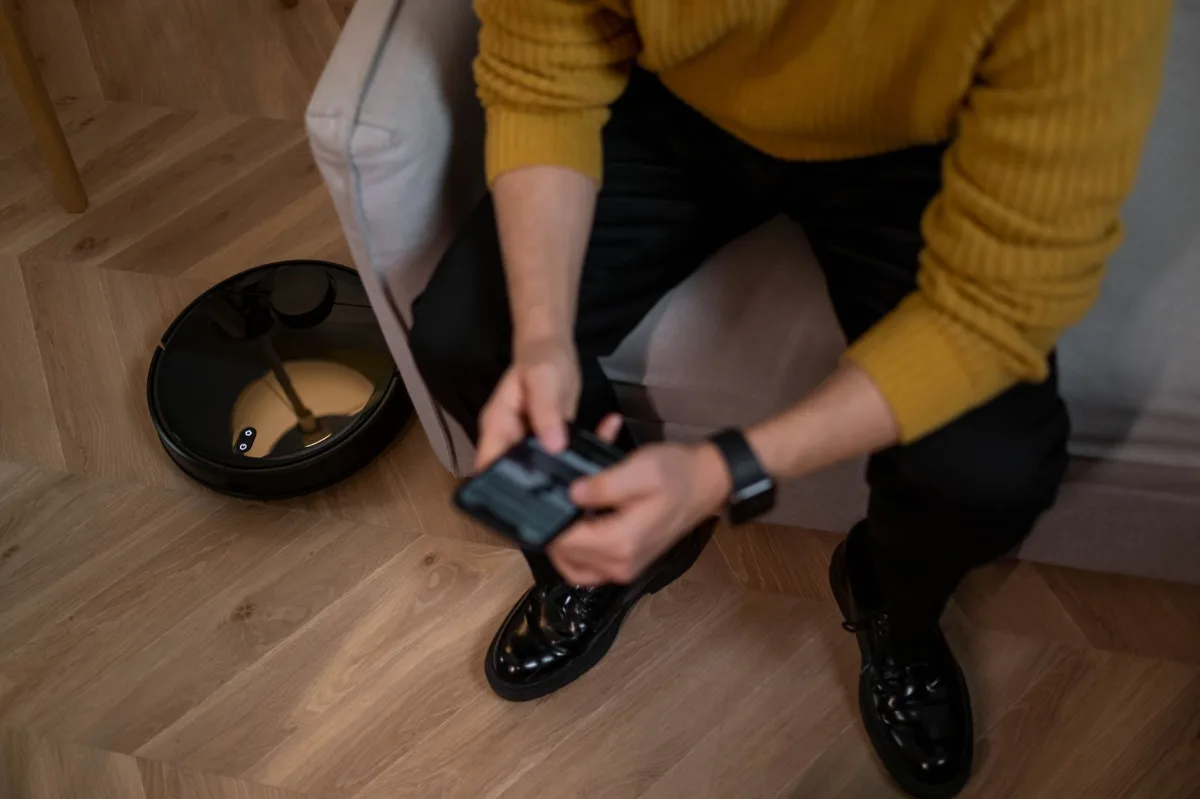
Photo by cottonbro studio on Pexels
On this page4 sections
Robot vacuum spec sheets now list an AI camera and a LiDAR turret on the same line, as though either sensor alone accounts for what the machine avoids on a floor.
They do not measure the same thing. A LiDAR sensor returns a precise map of empty space. A camera returns a guess about what occupies it. Stacking both does not merge their blind spots away, it only moves where the gap sits.
The two claims often read as one upgrade path on a product page. Engineering documentation treats them as two separate systems with two separate parts lists, and each carries its own documented gaps.
Geometry versus identityA LiDAR Turret Measures Distance, Never What Sits There
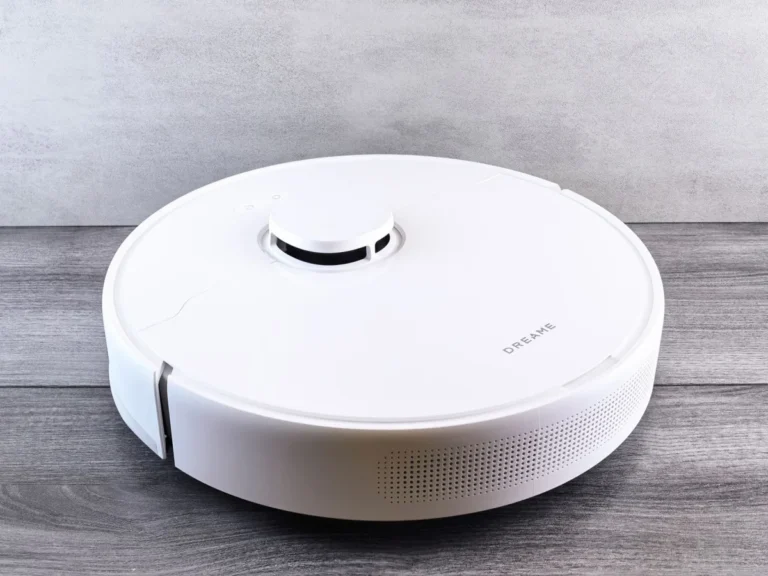
Spinning or solid-state LiDAR casts a laser outward on a level plane and times its return, building a geometric map of walls, furniture legs and doorframes to millimeter-level ranging. It works identically in daylight or full dark, which is why a LiDAR-mapped robot holds a consistent route long after sunset, when a camera-only machine would not.
That scan sits on a single horizontal plane, usually a few inches off the floor. An object entirely below or above that plane, such as a low picture-book spine or a chair leg the beam skims past, can fall outside the swept height even though the sensor is working exactly as designed.
What the returned point cloud cannot do is say what it hit. A charging cable lying flat, a dark sock, or a thin table leg can register as too faint a return to plot reliably, and the sensor has no channel for reporting what an obstacle is, only that something occupies a bearing and a range.
Sensor architecture
What Obstacle Avoidance Actually Covers
- The thresholdThe smallest height the sensor resolves. Everything below this line is driven over rather than avoided, whatever the obstacle is.
- AvoidedTall enough to cross the threshold, so it registers before contact and the route bends around it.
- Driven intoBelow the sensor floor, whatever the marketing says. Cables and pet waste remain the two failures owners actually report.
That gap is why a LiDAR-only robot can map a room to the centimeter and still drive through a pet accident it ranged perfectly. Distance was never the missing information.
Light-dependent classificationA Camera Names the Object, Until the Room Goes Dark
An onboard camera feeding an object-recognition model can, under the conditions a manufacturer demonstrates it in, distinguish a shoe from a charging cable from pet waste and route around each differently. That classification step is a documented capability, not purely a marketing claim.
A single camera also estimates distance rather than measuring it directly, inferring depth from an object’s apparent size against a trained model. A genuinely small object close to the lens and a large object farther away can produce a similar frame, a documented source of misclassification in monocular vision systems generally, not specific to any one robot.
It depends on light the way LiDAR does not. A camera loses resolution in dim rooms, at night, or in backlit glare, and an object a showroom demo classifies correctly can go unrecognized in a hallway lit by a single lamp. Camera-based avoidance is the system most likely to degrade exactly when a household runs its vacuum, overnight or before dawn.
Term
VSLAMVisual Simultaneous Localization and Mapping: building a position estimate from tracked visual features in camera frames, rather than from laser ranging. It is the camera-first alternative to LiDAR mapping, and it inherits the camera’s dependence on light.A robot that relies on VSLAM for its own position, not only for object recognition, carries that same light dependence into its basic navigation, not just its obstacle handling.
Some systems address the gap by weighting the two inputs differently depending on conditions: full confidence in the camera’s classification in good light, falling back to LiDAR ranging alone, with no object label, once light drops below a usable threshold. The fallback avoids a collision; it does not restore the missing identification.
A separate hazard entirelyCliff Sensors Are a Third System, Not a LiDAR Job
Detecting a stair edge or a drop is neither task above. Robot vacuums use dedicated infrared cliff sensors on the underside, aimed straight down and unrelated to the forward-facing LiDAR or camera array. A robot that avoids a cable cleanly can still misjudge a drop if that separate sensor is fooled by a dark rug or a reflective threshold strip.
Spec sheet disclosureMarketing Folds Two Systems Into One Word: AI
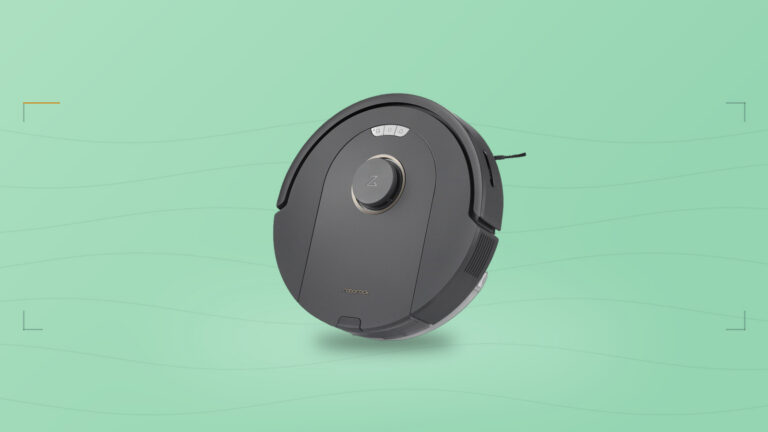
“AI obstacle avoidance” on a product page does not disclose which sensor does the classifying, or whether LiDAR is present at all. Current flagship vacuums increasingly pair a LiDAR turret for mapping with a separate camera for recognition; other models rely on the camera alone for both jobs.
A visible camera lens on the turret does not by itself confirm an object-classification model runs behind it, either. Some robots carry a front-facing camera solely for a live remote-monitoring feed to an owner’s phone, a feature separate from obstacle avoidance entirely and marketed under the same “smart” language.
The distinction outlasts the marketing label. A camera-only system inherits every light-dependent failure described above. A LiDAR-plus-camera system still classifies only as well as its camera does, in whatever light the room actually has at the hour it runs. Checking whether a listed spec names LiDAR specifically, rather than only “AI navigation,” is the way to know which sensor is doing the ranging.
A LiDAR turret and a camera answer different questions, and pairing them does not erase either one’s blind spot: distance still is not identity, and identity still needs light.