How do robot vacuums climb over thresholds and door sills?
Most robot vacuums stall at a two centimetre sill. A handful of 2026 flagships are rated to clear far taller ones, on a figure measured in the maker's own conditions.
On this page3 sections
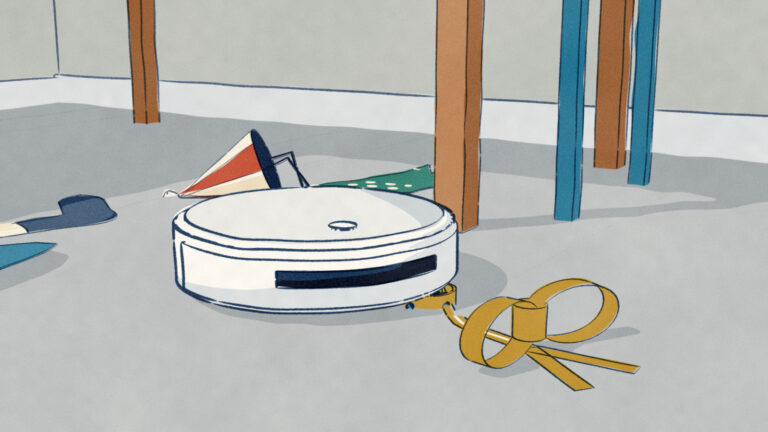
A robot vacuum reaches a bathroom doorway and stops. The sill is barely an inch of oak, yet the machine noses up to it, reverses, tries a second angle, and gives up. For most of the category, that low ridge is where the map ends.
A small set of 2026 flagships answer the same sill differently. The Dreame X50 Ultra and the Roborock Saros 20 carry hardware that raises the whole chassis off the floor, so the body rides up and over an edge instead of ramming into its face. A published review watched one mount a three centimetre board stacked on a saddle board and coast across.
A threshold is where a robot’s coverage quietly disappears. Independent guides put the climb height of an ordinary machine at about two centimetres, enough for a flat transition strip and little more. A sliding-door track, a raised bathroom saddle or a thick rug edge becomes a wall, and the rooms behind it go uncleaned without you ever seeing why.
Figure
Where a floor plan stops a robot
- ThresholdTaller than the machine can climb. The room beyond it never gets cleaned, and no coverage figure mentions it.
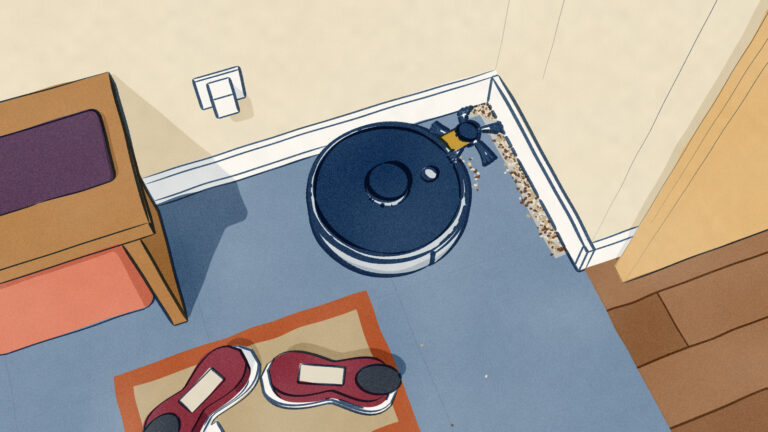
- SockAnything soft left on the floor is pulled into the brush and jams it. The run ends where that happened, and clearing it means turning the machine over.
- Dark rugAbsorbs the cliff sensor's pulse instead of returning it, so it reads as a drop and the machine refuses to cross.
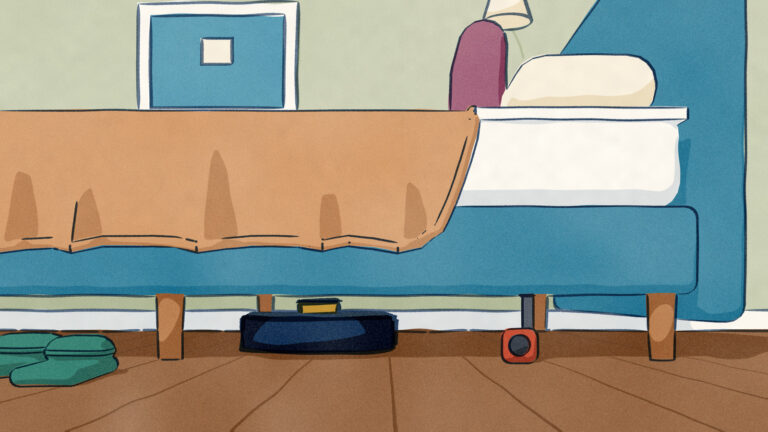
- Shut doorNo fault at all. The room behind it is simply not in the run, and the machine has no way to say so.
How the lift works
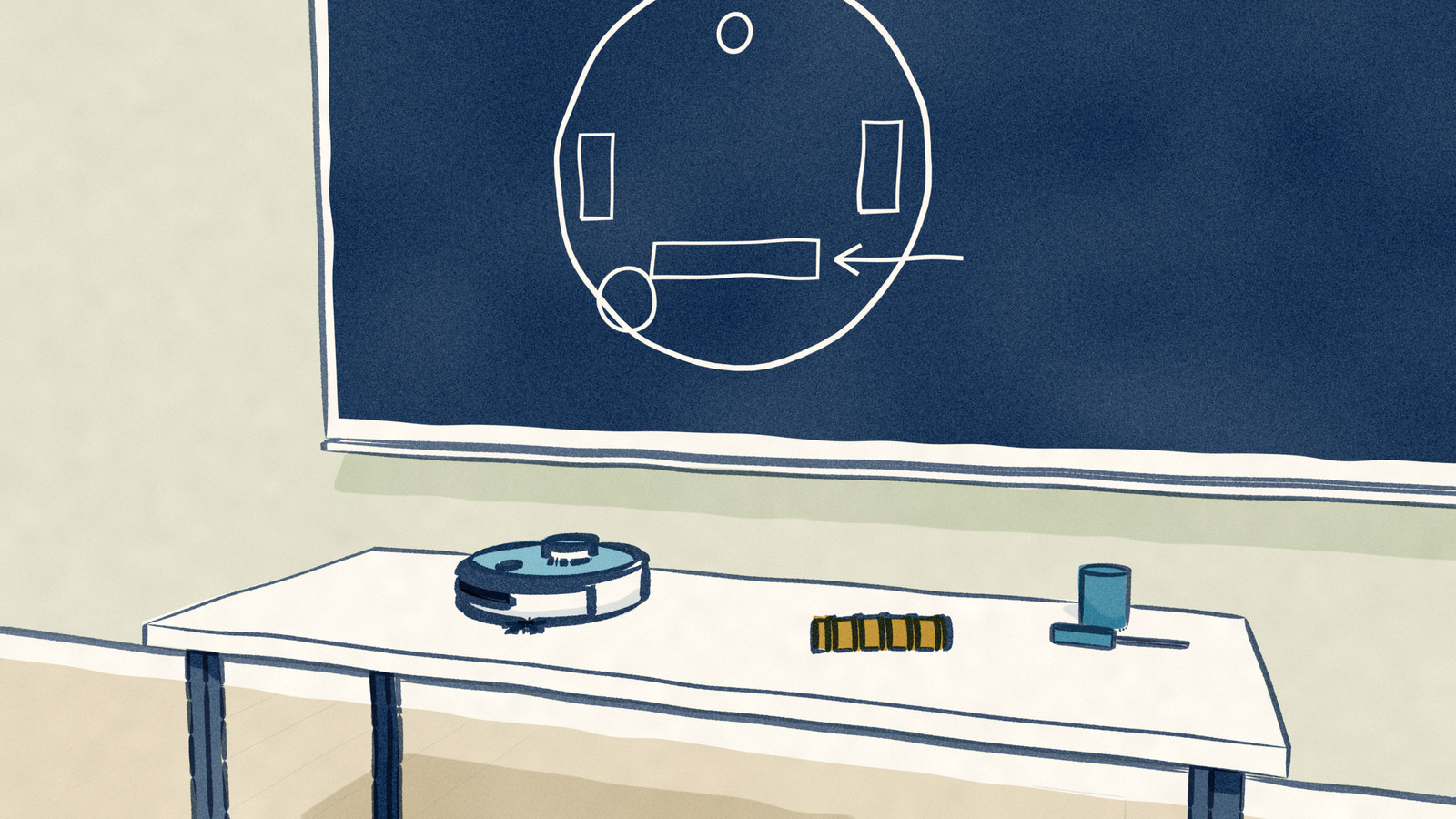
The mechanism is closer to a set of legs than a wheel upgrade. On the Saros 20, launch coverage describes a climbing arm and liftable main and auxiliary wheels working together. The robot raises its body to get over a raised threshold instead of spinning its wheels against the lip.
The eufy Omni S2 works on the same principle with a lifting chassis, and Dreame adds retractable legs and built-in shock absorbers that let the X50 Ultra clear thresholds rated to 2.36 inches, about six centimetres. Roborock’s software also stores how it crossed a given sill, so the robot does not relearn the approach on every run.
The same lift does a second job indoors. Because the chassis can change its ride height, these robots step onto thick rugs instead of stalling at the pile edge, and a published review found the mechanism handled rugs up to three centimetres thick.
Those figures are a clear jump from the older design. Launch specifications put the Saros 20 at 1.77 inches on a single threshold, where a fixed-wheel robot gives out near two centimetres.
Rated climb height, three 2026 lifting-chassis vacuums
| Robot | Rated climb | How it lifts |
|---|---|---|
| Roborock Saros 20 | 1.77 in single, 3.46 in two-step | Climbing arm, liftable wheels |
| Dreame X50 Ultra | 2.36 in, about 6 cm | Retractable legs, shock absorbers |
| eufy Omni S2 | 1.38 in single 35 mm, 1.65 in double 42 mm | Lifting chassis |
Set against the two centimetres a fixed-wheel robot manages, the lifting machines roughly double the reachable step. The double-threshold numbers run higher still, because the robot can take two short rises in sequence rather than one tall one, which is the exact profile of a balcony door with a track in front of it.
What the climb rating counts
A rated height is a maker’s figure measured under set conditions. The Saros 20’s 3.46 inch two-step number is the company’s own measurement, and it holds only when each step stays within set limits. One reviewer flagged it as a ceiling to read cautiously.
The shortfall shows on real sills. One independent review rated a flagship to 35 millimetres, then watched it clear a 32 millimetre step only once in three attempts, below the height printed on the box.
Rounded strips and metal transition profiles sit at the easy end. An abrupt wooden saddle or a tiled step is the harder case at the same height, because the shape of the edge resists the wheels as much as its height does.
The failure these legs exist to prevent is high-centering. When a chassis rides up onto a lip, its underside can come to rest on the edge while the drive wheels hang in the air, turning with nothing to grip.
Term
High-centeringWhen a chassis settles on a raised edge and its drive wheels lift clear of the floor, the robot loses traction and stalls in place, the way a car bottoms out on a steep driveway.What the owner still does
So what does the number on the box buy you? Less than it looks in an ordinary home. The high double-threshold figures assume two short steps in a row, such as a balcony track in front of a door sill, and not a single tall rise.
Fit a mopping module and the same robot copes with less, because the wet pad and water tank change how it meets the edge.
The rating is one clean step. The sills in an ordinary home are often two stacked transitions, a soft rug edge, or a square lip, and that is where a robot which clears the quoted figure still stops.
The practical move is a tape measure at the doorway before your robot arrives. A sill a shade under two centimetres suits most of the category. A tall oak saddle or a sliding-door track is the line the legs were built to cross, and the one worth checking against the figure on the box.