Do robot vacuums with cameras avoid obstacles better than ones with LiDAR?
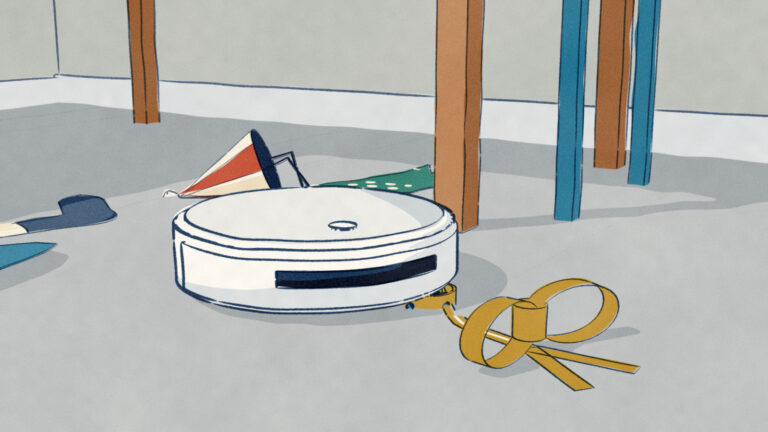
A laser turret maps the room from several inches up, and the sock lies on the floor below it. A 24-object test course shows which part sees it.
On this page3 sections
Lay 24 things across a floor that a robot vacuum should steer around: “cords, shoes, fabric, toys, simulated pet waste, and other low-profile items that commonly cause problems,” as one test lab lists them. Run the robot through. Then crowd many of the same obstacles into the room at once, for a harder “torture test” and run it again.
The eufy Omni S2 went around all 24 in both runs “without a single collision,” the lab’s chief executive wrote in his review. Just one other robot had scored 24 of 24 there: the Roborock Saros 10R. By the count in its review of the Ecovacs Deebot T90 Pro Omni, the average robot clears 16.
So what did those two have that the rest didn’t? Listings tend to name two navigation parts, a LiDAR sensor and an “AI camera,” and plenty of robots carry one without the other. If socks and cables end up on your floor, which part your robot has, and where it sits, decides whether it steers around them or finds them with its bumper.
Figure
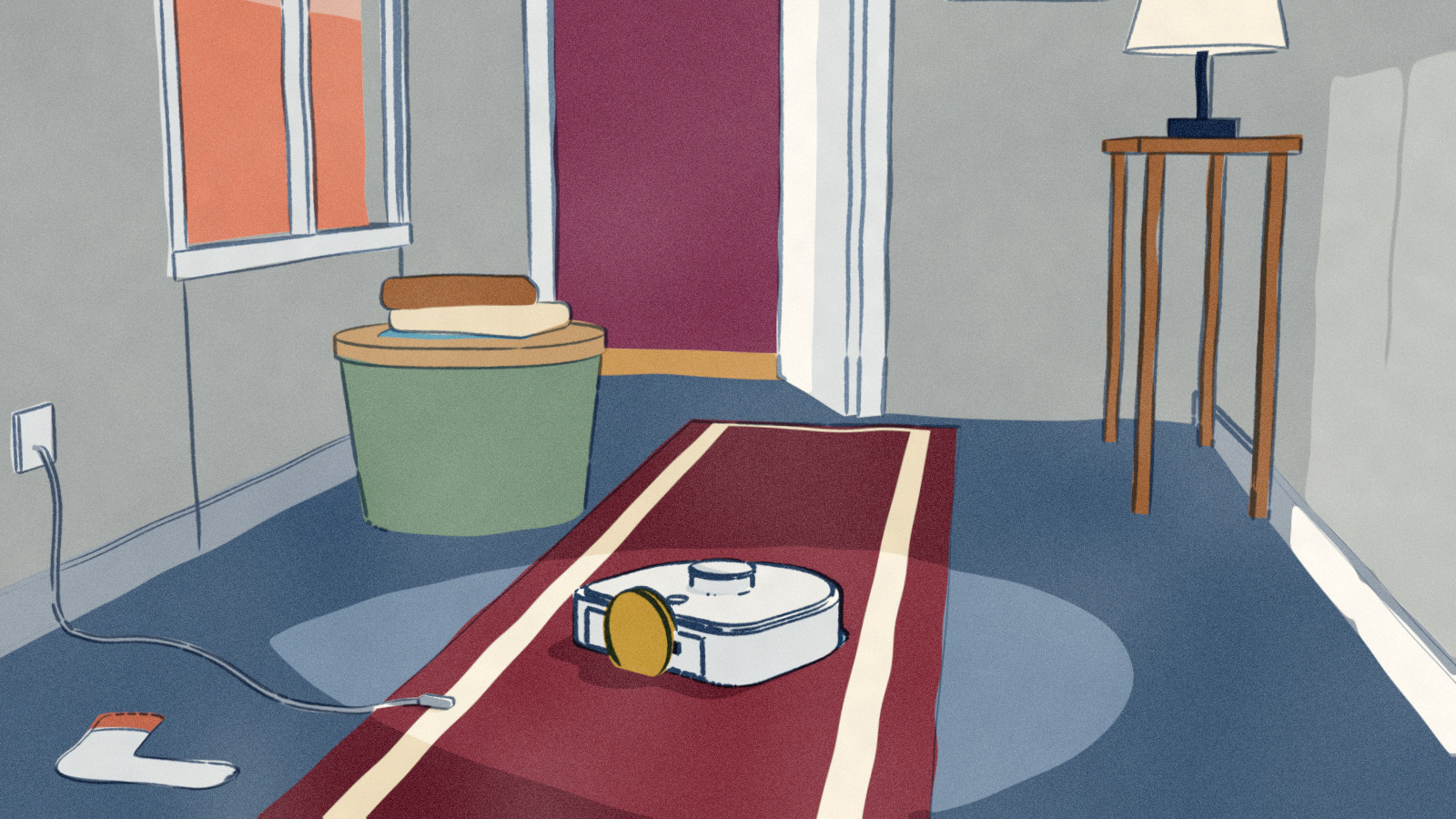
What the turret and the camera can reach
- The one plane it sweepsA turret measures a single horizontal slice at its own height. Only the chair legs cross it, so only the chair is in the data.
- Beneath the planeThe cable and the sock are not low-confidence detections. They are not in the data at all.
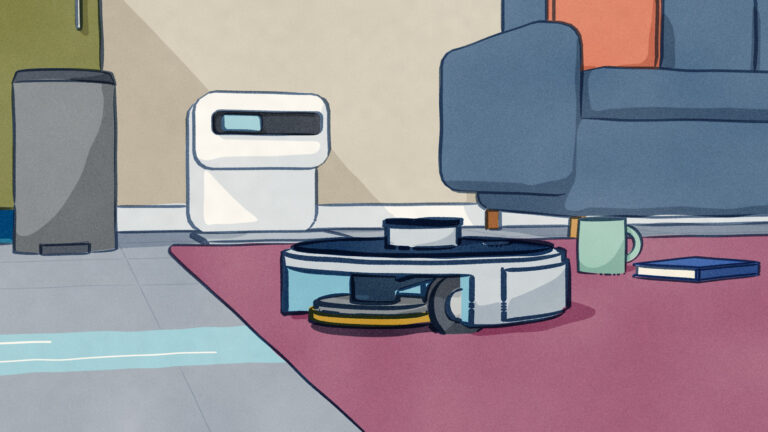
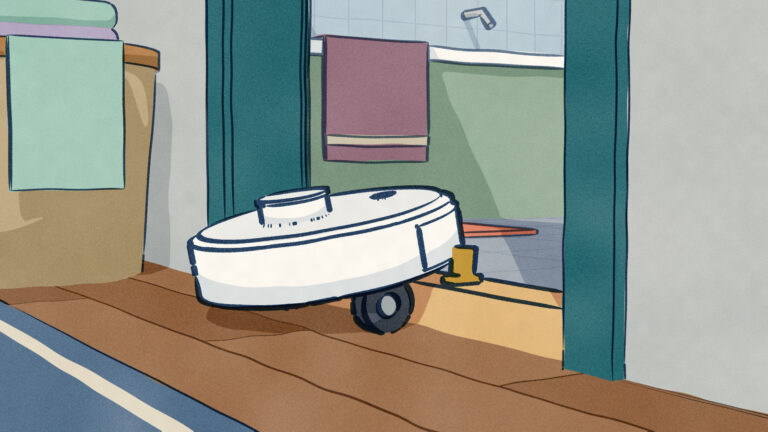
- What the lens reachesThe camera sees the floor ahead, so all three fall inside its view.
- Only while litA camera needs light. In a dark room it stops seeing any of the three, which is the failure the turret does not have.
The laser on the lid maps the room
A spinning LiDAR turret fires a laser in a circle and times the reflections. That gives the robot a plan of the walls and furniture to route by, and to remember between runs. The standard kind is “2D sensing”: the beam sweeps one flat plane at the height of the turret.
A sock, then, lies under the beam. A turret several inches above the floor is a mapping and navigation tool first, and it can miss low-profile objects below it. That is why robots that avoid clutter well add front-facing hardware.
The Roborock Q5 navigates by LiDAR and, one review notes, “does not include mopping or obstacle recognition.” Before a run, the reviewer suggests, “it’s probably a good idea to pick up things it could get stuck on,” or to draw No-Go Zones in your Roborock app.
On its first run in that review, the Q5 got stuck on a bathroom rug. On the second, it crossed the same rug without trouble. A robot with no forward sensor low enough to see a sock finds it with its bumper or its brush, so the same rug can stop it one run and not the next.
A camera can name an object but has to estimate its distance
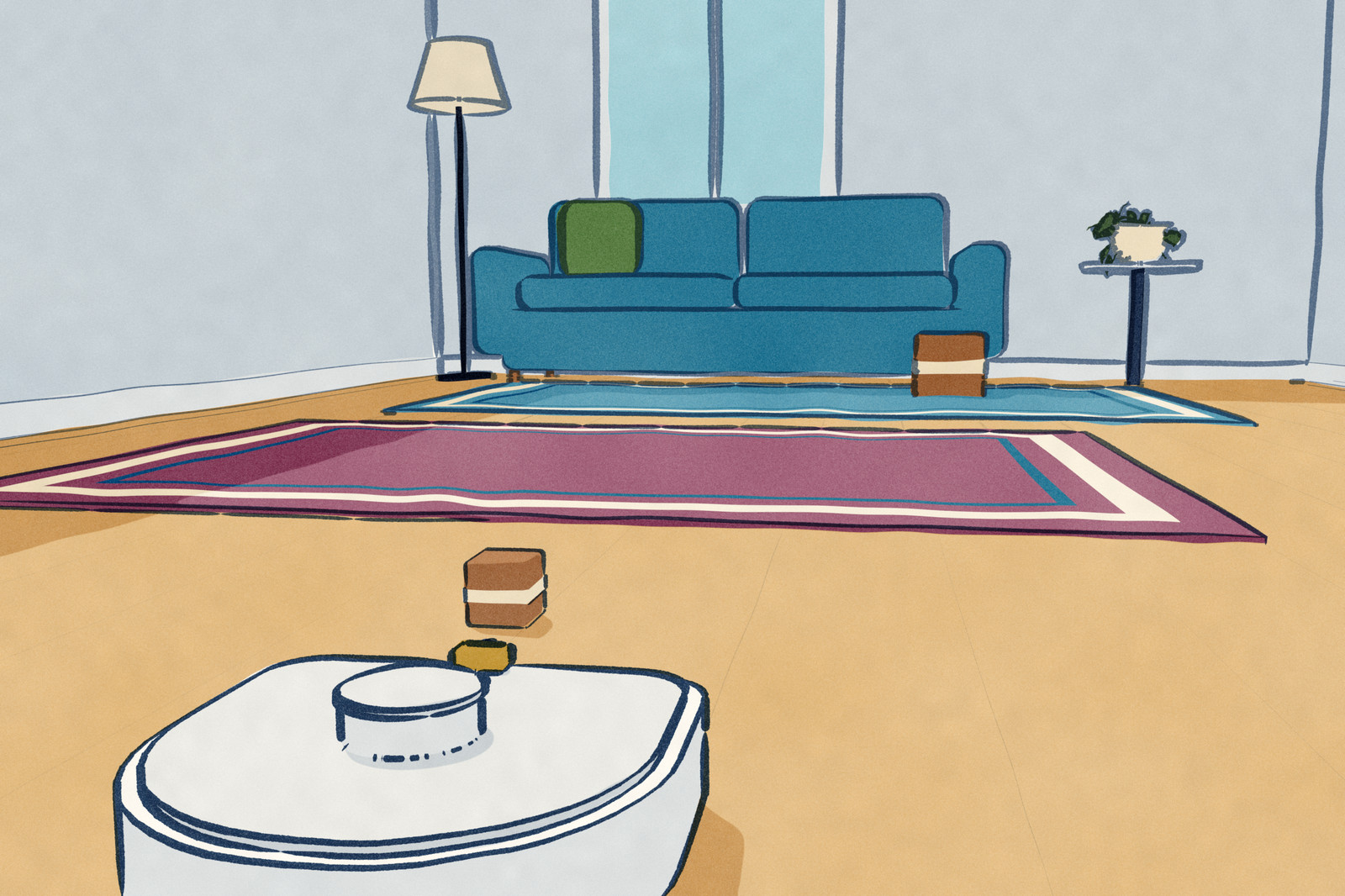
A front camera has the opposite strengths. A recognition model trained on photographs can tell a shoe from a cable from dog waste, which a laser return cannot. But one lens gives no direct reading of distance. The robot judges it from how big things look, so a small object near the lens can fill the frame like a large one across the room.
iRobot put a front-facing camera on the Roomba j7+, on sale from September 2021, and trained it on more than a million labeled images from more than a thousand homes. At the launch, Colin Angle, then iRobot’s chief executive, made the case for the camera.
I believe that the primary sensor for a robot should be a vision system. That doesn’t mean that stereo vision isn’t cool too, and there might be some things where some 3D range sensing can be helpful as a crutch.
A review of the j7+ found it recognizing and avoiding the toys, cords and novelty pet waste put in its path, and said it “excels at avoiding pet waste.” But that review gives no count on the 24-object course, so the j7+ has no score to set beside the newer robots.
A camera also needs light to see by, and in a very dim room it grows less reliable. Many robots now make up for that by pairing the camera with infrared light, an IR laser, structured light or another way of sensing depth.
The highest counts pair a camera with a depth sensor
The four robots with the highest counts, 23 or 24 of 24, don’t sit on either side of the camera-or-LiDAR question. They are the Omni S2, the Saros 10R, the T90 Pro Omni and the Ecovacs Deebot X12 OmniCyclone, which went around 23 in both the standard and torture runs.
Each pairs its camera with a sensor that sends out its own light to measure depth. There are two main kinds. A 3D structured-light sensor “projects an infrared pattern and measures how objects distort it,” and time-of-flight sensors “emit light pulses and measure their return time to estimate distance and object size.”
Four robots with 23 or 24 of 24 on an independent test course
| Robot | Depth sensing | Light for the camera | Objects avoided |
|---|---|---|---|
| eufy Omni S2 | 3D time-of-flight sensors | Automatic LED light matrix | 24 of 24 |
| Roborock Saros 10R | Solid-state LiDAR (3D time-of-flight) | Not stated by Roborock | 24 of 24 |
| Ecovacs Deebot T90 Pro Omni | 3D structured light, LiDAR in the body | LED light assist | 23 of 24 |
| Ecovacs Deebot X12 OmniCyclone | Structured light | LED light assist | 23 of 24 |
On the T90 Pro Omni, the laser has left the lid for a place inside the body, which lowers the robot slightly. The Saros 10R pairs its camera with a solid-state LiDAR, a 3D time-of-flight system, in a body about 3.1 inches tall.
So, does a camera robot steer around more clutter than a LiDAR robot? On the published results, yes. The camera is what lets a robot recognize floor clutter at all, and a LiDAR-only machine like the Q5 is sold without obstacle recognition.
But the robots with the best counts don’t choose between the two. At least two of the four carry LiDAR as well, and all four measure depth with light they project themselves. The course’s write-up puts it in one line: “The strongest systems combine object recognition, depth measurement, and reliable low-light detection.”
On low light, the published counts go quiet. The reviews of the T90 Pro Omni and X12 OmniCyclone each give one count for the standard and torture runs together, with nothing for a darkened room.
In 2021, Colin Angle called 3D range sensing a possible “crutch” for a robot’s vision. Both robots that have gone around all 24 objects on the course carry that kind of sensor.