
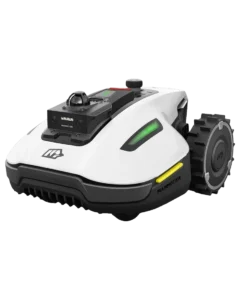
Worx Landroid Vision M800
Wire-free operation via vision comes with a trade-off: neural-network boundary detection requires clear grass-to-obstacle contrast, limiting performance on heavily shaded or uniformly mowed boundaries.
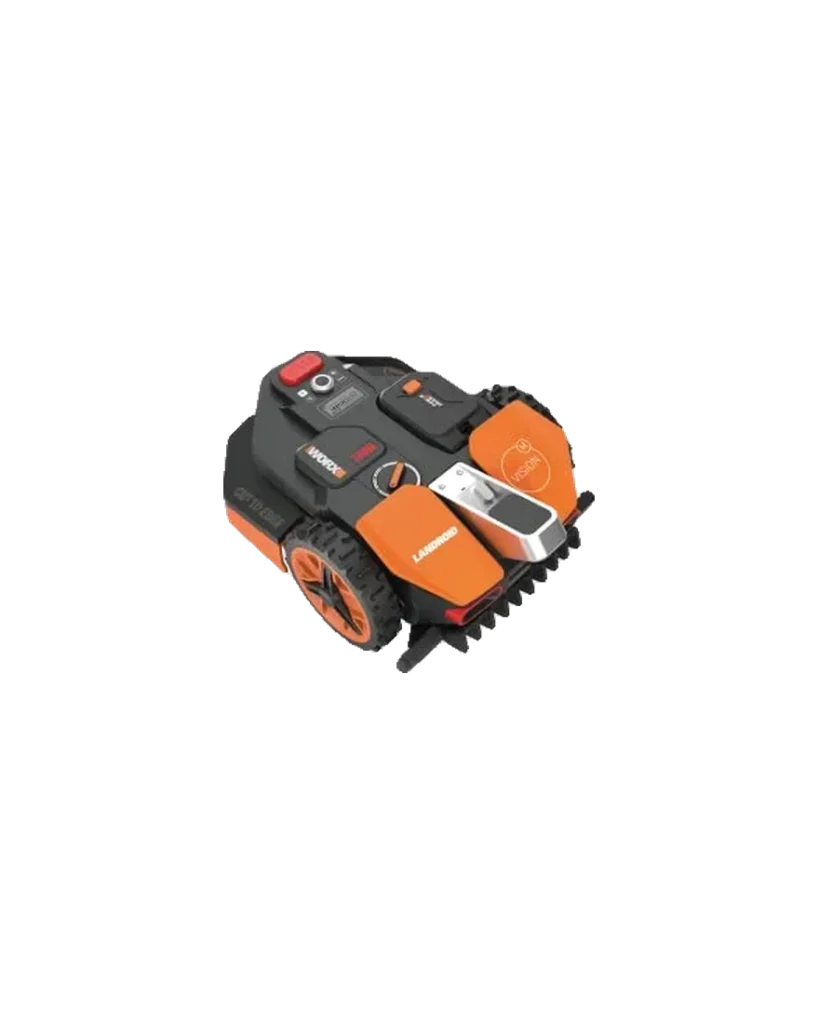
Will the Worx Landroid Vision M800 work on your yard?
Describe your yard using the controls. Each choice reads the spec sheet for you, flagging where the Worx Landroid Vision M800 is built for your space and where it isn’t.
A classification of fit for the conditions you set — not a recommendation. Verdicts describe engineering design intent, not test results.
The full spec sheet.
Priced below the category median, with every figure charted against the category below.
Position shows where the figure sits across the tracked category — not a quality judgment.
Living with it.
Vision boundary detection steadied across 2024–2025 firmware updates; camera contamination remains the primary failure point.
Early firmware versions showed false-obstacle detection in dappled shade. Subsequent updates refined the neural-network threshold. Owner reports since mid-2024 show fewer unwanted stops; camera cleaning frequency remains the dominant reliability concern.
$1,599 to buy, then about $120 a year for the replaceable parts below. Over three years that is roughly $360 past the sticker price. Excludes electricity and any repairs.
- BladesEvery 3-6 months$35–45
Replacement cadence from the maintenance schedule; prices shown where the source documents them.
CautionSpinning blade during dock maneuver: Blade continues spinning briefly after dock entry. Keep hands clear of dock cavity during operation.
NoteWi-Fi and cloud account required: Initial setup and boundary mapping require app connectivity. Mower stores routes locally; cloud outages do not interrupt scheduled runs.
How the assessment has moved.
Every announcement, release and reassessment behind the current classification.
-
Mar 2024 · ReleaseReaches US retail at $2,399
-
Sep 2024 · UpdateVision M800 app update addresses shaded-boundary detection failures
-
Jul 2026 · AssessmentRobovations Score recorded at 67 of 100
-
Jul 2026 · AssessmentRobovations Score revised 67 → 70
What people actually ask.
OperationDoes the Worx Vision M800 need a perimeter wire at all?
OperationCan the Vision M800 handle yard changes without re-mapping?
OperationWhat happens if the camera gets dirty or cloudy?
OperationHow does the Vision M800 perform on shaded lawns?
OwnershipWhat is the blade replacement cost and interval?
OperationDoes the dock require winter storage or off-season prep?
 III
III
Segway Navimow i215 LiDAR
 III
III
Sunseeker S4
 III
III
eufy Robot Lawn Mower E15
 III
III
Mammotion Yuka Mini
Reference the Worx Landroid Vision M800 classification.
Embed the Autonomy Ladder™ mark or copy the citation. The mark links back to this assessment and updates if the classification changes.