
Roborock S7
Sonic mopping debut at consumer price. VibraRise lift is mechanical simplicity compared to later docks. Strong Level III navigation for the 2021 release; age means newer flagships offer higher autonomy ceilings and fresher firmware.
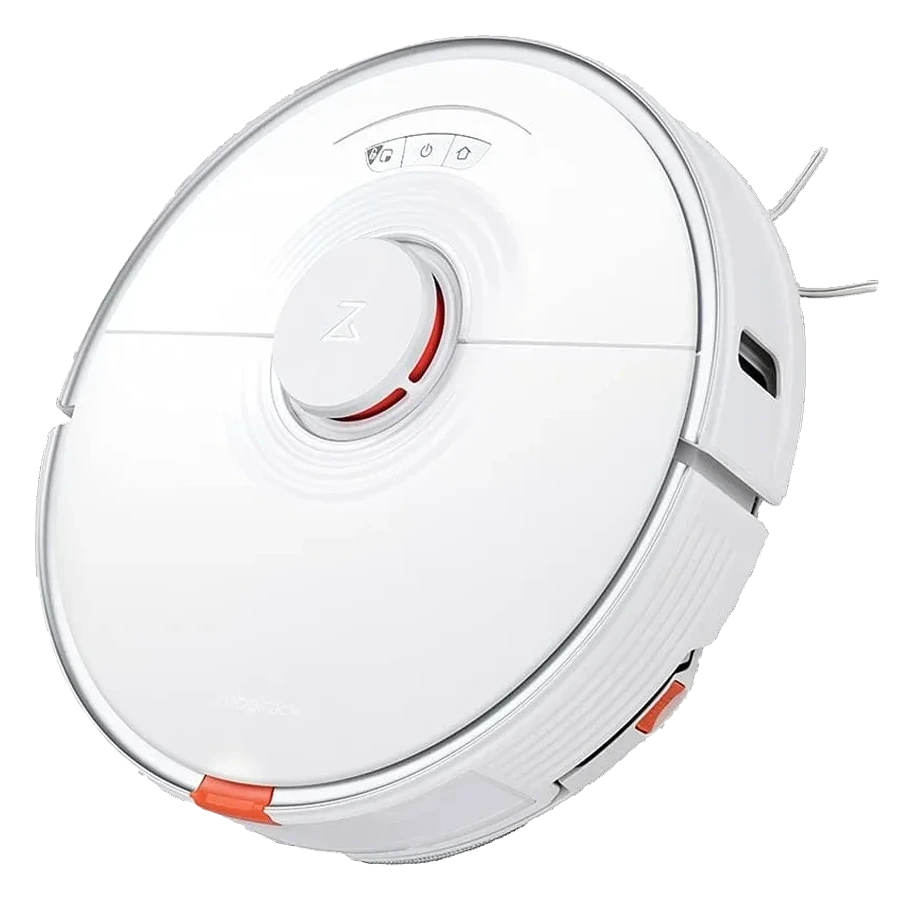
Will the Roborock S7 work in your home?
Describe your home using the controls. Each choice reads the spec sheet for you, flagging where the Roborock S7 is built for your space and where it isn’t.
A classification of fit for the conditions you set, not a recommendation. Verdicts describe engineering design intent, not test results.
The full spec sheet.
Priced below the category median, with every figure charted against the category below.
Position shows where the figure sits across the tracked category, not a quality judgment. Suction in Pascals has no standard test method, and the published figure is a peak-mode claim, so it is comparable only within a brand and generation.
Living with it.
Four years of firmware iteration solidified navigation; brush and filter maintenance are predictable and low-cost.
Owner forums confirm stable performance across 4+ years and multiple firmware versions. Main failure mode is brush tangle (preventable with weekly maintenance) or sensor drift (resolved by map reset). No documented dock-related failures because this model has no dock.
$649 to buy, then about $6 a year for the replaceable parts below. Over three years that is roughly $18 past the sticker price. Excludes electricity and any repairs.
- Filter
- Brush
Replacement cadence from the maintenance schedule; prices shown where the source documents them.
CautionMain brush pinch point during removal: Brush removal exposes finger pinch zones; supervise children during maintenance.
NoteWater tank tipping during refill: Manual water tank can spill if overfilled or tipped during mid-cycle refill; test placement before operation.
How the assessment has moved.
Every announcement, release and reassessment behind the current classification.
-
Sep 2026 · AssessmentRecord status: Verified → Provisional
-
Aug 2026 · AssessmentRobovations Score rescored under v4.2: 68 → 75
-
Jul 2026 · AssessmentRobovations Score revised 69 → 68
-
Jul 2026 · AssessmentRobovations Score recorded at 69 of 100
-
Sep 2023 · NewsPrice repositioned as S8 line takes mid-range slot
-
Aug 2022 · UpdateFirmware 4.3.5 adds Quick Mapping and map backup in 2022
-
Mar 2021 · ReleaseGoes on sale in the US with sonic mopping at $649
-
Jan 2021 · AnnouncementUnveiled at CES 2021 with sonic mopping and automatic mop lift
What people actually ask.
ComparisonHow does sonic mopping compare to traditional brush-pad mopping?
OperationDo I need to refill the water tank manually during a cleaning session?
OperationDoes the S7 work on multiple floors, and will it preserve separate maps?
OperationIs the S7 still receiving firmware updates in 2026?
OperationWhy would I choose the S7 over newer models like the S8 or Saros?
 III
III
Dreame L10 Pro
 III
III
Ecovacs Deebot T30 Pro Omni
 III
III
Roborock S8 MaxV Ultra
Where it's sold
We may earn commission from qualifying purchases. This does not influence classification.
We are no longer finding a current new-stock listing for this robot. Remaining offers may be used, refurbished, or third-party — confirm the condition and price on the retailer’s page before buying.
Reference the Roborock S7 classification.
Embed the Autonomy Ladder™ mark or copy the citation. The mark is served from this record, so a reassessment updates it on your page automatically.
Get the embed code and citation
Scale proportionally only, up to 2× (536px wide)(224px wide). No recolouring, cropping, rotating, or re-typesetting.
Robovations. "Roborock S7: Autonomy Level III (Conditional Autonomy)." Autonomy Ladder™, assessed September 2026. https://robovations.com/robots/roborock-s7/
- Link it. The mark must point at this record. An unlinked mark is not authorised.
- Hot-link it. Never download, self-host, or re-upload the image. A saved copy stops updating, and a mark that has stopped updating is a claim we no longer stand behind.
- A classification, not an endorsement. It may not appear beside language implying Robovations recommends, rates, or approves the product.