
Gardena smart Sileno free 800
Removes the perimeter-wire setup barrier that kept robotic mowing a niche installation job. Satellite positioning with app-drawn boundaries holds roughly 10 to 30 cm, corrected over the internet through the included smart Gateway, so the dependencies move from buried copper to sky view and a working connection. It reached market in 2025, several seasons after consumer RTK mowers were already selling at comparable prices.

Will the Gardena smart Sileno free 800 work on your yard?
Describe your yard using the controls. Each choice reads the spec sheet for you, flagging where the Gardena smart Sileno free 800 is built for your space and where it isn’t.
A classification of fit for the conditions you set, not a recommendation. Verdicts describe engineering design intent, not test results.
Living with it.
First-generation GPS mower; boundary accuracy varies with satellite visibility.
Unprovenowner-reported arc
Early reviews (Q1-Q2 2026) report 85-90% autonomous session completion in open yards; cloud cover and canopy shadow trigger manual recovery. No major firmware regression documented.
The independent record is still forming. Failure modes are listed once an outside source reports them.
Inspect wheel wells and cutting deck for compacted clippings if mowing in heavy-growth season; typical 10-15 minutes every 2 weeks in standard yards.
Inspect the satellite antenna housing for debris and clean the dock contacts if docking performance degrades.
Clean charging dock contacts with soft brush to prevent corrosion; inspect for ant nests or water ingress.
Winter storage is clean the machine, charge the battery fully, and store the mower and its charging station somewhere dry and frost-free. The 18 V lithium pack is internal and stays in the machine. There is no fuel system and nothing to disconnect, and a lithium pack goes into storage charged rather than run down. Spring: check positioning and boundary behavior before the first cut of the season.
Replace the cutting . Robot mower blades are replaced, never sharpened: grinding weakens the protective coating and leaves an unbalanced part spinning unattended.
-
Blade rotation during manual recoveryBlade does not stop automatically when mower is lifted. Power off via app before handling.
-
GPS signal loss in electrical stormsDo not operate during thunderstorms. Manufacturer advises dock containment.
The full spec sheet.
Manufacturer-published figures, measured against every robot lawn mower we track.
- FootprintThe width, depth and height of the robot itself, without its dock.
- 16.9 × 24.8 in · 10.2 in tall•
- WeightThe robot alone, without its dock, as the maker states it.
- 30.5 lbs•
- Wi-FiThe bands the robot can join; many models need a 2.4 GHz network to set up.
- Supported✓
- Cutting height range
- 1-1.8 in•
- Max area
- 8,610 sq ft•
- Max slope
- 35%•
- Boundary method
- Wire-free•
- Cutting width
- 8.7 in•
- Blade system
- 2 discs with 3 pivoting razor blades•
GPS geofencing with automatic boundary learning; no RTK precision.
Position shows where the figure sits across the tracked category, not a quality judgment.
How the assessment has moved.
Every announcement, release and reassessment behind the current classification.
-
Sep 2026 · AssessmentRecord status: Provisional → Pending
-
Aug 2026 · AssessmentReadiness reassessed: Promising Progress → Ready Now
-
Aug 2026 · AssessmentRecord status: Provisional → Verified
-
Aug 2026 · AssessmentRobovations Score rescored under v4.2: 70 → 65
-
Jul 2026 · AssessmentRobovations Score recorded at 70 of 100
-
Mar 2025 · ReleaseReaches European retail in March 2025
-
Sep 2024 · AnnouncementGardena unveils smart Sileno free 800 wire-free GPS robotic mower
How Gardena smart Sileno free 800 compares.
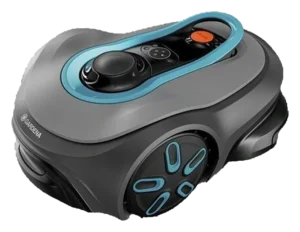
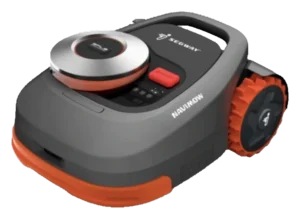
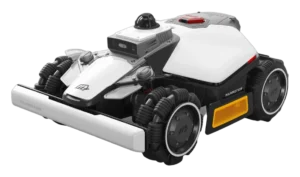
What people actually ask.
OperationDoes the Sileno free 800 need a buried perimeter wire?
OperationWhat happens if the satellite fix drops during a mowing session?
OperationHow often do I need to replace the blades?
OperationCan the Sileno free 800 handle slopes?
OperationWhat is the difference between the Sileno free 800 and the wired Sileno+ line?
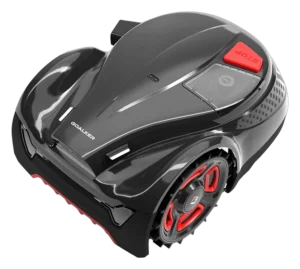 III
III
Goalker H3 Pro
 III
III
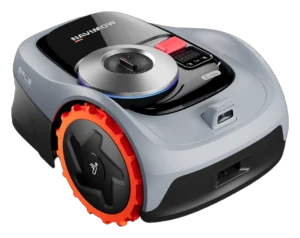
Segway Navimow i105N
 III
III
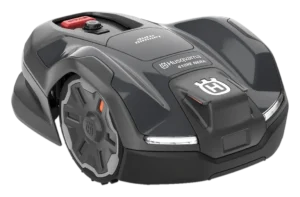
Husqvarna Automower 410XE NERA
 III
III
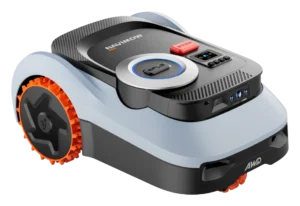
Segway Navimow i2 LiDAR Pro
Where it's sold
We may earn commission from qualifying purchases. This does not influence classification.
Reference the Gardena smart Sileno free 800 classification.
Embed the Autonomy Ladder™ mark or copy the citation. The mark is served from this record, so a reassessment updates it on your page automatically.
Get the embed code and citation
Scale proportionally only, up to 2× (536px wide)(224px wide). No recolouring, cropping, rotating, or re-typesetting.
Robovations. "Gardena smart Sileno free 800: Autonomy Level III (Conditional Autonomy)." Autonomy Ladder™, assessed August 2026. https://robovations.com/robots/gardena-smart-sileno-free-800/
- Link it. The mark must point at this record. An unlinked mark is not authorised.
- Hot-link it. Never download, self-host, or re-upload the image. A saved copy stops updating, and a mark that has stopped updating is a claim we no longer stand behind.
- A classification, not an endorsement. It may not appear beside language implying Robovations recommends, rates, or approves the product.